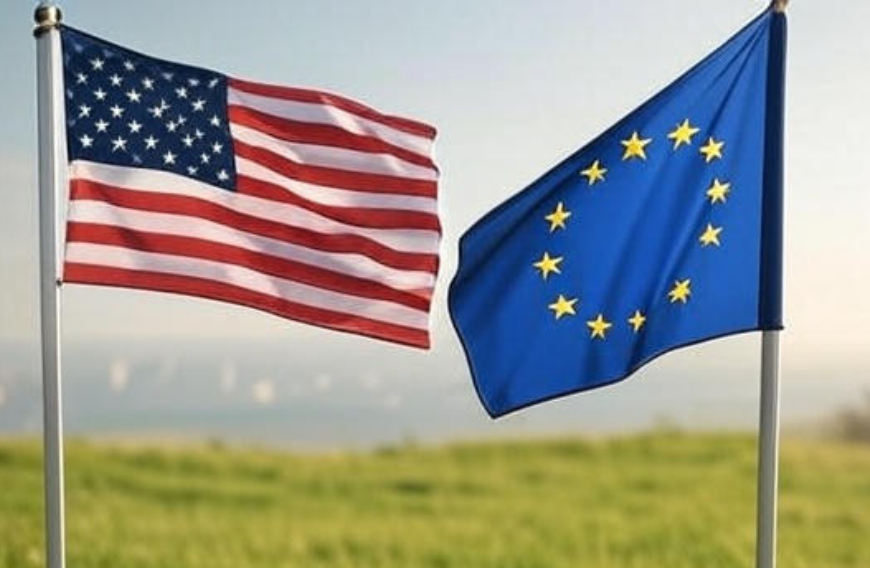
It seems that the United States’s trade agreement has left many pharmaceutical companies in the dark about prices. President Donald Trump announced a rate “directly through” on “cars and everything else”, during a press briefing, while simultaneously suggesting that the Pharma was “not linked to this agreement”.
“We have 15% for pharmaceutical products. Whatever the decision later, of the President of the United States, how to manage pharmaceutical products in general in the world, which is on another sheet of paper,” the president of the European Commission, Ursula von der Leyen on Sunday.
The US trade agreement introduces a rate of 15% on most EU imports, including many pharmaceutical products, replacing the rate of 30% previously threatened by largely affected brand pharmaceuticals. Although no tariff is legally applied, but due to a continuous national security examination of the United States, industry is preparing for cost increases.
Read: The American trade agreement will be in difficulty on the deadline for imminent prices (July 4, 2025)
EU countries such as Ireland, Germany and Belgium, the main exporters of pharmaceutical products are expected to face up to $ 19 billion in additional costs. Until the investigation of article 232 ends, pharmaceutical imports remain without a price under the WTO.
The uncertainty surrounding the tariffs of drugs has triggered warnings of European pharmaceutical companies and industrial groups. Many companies plan to move production and investments in R&D in the United States, invoking concerns concerning the increase in export costs and a non-competitive European regulatory environment. Lobbies groups believe that the EU could lose more than 100 billion euros in pharmaceutical investment over the next five years if reforms are not made.
For the United States, the potential increases in drug prices and the supply chain disturbances may have an impact on affordability and access to health care. The situation has sparked a political umbrella in Europe, some leaders criticizing the agreement as unilateral and prejudicial to the EU strategic industries.
“Questions concerning pharmaceutical prices are highly important, given the volume of imports from the EU,” Wolfe research analysts wrote in a note on Monday.
Drugs and pharmaceutical products represent the greatest export of the EU to the United States, totaling 120 billion dollars in 2024. Analysts estimate that 15% of samples could increase industry costs from $ 13 billion to $ 19 billion per year, according to in Reuters.
“Any increase in the 15% ceiling surprise on pharmaceutical prices threatened the wider commercial truce,” wrote Eurasia group analysts in a note on Monday.
Read: US “ very close ” to finalize the trade agreement with India (July 18, 2025)
“If a dispute over these sectoral prices does not sabotage the wider agreement,” added the European economy, added Rabobank analysts.
The EU and the United States represent the largest pharmaceutical market in the world together, and their cooperation stimulates investments in research, clinical trials, regulatory harmonization and access to advanced therapies. All commercial obstacles may fragment this system, slowing innovation and reducing the speed at which new drugs reach patients.
In addition, global challenges such as pandemics, antibiotic resistance and rare diseases require coordinated responses that are based on transparent collaboration between regulators, manufacturers and researchers. Current price uncertainty is likely to undermine this cooperation at a critical time for global public health. To protect innovation and access to patients, decision -makers must prioritize transparent negotiations, regulatory alignment and fair trade practices that support an innovative resilient pharmaceutical sector.
About The Author