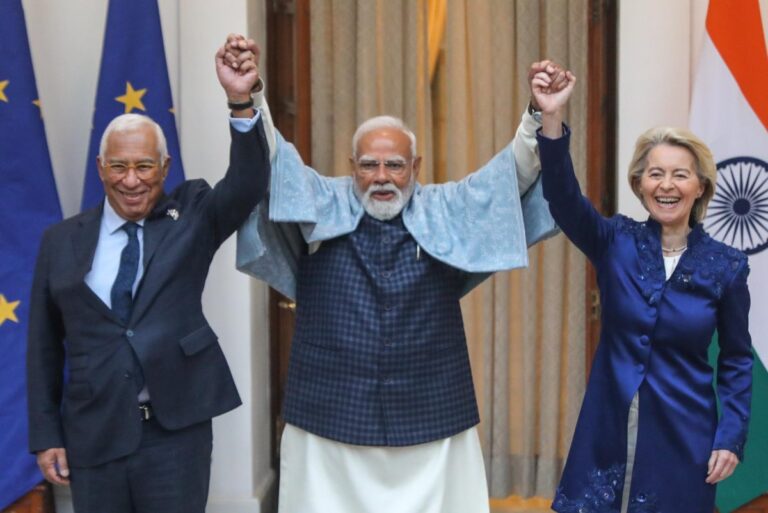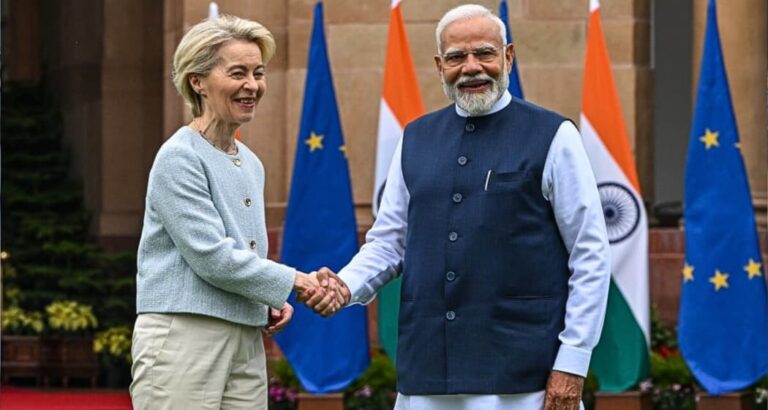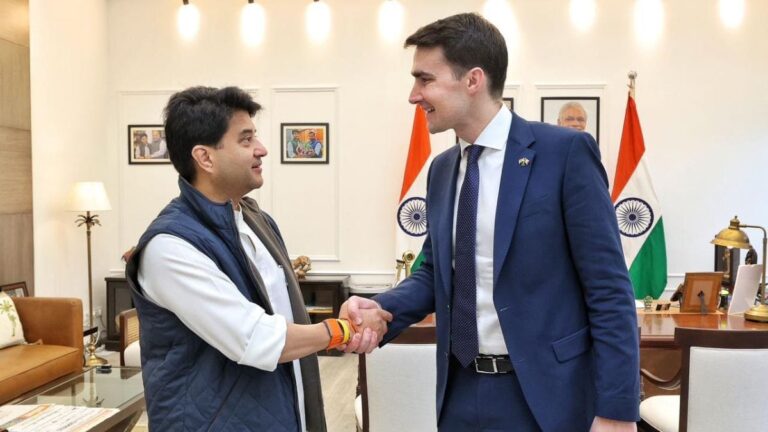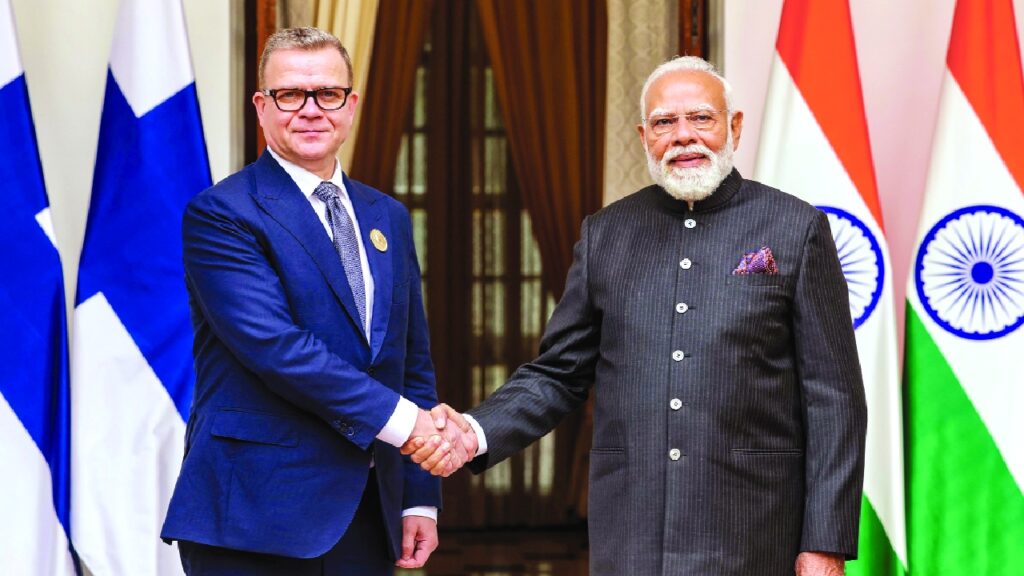
Prime Minister Narendra Modi on Wednesday said the Free Trade Agreement (FTA) between India and the European Union (EU) marks not just progress, but the dawn of a “golden age” in India-Europe relations, as he held high-stakes meetings with Spanish President Pedro Sanchez and Finnish Prime Minister Petteri Orpo, in the national capital.
During his talks with Sánchez, the Prime Minister reviewed the entire Indo-Spanish engagement, covering defence, security, infrastructure, renewable energy, space cooperation and emerging technologies. But the central theme remained the economic transformation fueled by the India-EU FTA.
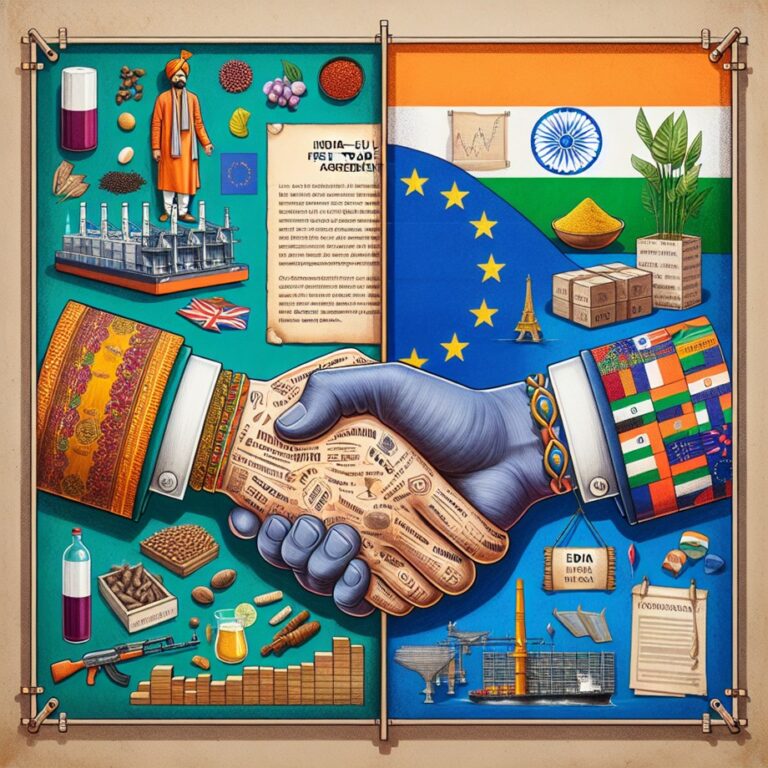
Terming the agreement “historic”, Modi said it would open up significant new opportunities for businesses, workers and innovators in both countries. He stressed that the agreement is not symbolic diplomacy but a structural reset of economic ties between India and Europe.
The leaders welcomed the progress made in the Tata-Airbus C-295 transport aircraft program in Vadodara, describing it as a concrete example of defense co-development and co-production. The project, they noted, reflects India’s desire to favor deeper industrial partnerships rather than transactional purchases.
Modi also highlighted the decision to mark 2026 as the India-Spain Year of Culture, Tourism and Artificial Intelligence, emphasizing that cooperation on AI must be based on accountability and human-centric governance. Sánchez echoed the call for responsible AI frameworks while welcoming India’s bringing together global leaders in the technology field.
Both sides reiterated their uncompromising condemnation of terrorism in all its forms and agreed to intensify coordination on security challenges. In a separate meeting, Modi and Finnish Prime Minister Petteri Orpo described the India-EU FTA as a watershed. Modi thanked Orpo for his personal support in promoting the agreement, saying it ushers in a transformational phase in India-Europe engagement.
The leaders focused on the sectors of the future: quantum technologies, 6G telecommunications, renewable energies, circular economy systems and defense innovation. They emphasized that digitalization and sustainability are not optional ambitions but central pillars of long-term growth.
As technology companies from both countries expand their operations and partnerships in each other’s markets, both sides called for doubling bilateral trade and accelerating co-development initiatives.
Amid broader discussions about AI, industry voices have highlighted the need to deeply integrate artificial intelligence into critical infrastructure.
With the establishment of the India-EU FTA and AI cooperation high on the agenda, India’s engagements with Spain and Finland demonstrate an increased focus on trade expansion, strategic technology partnerships and infrastructure modernization.
About The Author