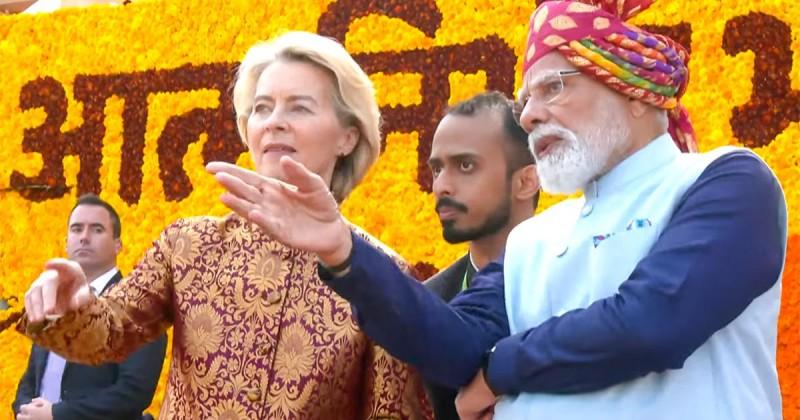
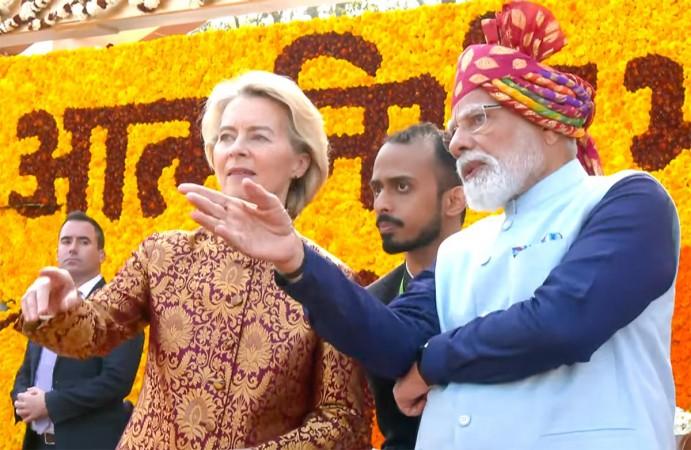
The EU-India Free Trade Agreement (FTA) – touted as “the mother of all deals” – reveals the emerging silhouette of a post-American world order amid relentless threats to territorial sovereignty, punitive tariffs and the weakening of multilateral institutions, according to a recent Guardian report.
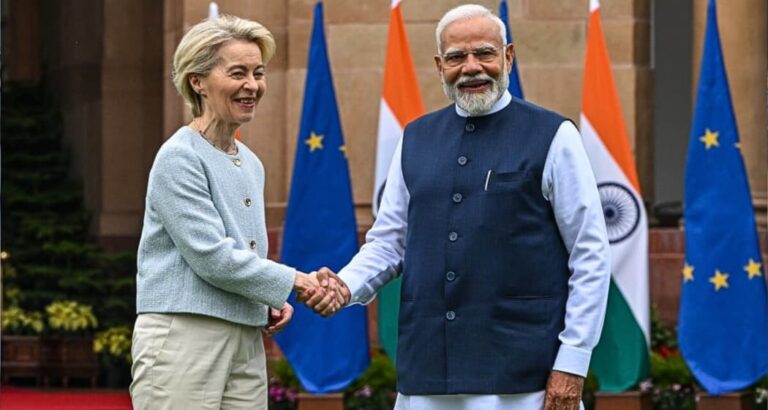
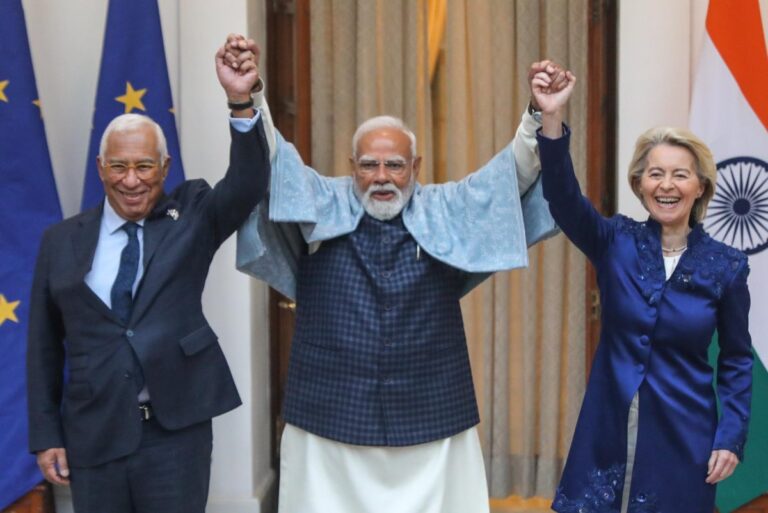
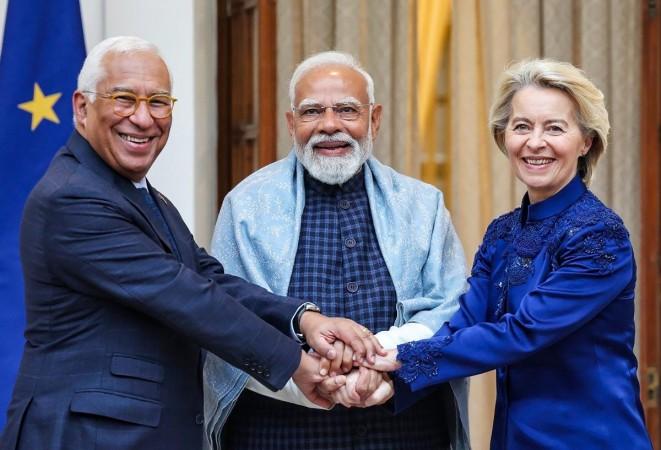
The trade deal announced recently by European Commission President Ursula von der Leyen, European Council President Antonio Costa and Prime Minister Narendra Modi promises to bring about two billion consumers and a quarter of global GDP closer together.
Ravinder Kaur, professor of Asian studies at the University of Copenhagen, writes that the broad scope of the evolving India-EU partnership “suggests a move towards greater convergence in terms of engagement with multilateral institutions and cooperation in a range of areas of security and defense, research, mobility and connectivity, including increased engagement in the Indo-Pacific region.”
As the United States withdraws from the Western Hemisphere, the Indo-Pacific region – once central to US engagement in Asia – is now more open to collaboration with the EU, she adds.
“The post-American world is already taking shape,” and the massive trade deal between the EU and India is one example.
Brussels recently concluded a trade deal with the South American trade bloc Mercosur, and several more are in the works. According to the report, India has entered into agreements with the United Kingdom and New Zealand in recent months.
“While ratification and implementation take time, and may even face an obstacle or two (like the delay of the EU-Mercosur deal), it suggests a change that is unmistakable,” Kaur writes, adding that “the world that many outside the West have long dreamed of – of multipolarity, strategic autonomy, even dedollarization – is taking shape, at first slowly, now quickly.”
Meanwhile, the free trade agreement between India and the European Union was concluded last month, which could have pushed the United States to strike a trade deal with India, according to a South Asia expert at the Asia Society in New York.
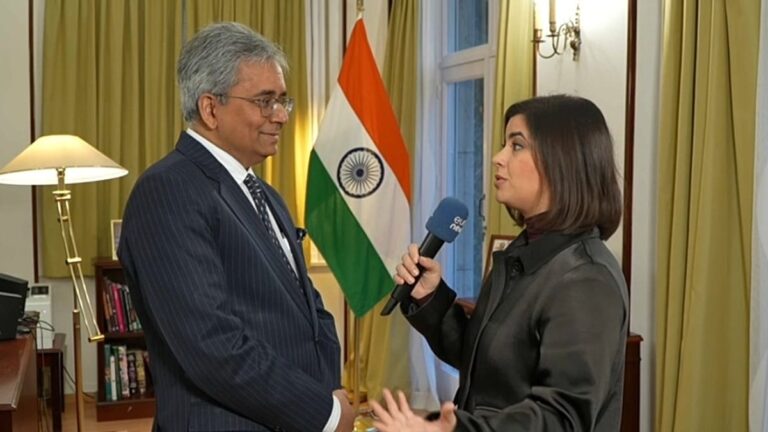
“Even though trade talks between India and the US had been going on for some time, the deal with the EU could have spurred the US to move forward,” said Farwa Aamer, director of South Asia initiatives at the Asia Society Policy Institute (ASPI). “The timing is interesting since the agreement comes just after the EU-FTA,” she added.
(With inputs from IANS)
About The Author