Around 2,200 players in the sustainable food sector, including more than 100 from India, are exhibiting their products over four days at BIOFACH 2026, the world’s leading trade fair for organic food, at the Nuremberg Exhibition Center.
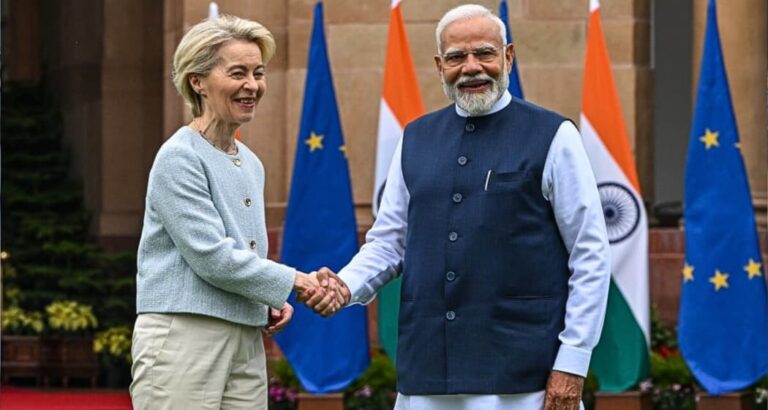
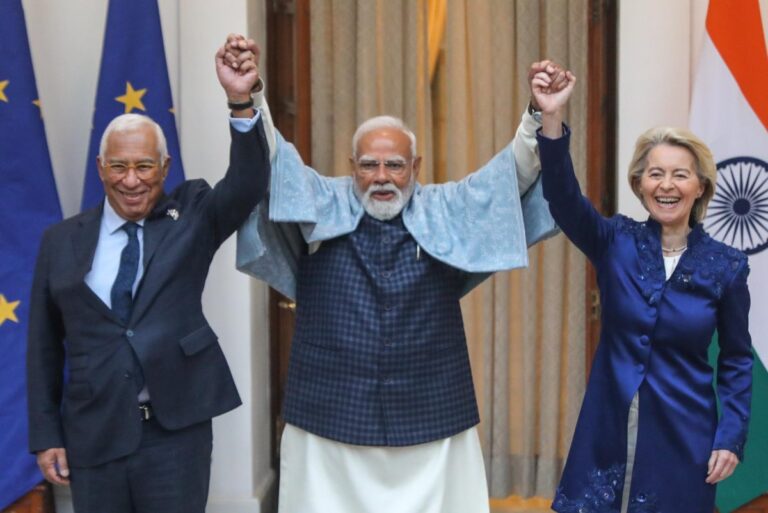
The show comes at an opportune time, as India and the 27-nation European Union announce the conclusion of negotiations for a free trade agreement on January 27 after nearly two decades of negotiations. It is expected to be signed and implemented in about a year.
According to organic food industry experts, the deal opens up opportunities worth $60 billion for Indian exporters of organic products in the EU. The agreement also offers a market of 140 million consumers to EU countries.
Under the agreement, the two sides will eliminate and reduce import duties on hundreds of goods to promote bilateral trade.

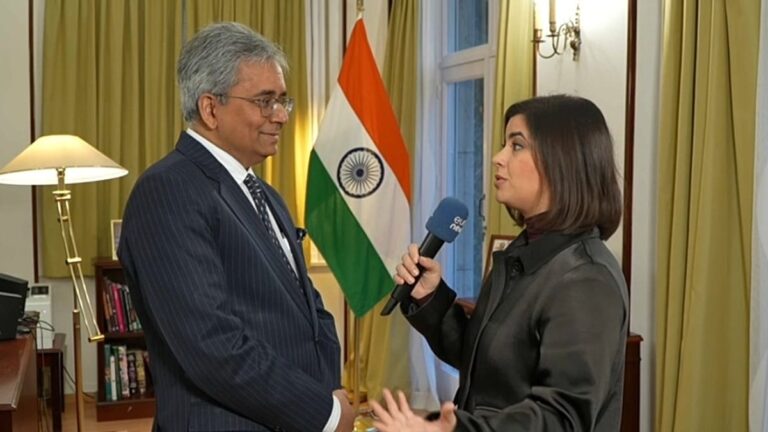
“The sector offers huge opportunities for both parties,” said Abhishek Dev, chairman of the Agricultural and Processed Food Products Export Development Authority (APEDA).
India marked a significant presence as ‘Country of the Year’ at BIOFACH. APEDA, under the Ministry of Commerce, is organizing India’s participation in the fair, showcasing the country’s rich agricultural heritage and its growing stature as a reliable global supplier of organic products. Trade visitors will gain insight into Indian organic products, value creation models and partnership opportunities, he said. Indian organic food exports in 2024-25 stood at $667 million.
The India Pavilion was inaugurated by Commerce Secretary Rajesh Agrawal, in the presence of Manipur Additional Chief Secretary Vivek Dewangan; Minister (Personnel), Indian Embassy Berlin, Mandeep Singh Tuli; and Joint Secretary, Ministry of Cooperation, Raman Kumar.
Companies participating in the show, ranging from organic juice and snack makers to cereal producers and soft drinks companies, were united in saying that the deal would help boost trade in this segment.
Several companies from regions like France are actively looking for local partners in India to sell their products.
“If demand increases in India, we can start manufacturing in India,” said a snack maker.
However, both regions need to work on certification issues that are currently creating a problem in exporting goods, said Nagendra Kumar H, CEO and co-founder Rajamudi. The Karnataka-based company is engaged in trading organic sites, herbs and grains.
“The FTA will help increase exports to the EU, but the government must work to resolve compliance issues of EU exporters. We can meet the demand of the Indian diaspora in the EU,” Kumar said, adding that his company exports to Ireland, Germany and the Netherlands.
Maharashtra-based organic juice maker RUS Organic, founder Ujvala said there is a huge demand in Europe for such products.
“At present, we are exporting to Israel and Dubai. We are looking to raise Rs 3 crore for further expansion. I have already spent around Rs 20 crore so far. We want to double our capacity from the current four lakh bottles per month,” Ujvala said. The start-up, which started operations in 2019, sources fruits from different states in India.
She added that growing demand in global markets will help the company increase its turnover.
Rejaiv MD KS Singhal, who works in the organic food sector, said the deal would help increase the reach of Indian products in the EU.
European companies are also optimistic that India’s 140 million consumer base offers them huge business opportunities.
Moldova-based lavender oil maker Stela Melnic, founder of Floral Remedy, said he wants to export to India.
“The oil is used in the cosmetic industry. We are planning to export to India. Simple certification processes can help us a lot,” she said.
The CEO of Hollinger, Austria-based organic drinks maker Axel Fila, said he had “good” meetings with some Indian companies and his company was exploring opportunities to start exports to India leveraging the deal.
“There are some issues at the certification level. EU certificates are not accepted in India. Both sides need to work on this,” he said.
The APEDA president said the Indian government was taking steps to strengthen certification and organic testing laboratories.
Companies from other countries, including Southeast Asia and Africa, are also keen to increase their exports of organic products to India.
South Africa-based essential oil manufacturer Rosehip Farm said its product is used in both the cosmetic and drug industry and it is interested in the Indian market.
“At the moment we are not exporting to India, but we are definitely looking at entering India,” said Celeste Gericke, owner of Rosehip Farm.
About The Author