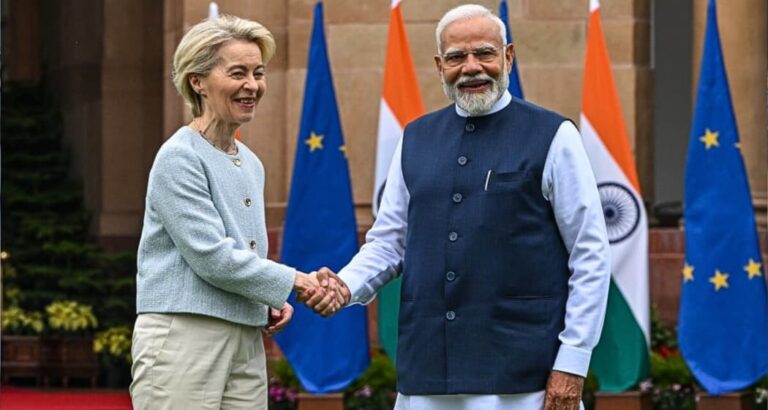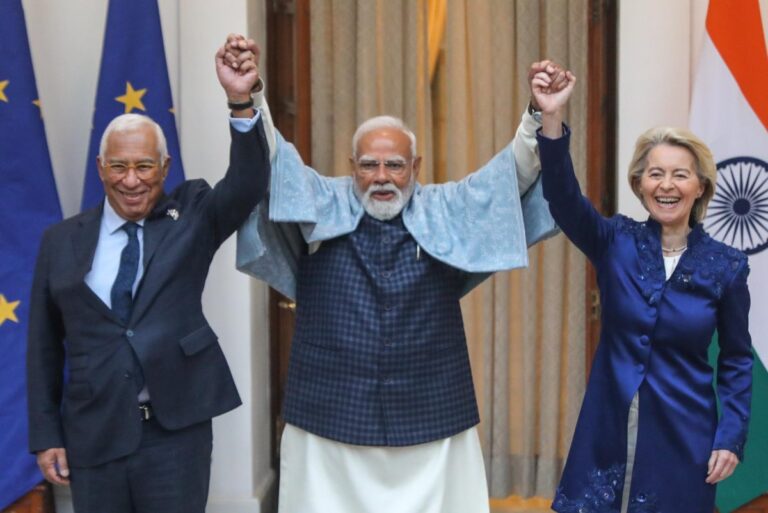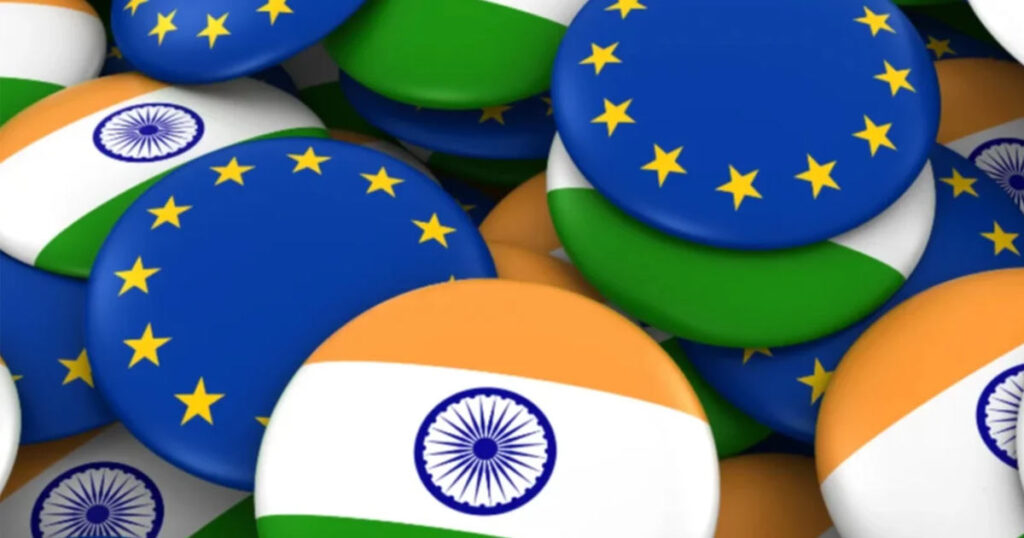

After decades of negotiations, the European Union and India concluded a free trade agreement in 2017. January 2026. The President of the European Commission, Ursula von der Leyendescribed the agreement as “the mother of all trade agreements”. At first glance, the agreement is convincing: the EU and India host approximately two billion peopleor about a quarter of the world’s population. The two economic zones represent around a quarter of global economic output. The EU-India trade deal is the largest trade agreement ever concluded by the two countries. This will strengthen trade, investment and political relations between the world’s two largest democracies. It aims to remove trade barriers and simplify procedures, open up new export opportunities and strengthen the economic security of India and the EU by diversify sources of supply.
Trump’s catalytic effect
While many observers had already dismissed the free trade agreement between the European Union and India, a new dynamic emerged in 2025. Indian media described the agreement as a “forced marriage”. The American president had seriously offended the European and Indian governments. Old European colleagues were astonished at Trump’s dismissive tone, while his treatment of Prime Minister Modi, who made an official working visit to Trump on February 13 The year 2025, shortly after Trump’s re-election to the White House, was no better. If Trump and his advisers expected reviled partner governments to react passively to the United States going it alone, they were wrong. The EU and India have taken radical and unexpected measures. In the Europe-India Free Trade Agreement, the European Commission abandons its previous policy of imposing European social and environmental preferences in side agreements. The planned agreement will therefore not have to be approved by the parliaments of the EU member states, because it is a trade agreement and Brussels is solely responsible for this policy area. It remains unclear, however, whether the investment protection clauses contained in the agreement could mean that member state parliaments will ultimately have to give their approval.
If Trump and his advisers expected vilified partner governments to react passively to the United States going it alone, they were wrong. The EU and India have taken radical and unexpected measures.
Modi also took the bull by the horns and further liberalized India’s foreign trade. In addition to the agreement with the EU, Indian and American negotiators also reached a broad agreement. Furthermore, Modi is moving forward and has started negotiations with the Gulf Cooperation Council (GCC) in February 2026. The Gulf states play a central role for India’s foreign trade: they account for 15% of India’s foreign trade. Annual growth rates for bilateral trade are around 15 percent per year over the past five years. In India’s fiscal year 2025, trade with the Gulf States amounted to approximately 180 billion US dollarssurpassing the volume of Indian trade with the EU, which stood at around US$136 billion.
Critical Warnings
The European Commission’s euphoric attitude is understandable given Trump’s reprimands. Yet he overestimates the importance of the agreement: if we consider economic performance rather than population size, the EU-Japan agreement, which entered into force in 2019, when Japan had a gross domestic product above 5 trillion US dollars in 2019was more significant.
Furthermore, the EU-India Free Trade Area should not be wrongly considered a liberal economic area. As in all free trade zones, only goods considered to be Indian or European products under the agreed rules of origin can be traded duty-free. Rules of origin are opaque trade barriers, compliance with which entails costs for trading companies. However, the Euro-Indian agreement is not based on uniform rules, such as minimum added value, but on product-specific rules of origin. For businesses, this means product-specific opacity.
India emphasizes that the product-specific rules (PSRs) are balanced and aligned with existing supply chains. These PSR would ensure that significant transformation takes place in India or the EU. The rules of origin aim to prevent abuse of the trade agreement, for example by Chinese companies. It is nevertheless striking to note that these supposedly tailor-made rules have a major drawback: they codify the current economic and commercial structure and can prevent the dynamic development of economic relations between Europe and India.
Another highly controversial area is the EU’s Carbon Border Adjustment Mechanism (CBAM), in place since early 2026. Indian exports of steel, aluminum, cement and fertilizers are affected by this tariff. These exports are important to the Indian economy, and the development and implementation of an Indian emissions trading system will likely take many years. Until then, the Indian government will rightly view CBAM as a protectionist tool. Future conflicts are inevitable.
However, the Indian government has obtained assurances that exemptions from climate protection tariffs that the EU will grant to other countries in the future will also benefit India. So this is a sort of most favored nation clause in the area of European climate tariffs. It doesn’t take much imagination to envision an exemption for products from American manufacturers, which would then also apply to Indian producers. However, this raises the question of whether the EU will be able to maintain its climate protection tariffs. It seems entirely possible that the Indian government is speculating that European climate protection policy could collapse like a house of cards.
A big step forward in turbulent times
The liberalization of trade between the EU and India constitutes an important and useful step forward. The signal is that the international division of labor will continue. Trump can create obstacles, but he cannot stop other countries’ trade policies.
After the European Parliament refused to approve the EU-Mercosur Free Trade Agreement and insisted that the deal be reviewed by the European Court of Justice, the question inevitably arises whether the deal with India could also fail. The European Council must approve the agreement by qualified majority, as does the European Parliament. If the agreement qualifies as a so-called mixed agreement, which also affects the legislative powers of member states, all EU parliaments would also have to approve it. This process could be long and arduous. However, the question of the nature of the agreement has not yet been definitively answered.
InIndia and the EU could, over time, consider establishing a new global trade regime or joining and modernizing an existing club, for example the CPTTP Trans-Pacific Partnership.
However, the EU-India FTA does not solve the problem of multilateral trade regulation. The WTO has fallen into oblivion and will not be resurrected any time soon. India and the EU could, over time, consider establishing a new global trade regime or joining and modernizing an existing club, for example the CPTTP Trans-Pacific Partnership. Of course, today it’s an empty promise. But relying exclusively on bilateral trade deals is only a second-best solution due to the limited scope and bureaucratic side effects that such deals inevitably entail.
Dr Héribert Dieter is an assistant professor at the University of Potsdam and the National Institute for Advanced Studies in Bangalore.
The opinions expressed above are those of the author(s). ORF research and analysis now available on Telegram! Click here to access our curated content – blogs, long forms and interviews.
About The Author