London
—
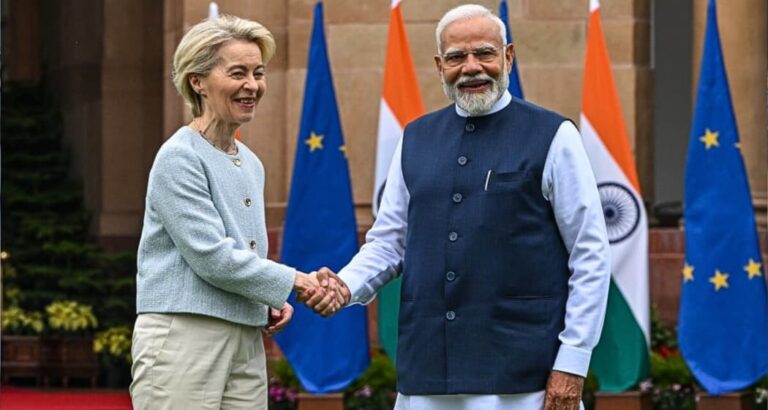
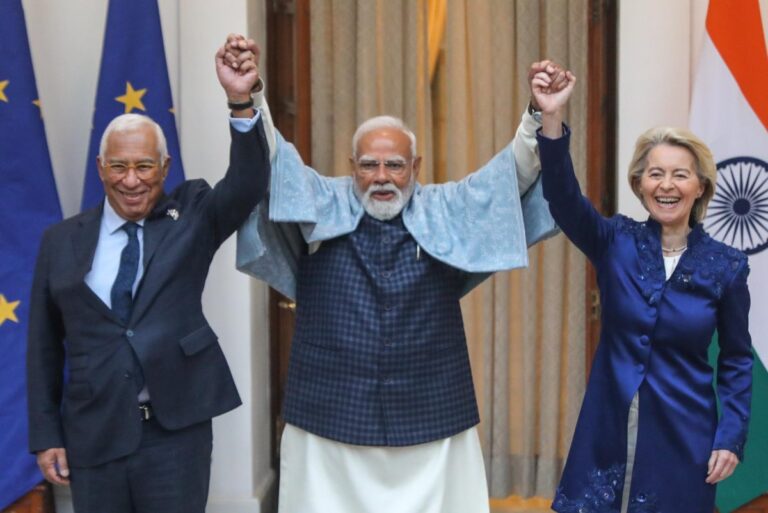
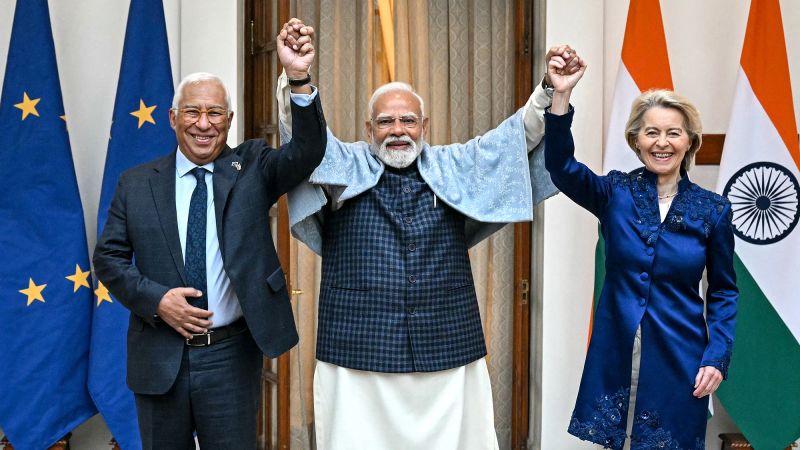
The European Union and India concluded a free trade agreement on Tuesday, the largest such agreement ever concluded by the two sides, as they face erratic trade policy from their main trading partner, the United States.
“We have done it, we have concluded the mother of all deals,” Ursula von der Leyen, president of the European Commission, the EU’s executive branch, told reporters in New Delhi.
The agreement will strengthen economic and political ties between the 27-nation bloc and the world’s fourth-largest economy, the commission said in a statement. statement“at a time of growing geopolitical tensions and global economic challenges, underscoring their shared commitment to economic openness and rules-based trade.”
“We have sent a signal to the world that rules-based cooperation always yields excellent results,” von der Leyen said in the statement.
Most recently, US President Donald Trump threatened to impose higher tariffs on European countries that opposed his attempted annexation of Greenland, which belongs to Denmark, although he later backed down from his threats. For the EU as a whole, the United States is the largest export market.
And in August, Trump announced an additional 25% tariff on India as punishment for importing Russian oil and natural gas, building on a previously announced 25% tariff rate.
The EU and India already trade more than €180 billion ($215 billion) worth of goods and services a year. Trade in goods between the two sides has almost doubled over the last decade.
Negotiations on the trade deal, which began in 2007, were restarted in 2022 after a long suspension, and last week von der Leyen highlighted work on the deal by speaking of the need to build “a new form of European independence.” Speaking in Davos, Switzerland, she said such independence was necessary due to current geopolitical shocks and the fact that Europe preferred “fair trade to tariffs”.
Tuesday’s announcement follows a recent trade deal between the EU and Mercosur, a South American trade bloc.
India also signed trade agreements with various countries in 2025, a year marked by Trump’s return to the White House and his chaotic trade policy.
The EU-India deal is expected to double EU exports of goods to India by 2032 by eliminating or reducing customs duties, the European Commission said.
Under a number of provisions of the deal, Indian tariffs on European cars will gradually fall from 110% to 10% and tariffs on machinery, chemicals and pharmaceuticals from Europe will mostly disappear.
India’s tariffs on EU wines will also be halved from 150% to 75% and will eventually fall to 20%, while tariffs on European olive oil will drop from 45% to zero over five years.
The EU will also reduce its customs duties on Indian products, benefiting labor-intensive sectors such as textiles, tea, spices, gems and jewelry, among others, India’s commerce ministry said in a statement. statement.
Daniel Kral, senior economist at consultancy Oxford Economics, said the deal “has great symbolic importance in a world of growing protectionism”, noting that it is unlikely to significantly boost the European or Indian economies.
The agreement still needs to go through various legal stages before coming into force.
About The Author