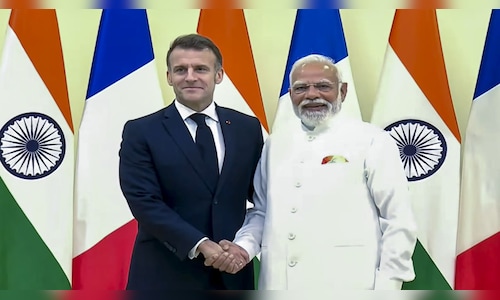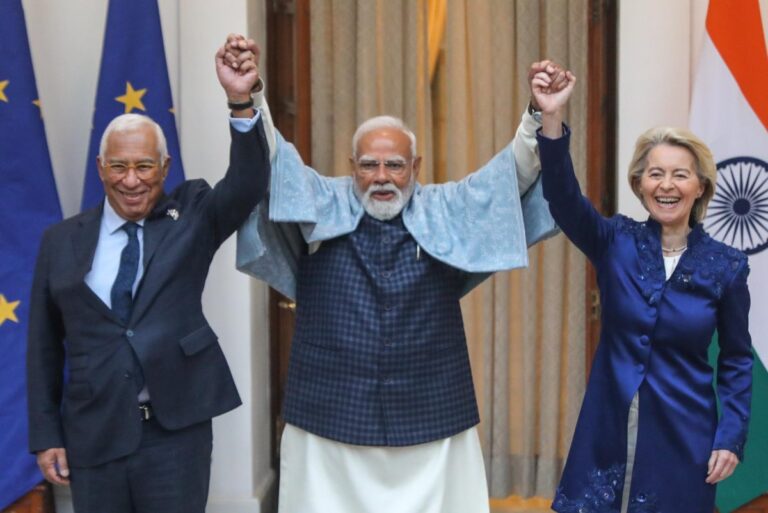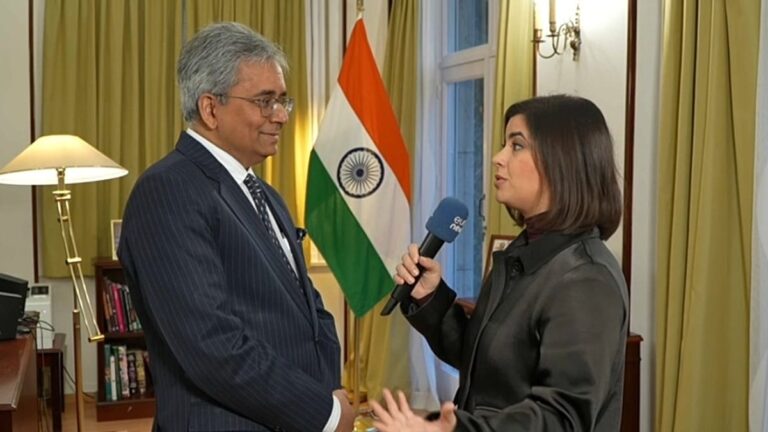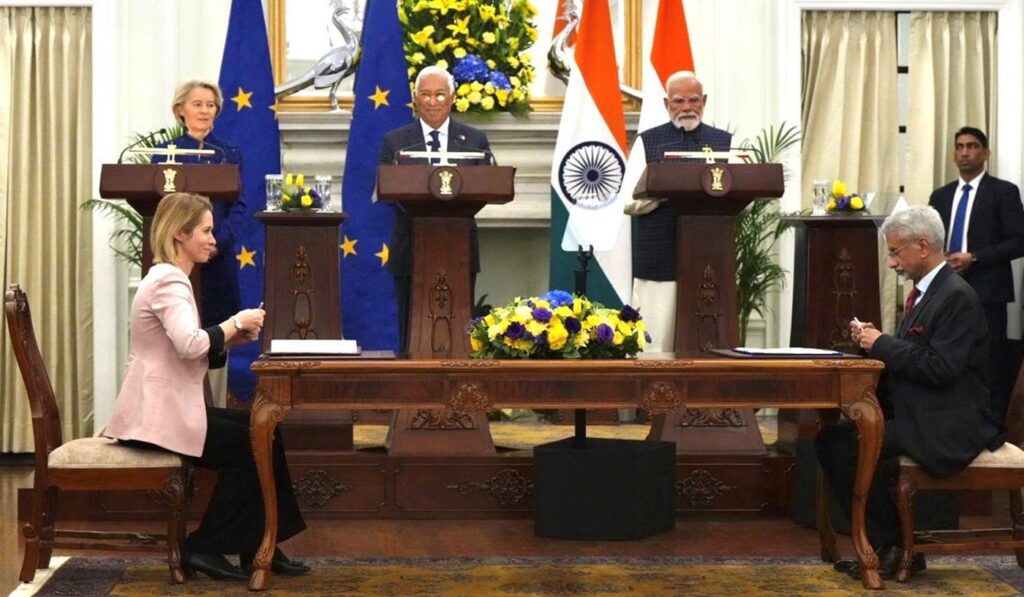

- EU leaders visited New Delhi on January 27 for talks with Indian government ministers to cultivate a closer working partnership in defense and security.
- But both sides are pursuing a policy of strategic autonomy, eager to increase their defense industrial competitiveness, overwhelmed by a flood of American and Russian defense systems.
- Yet there could be common ground as the EU seeks access to materials and components while India taps the European defense market.
A new Security and Defense Partnership (SDP) was signed by EU High Representative Kaja Kallas and Indian Foreign Minister Subrahmanyam Jaishankar in New Delhi on the sidelines of a January 27 summit that also included the signing of a separate free trade agreement.
The SDP forms the cornerstone of a closer working relationship between the two political regimes in a fractured geopolitical landscape in which the US and Chinese orbits offer little room for maneuver.

Discover effective B2B marketing
Combine business intelligence and editorial excellence to reach engaged professionals across 36 leading media platforms.
Learn more
The US president’s threat to impose tariffs on Greenland and China’s aggressive posture in the Indo-Pacific, have forced aspiring powers to find their own way; a sentiment that featured in Canadian Prime Minister Mark Carney’s speech speech in Davos, touted for his astute vision of the world order.
Key areas of cooperation between the EU and India include the security of the Indian Ocean region and measures to integrate defense industrial supply chains. For a deal of this scale, there are three key implications to consider as both sides seek to increase their strategic autonomy.
SECURE regulations
One of the implications of the SDP is that it now allows India to participate in the European Security Action For Europe (SAFE) regulation, among other financial instruments.
The SAFE Regulation is a temporary loan program that the EU introduced in May 2025 to provide up to €150 billion in loans to member states with the aim of helping to rapidly accelerate defense production, procurement and industrial capacity.
Any country that has concluded an SDP with the bloc is eligible to participate in the financial mechanism. However, third countries must comply with the requirement that no more than 35% of the costs of components of joint defense projects come from outside the EU.
This now puts India on a par with the UK, for example, whose government recently failed to secure differential treatment in 2025. The UK is said to have tried to increase the cap, but this came with a €6 billion fee, which London determined was not cost-effective.
A diversified supply chain
Defense Minister Rajnath Singh reportedly cajoled EU diplomats during the negotiations when he suggested that India’s defense industry could play a “significant role” in the EU’s broader ReArm initiative, which commits 800 billion euros to defense by 2030, especially as the bloc wants to quickly diversify its suppliers, reduce dependency risks and tap India’s growing manufacturing base.
“While the EU initiative emphasizes the development of advanced weapons systems in Europe using domestic industrial capacity, a notable gap remains at the lower end of the spectrum,” observed Abhijit Apsingikar, defense analyst at GlobalData, referring to munitions, unmanned aerial systems and stray munitions, which he said could be sourced from Indian suppliers at a “significantly lower cost.”
Indian aerospace companies such as Tata Advanced Systems already operate a local assembly line for the Airbus C-295 light transport aircraft in India. European aerospace and defense companies could deepen their partnerships to source aerostructures and other fuselage components from Tata.
However, at the same time, European policymakers should approach integration gradually. This stems from concerns about the lack of regulatory alignment, technological protection and assurance when it comes to insulating European supply chains.
Technology transfers
Currently, the Indian armed forces place their trust in French defense suppliers, constrained by the performance of Scorpeneof American-class submarines and the foreseeable deadlines and state of readiness of Rafale combat aircraft.
But other European systems remain competitive in areas such as advanced naval propulsion, aerospace components, electronic warfare suites and precision munitions.
However, India’s procurement strategy is now firmly anchored in the development of the domestic defense industry, marked by the government’s ‘Atmanirbhar Bharat’ (self-reliant India) campaign.
“European sales (are) more viable when structured around joint production or co-development rather than direct imports,” said Walter Ladwig III, a research associate at the Royal United Services Institute in their Indo-Pacific program.
“The appetite is there,” he continued, “but it increasingly depends on whether cooperation strengthens India’s long-term industrial self-reliance rather than simply filling capacity gaps.”

Sign up for our daily news roundup!
Give your business an edge with our industry-leading knowledge.
About The Author