Maintaining deeper ties will require compromise on both sides in the long run
“It is not just Brussels that is investing heavily in new relationships. New Delhi is also seeking to diversify its markets in the wake of punitive tariffs imposed by the United States. As such, it sends a powerful message in an era of rapidly changing global alliances.
It is therefore appropriate to recognize that the current bonhomie in India-Europe relations will be tested on the ground in the coming days.

India and Europe appear poised to bridge a decades-long gap. There has been greater confluence with the United Kingdom, given the colonial history and ease of communication in the English language. A common language has also helped promote close relations with the United States, as well as a highly educated diaspora.
As for Europe, multinationals have invested considerable sums, but the flows have been much lower than those in China. Economic ties have also faced obstacles posed by the European Commission’s complex bureaucracy and rigid regulations. Despite this, trade between India and the European Union (EU) has grown rapidly over the years.
The latest official data shows that annual merchandise trade between India and the EU stood at $136 billion in 2024-25. This is even more than the $132 billion in trade recorded with the United States. The EU is India’s largest trading partner, but the long-awaited deal with the United States has attracted far more hype than the one with the EU. This is mainly due to the tariff drama of US President Donald Trump, who has used the trade instrument as a blunt weapon of his foreign policy.
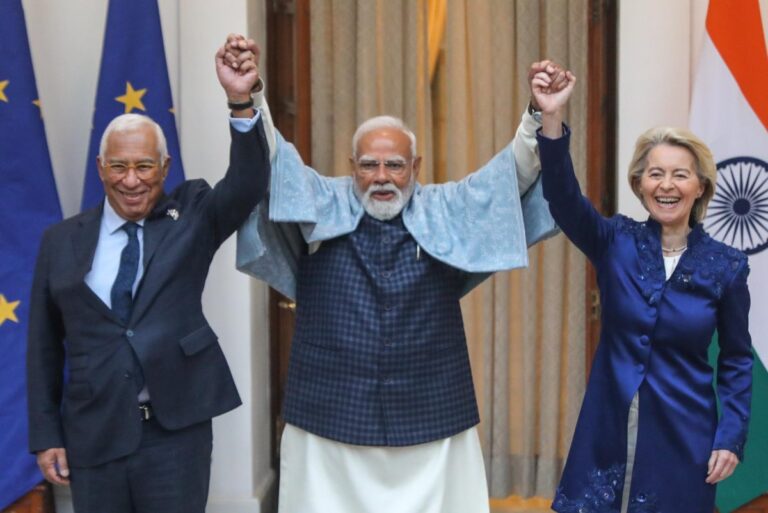
At the World Economic Forum summit in Davos last week, the buzz was around Trump’s summary dismissal of Europe on a wide range of issues, from Greenland to the role of NATO. Similarly, Canadian Prime Minister Mark Carney’s call for middle powers to create a new world order caused a stir. It was at this time, when the post-World War II rules-based international system appeared to be collapsing, that EU leaders visited New Delhi for a high-level summit and were guests of honor on Republic Day. The unveiling of a free trade agreement (FTA) at this stage could not have been more timely, as Europe clearly seeks to reduce its economic dependence on the United States. New ties are being forged quickly as the trade deal with India follows the EU striking a deal with Latin America’s largest trading bloc, Mercosur.
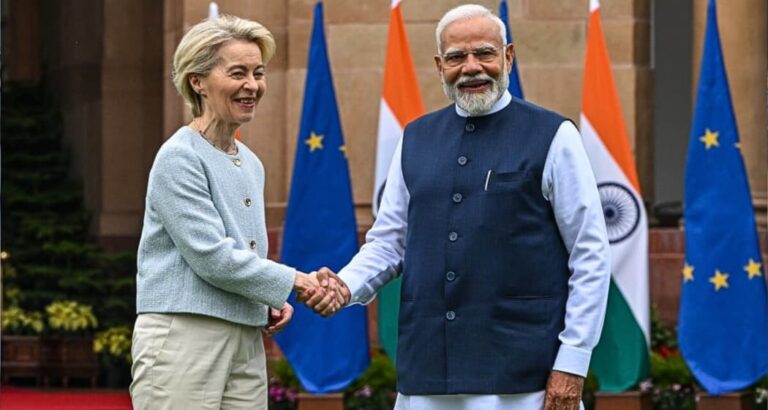
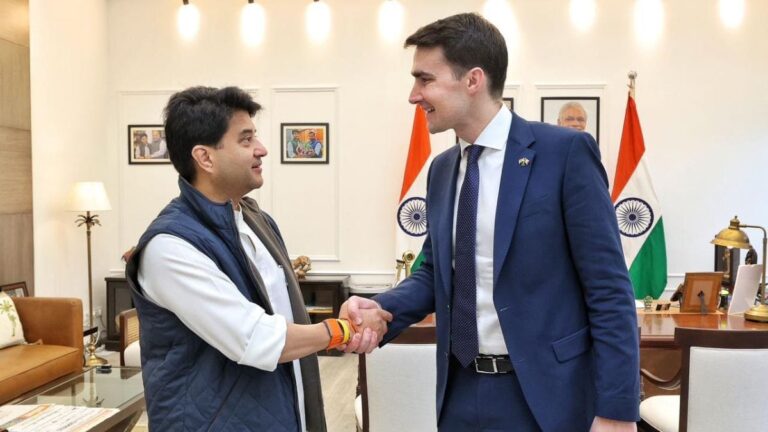
It is not just Brussels that is investing massively in new relationships. New Delhi is also seeking to diversify its markets following punitive tariffs imposed by the United States. There is a mutual recognition of the value of a close partnership. This translates into not only a trade agreement, but also a security and defense partnership. This would be only the third such agreement signed by the EU, the other two being with Japan and South Korea. As such, it sends a powerful message in an era of rapidly evolving global alliances.
At the same time, maintaining deeper ties between India and the EU will require compromises from both sides in the long term. The newfound warmth appeared after many years of frost. It is worth remembering that the current FTA has been under discussion for 18 years. Negotiations were even suspended in 2014, then resumed in 2022. The reason is rigidity on both sides, with red lines being firmly drawn without any effort at flexibility.
In the future, the first area of conflict may be the bureaucracy of the European Commission, legendary for its tangle of rules. In fact, some Brexit supporters have cited the EU’s regulatory complexity as a reason to exit the economic bloc. There is no doubt that, in contrast, the FTA with the UK has progressed much more quickly despite several changes at the top during the negotiations. Boris Johnson was Prime Minister at the start of the negotiations, while it was Keir Starmer who ultimately signed the deal.
There are therefore potential irritants, particularly with regard to a wide range of non-tariff barriers. The most controversial is the Carbon Border Adjustment Mechanism (CBAM), which could affect the final cost of myriad Indian exports, particularly steel, aluminum and cement. This flies in the face of studies showing that the environmental impact of these emissions is minimal. According to an UNCTAD report, the value of CBAM in mitigating climate change is limited as it would only reduce 0.1 percent of global CO2 emissions.
Another crucial issue for India is the greater ease of movement of skilled professionals. While the United States has benefited greatly from relaxed entry policies for highly skilled personnel, Europe has lagged behind in this regard. This is despite countries like Germany now looking to attract high-tech professionals, particularly following restrictions on H-1B visas. The new mobility agreement that is being put in place could ultimately fill this gap, even if it places a large emphasis on students and research.
The need to understand India’s red lines in terms of market access will also be an important factor in expanding economic ties. Dairy and agriculture have always been contentious issues between the two parties. The EU has often taken sharply divergent positions within the World Trade Organization on agriculture, including on the need to protect the livelihoods of farmers surviving at subsistence levels, even as huge subsidies are given to wealthy farmers in developed economies. A better understanding of these issues is needed on multilateral platforms.
It is therefore appropriate to recognize that the current bonhomie in India-Europe relations will be tested on the ground in the coming days. Among the positives, the free trade pact was finalized through a determined effort to be more flexible, given external headwinds on the trade front. Even India has had to recognize that better market access can yield rich dividends by providing equivalent access to a huge market of developed economies.
Both sides must nevertheless cut the red tape for which Brussels and New Delhi have a well-deserved reputation. In the context of a changing world order, it is hoped that efforts will be made to do whatever is necessary to improve economic and strategic relations. Only this firm determination will ensure better prospects for Indo-European relations.
(Sushma Ramachandran is a columnist at The Tribune)
About The Author