Issue
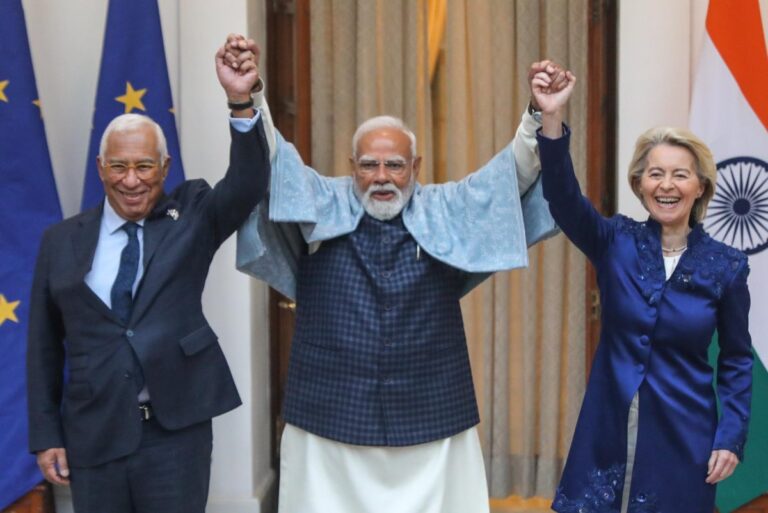
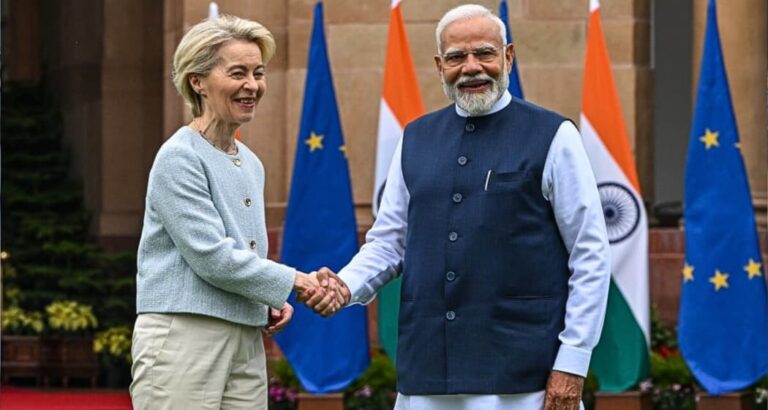
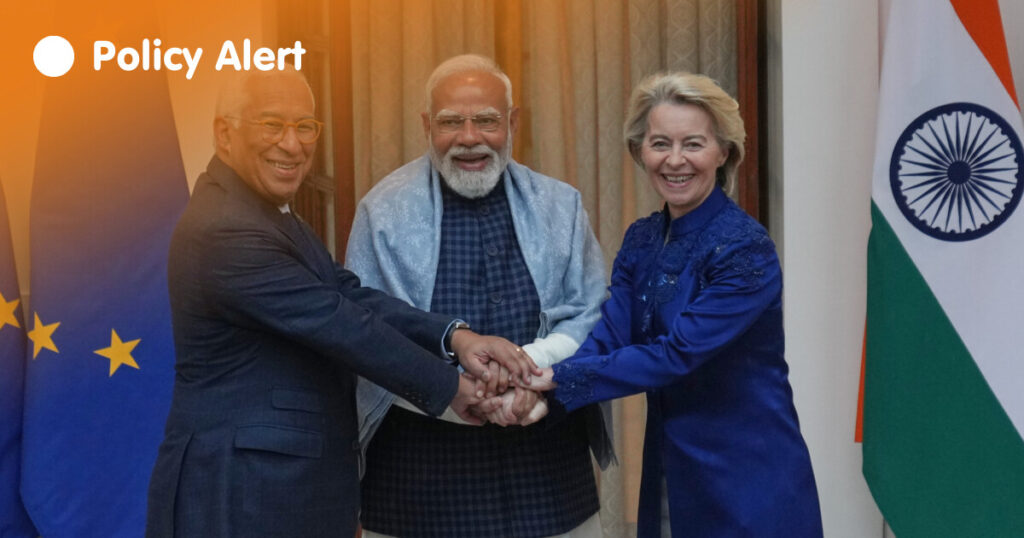
The conclusion of the EU-India Free Trade Agreement (FTA), announced today on the sidelines of the EU-India Summit in New Delhi, comes at a time of deep geopolitical and economic uncertainty. Global trade liberalization is reversing, supply chains are secure, and confidence in U.S. leadership is crumbling in the face of China’s growing influence. An ECFR poll shows that majorities in many major countries now expect Chinese influence to expand over the next decade. European leaders want a new era of geopolitical diversification, seeking new partners to compensate for the loss of the United States and solve the problems of a new fragmented world.
These shared strategic interests mean that the EU and India have now taken significant steps to move beyond historically underperforming relations. After nearly 20 years of stalled negotiations, the new FTA represents a significant achievement. It includes significant tariff reductions of more than 36 percent on European food products as well as European cars (a gradual reduction from 110% to 10%, with a quota of 250,000 vehicles per year). Tariff changes affect approximately 96 to 97% of the value of trade between the two economies, with savings estimated at around 4 billion euros per year in customs duties on EU exports only.
But even with the free trade deal now concluded, unresolved frictions remain. This includes sustainability standards, including the EU’s Carbon Border Adjustment Mechanism (CBAM), as well as data governance, investment controls and intellectual property. Without effective implementation mechanisms, the partnership risks reverting to episodic peaks rather than becoming a lasting pillar of risk reduction and European strategic autonomy.
Solution
The EU should now view the new FTA as a strategic platform and not an objective. First, Brussels should quickly use the new agreement to develop flagship supply chain projects in sectors where mutual dependence is already high. These include pharmaceuticals – India supplies about 20% of EU generic medicines: clean energy technologies and semiconductors. These projects should be supported by concrete EU financial instruments, such as Global Gateway guarantees and risk reduction incentives, to demonstrate political commitment beyond regulatory cooperation.
Second, the EU should improve the EU-India Trade and Technology Council. The current TTC format has not performed well and requires clearer mandates, measurable results and annual reporting. Part of this means stronger political leadership. But it will also require greater openness to businesses for high-level technology partnerships, supported by structured matchmaking, research inputs and civil society engagement.
Third, the EU should take a pragmatic approach to sustainability and regulatory divergence. In terms of CBAM, transitional arrangements, technical assistance and structured dialogue should take precedence over rigid conditionality. Mutual recognition and flexible implementation – rather than full regulatory convergence – will be key to policy sustainability.
Finally, Brussels and New Delhi should institutionalize regular coordination on trade, security and foreign policy, including joint initiatives in the G20, the WTO and climate negotiations. Acting together, the EU and India…representative nearly 2 billion people and around 25% of global GDP – can exert disproportionate influence over the development of contested global rules.
Context
The EU-India FTA is one of the largest trade agreements concluded in recent years, covering goods, services, investments, digital trade and regulatory cooperation. This reflects a shared recalibration toward strategic autonomy against a backdrop of unreliable U.S. leadership and a more coercive China. For the EU, India is at the heart of diversification and risk reduction; for India, Europe is a complementary partner alongside America, China and regional groupings. If effectively implemented, the agreement could become a model for 21st century trade governance focused on resilience, diversification and standard-setting, rather than just restricted market access.
The European Council on Foreign Relations does not take a collective position. ECFR publications represent solely the opinions of their individual authors.
About The Author