
 Hindustan Times via Getty Images
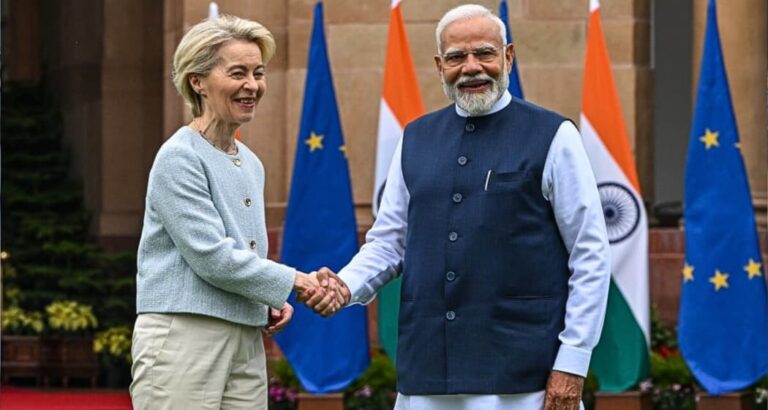
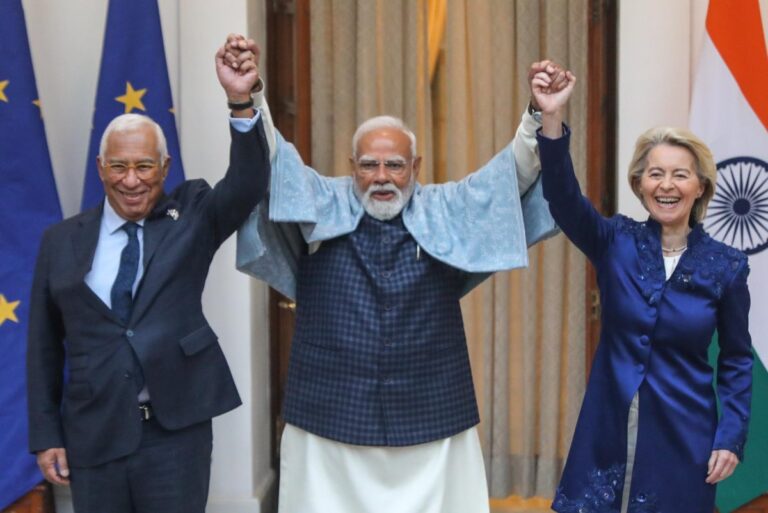
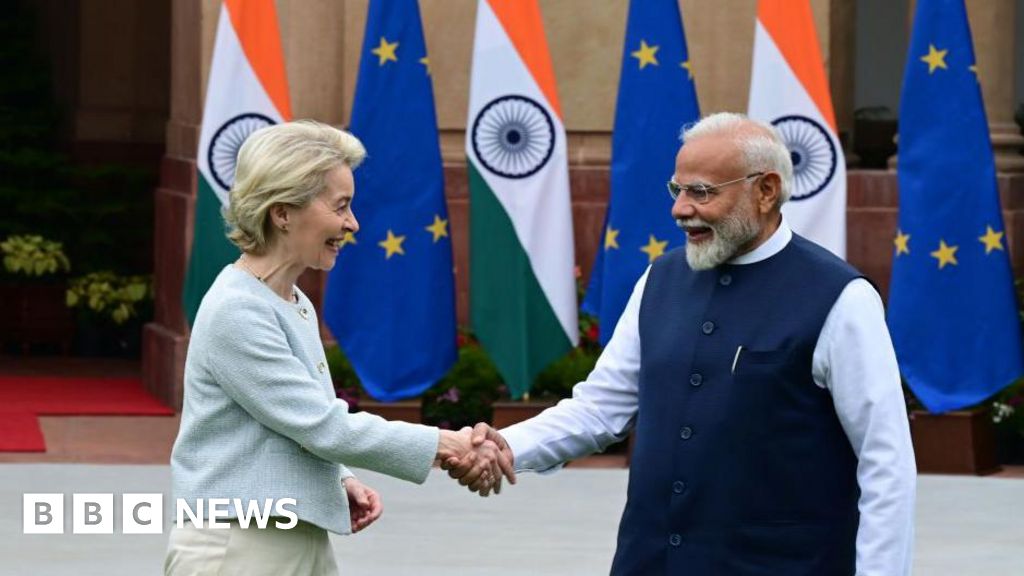
European Council President Antonio Luis Santos da Costa and European Commission President Ursula von der Leyen will be the chief guests at India’s Republic Day celebrations next Monday.
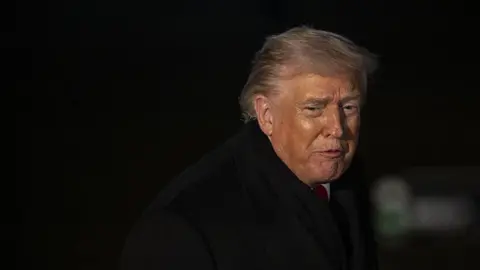
Besides the state banquets and the ceremonial pomp of the event, the two leaders will have a more pressing item on their agenda: advancing free trade negotiations with Asia’s third-largest economy. It comes at a particularly trying geopolitical moment for Europe, with President Donald Trump first threatening to escalate his trade war with European allies for opposing a U.S. takeover of Greenland and then backing down.
The choice of guests also conveys an important diplomatic message from India: Delhi is accelerating its strategic and trade relations with the rest of the world as the impasse over Washington’s 50% tariffs on India extends into the new year.
“(It) sends a signal that India maintains a diverse foreign policy… and is not subject to the whims of the Trump administration,” Chietigj Bajpaee of the London-based think tank Chatham House told the BBC.
Some reports indicate the deal could be announced as early as Jan. 27, when leaders from both sides meet for a high-level summit. von der Leyen and Indian Commerce Minister Piyush Goyal called him ” “the mother of all affairs” – underlining the importance they attached to the conclusion of the negotiations which are coming to an end after almost two decades of tough negotiations on both sides.
The deal will be India’s ninth free trade agreement (FTA) in four years, following a series of agreements with the United Kingdom, Oman, New Zealand and other countries. For Brussels, this follows the recently concluded trade agreement with the Mercosur trade bloc as well as Japan, South Korea and Vietnam.
“Both sides are now looking for reliable trading partners as geopolitical threats have created a tumultuous environment for trade. The urgency is equally strong: for India to offset US tariff problems, and for the EU to offset its trade dependence on China which it views as unreliable,” said Sumedha Dasgupta, senior analyst at the Economist Intelligence Unit.
The agreement will also mark “an ongoing and significant effort to shed India’s notoriously protectionist shell”, adds Dasgupta.
 AFP via Getty Images
Beyond the diplomatic signal, what is there to gain for both parties?
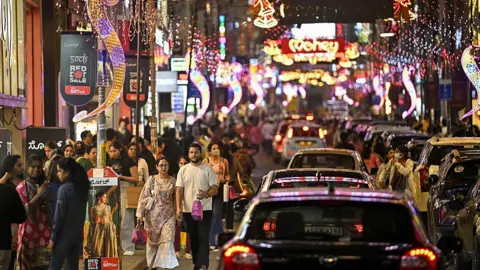
Closer trade ties with India are important for the European Union (EU) due to its growing economic stature. India is the world’s fourth-largest and fastest-growing economy, and is on track to surpass $4 trillion (£2.97 trillion) in GDP, surpassing Japan this year.
As von der Leyen said in his speech at the World Economic Forum in Davos, the union of the EU and India would create a free market of two billion people, representing a quarter of global GDP.
For Delhi, the EU is already its largest trading bloc, and the deal will mark the reinstatement of the so-called Generalized System of Preferences (GSP) – which removes import duties on products entering the EU market from developing countries.
“India exported around $76 billion worth of goods to the EU while importing $61 billion, running a trade surplus, but the withdrawal of EU GSP benefits in 2023 has eroded the competitiveness of many Indian products,” according to Ajay Srivastava of the Delhi-based Global Trade Research Initiative (GTRI).
“An FTA would restore lost market access, lower tariffs on key exports such as clothing, pharmaceuticals, steel, petroleum products and machinery and help Indian companies better absorb shocks from rising US tariffs,” Srivastava said.
But India is expected to protect politically sensitive areas like agriculture and dairy from the deal, while sectors like autos, wine and spirits will eventually see tariffs fall gradually, consistent with the approach it has taken in previous deals – such as with the UK.
“India’s tendency has been to adopt a phased approach in negotiating trade deals by moving more politically sensitive issues into later rounds of negotiations. In doing so, the geopolitical symbolism of the deal is as important as the economic substance,” says Bajpaee.
 Anadolu via Getty Images
Despite progress, deep divisions remain.
For Europe, the protection of intellectual property is a major concern. It seeks better data protection and stricter patent standards.
For India, a new carbon tax known as CBAM (Carbon Border Adjustment Mechanism) imposed by Europe starting this year constitutes a major fault line in the discussions.
The CBAM “effectively acts as a new border tax on Indian exports, even though import duties are removed under the FTA,” says GTRI’s Srivastava. “This is particularly damaging for MSMEs (micro, small and medium industries), which face high compliance costs, complex reporting requirements and the risk of being penalized by using inflated default emissions values.”
Whether the deal ultimately becomes a “growth-enhancing partnership or a strategically asymmetric deal” will depend on how these final issues are resolved, Srivastava says.
But in the long run, it will be a win-win, analysts say.
“Ultimately, this could accelerate trade decoupling from the United States and other unreliable partners. It would mean reducing reliance on Trump’s America – or China for that matter – and reducing vulnerabilities to recurring and recurring tariffs, export controls and the general militarization of supply chains,” said Alex Capri of the National University of Singapore.
According to Capri, India’s high carbon emissions and concerns about its human rights record have led to some resistance to the deal in Europe. But India’s reduction in its purchases of Russian crude oil from November 2025 could facilitate its smooth passage by the European Parliament, whose approval will be needed for the deal to come into force, analysts say.
“Political friction with the United States since early 2026 means that European leaders will now be more welcoming to this trade deal than they otherwise would have been,” says Dasgupta.
Follow BBC News India on Instagram, YouTube, X And Facebook.
About The Author