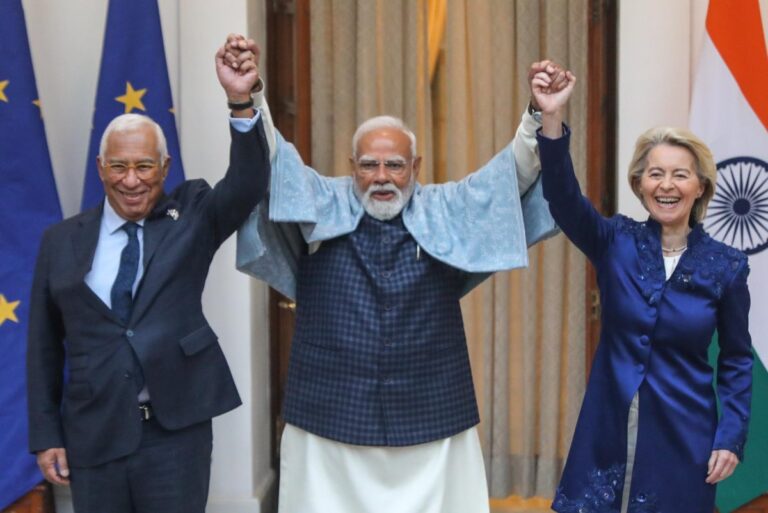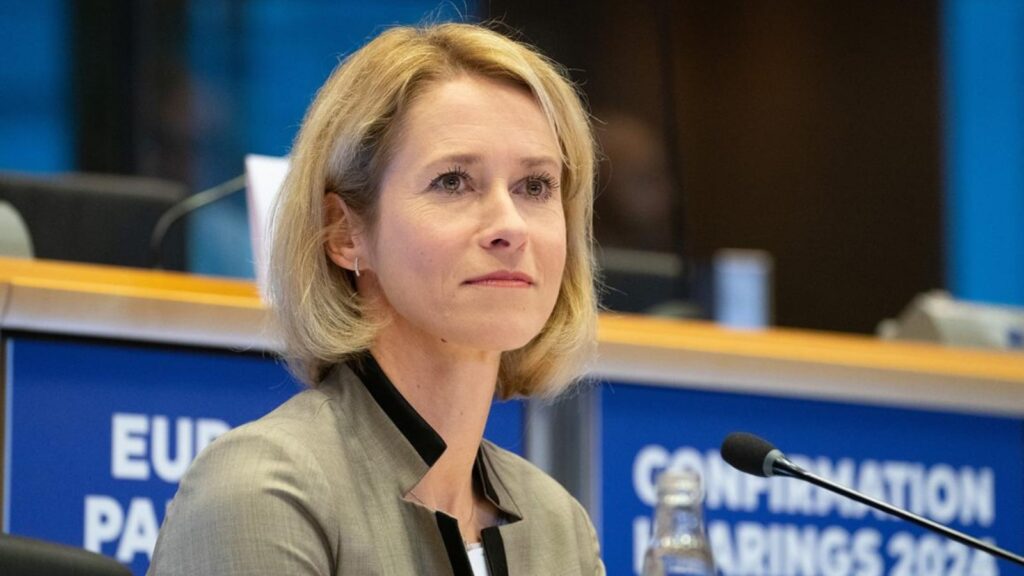
On the eve of the state visit of European Union leaders from January 25 to 27, the High Representative for Foreign Affairs and Security Policy and Vice-President of the European Commission, Kaja Kallas, said on Friday that the India-EU Free Trade Agreement is a “strategic choice” and offers a chance to reduce dependence on China, Russia and the United States.
In an exclusive interview with The Indian ExpressKallas, a former Estonian prime minister who also holds the rank equivalent to foreign minister, said the EU and India would sign a new security and defense partnership on January 27 at the India-EU leaders’ summit. She will attend the summit.

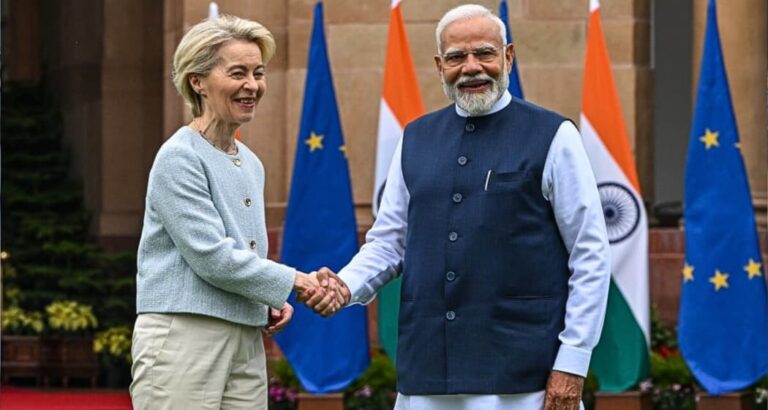
European Commission President Ursula von der Leyen is expected to arrive in India on Saturday and European Council President António Luís Santos da Costa on Sunday.
Both are the chief guests at the Republic Day celebrations on January 26 and will participate in the summit on January 27.
Edited excerpts:
How do you see the evolution of India-EU bilateral relations, from the first India-EU summit in 2000 to the first invitation extended to EU leaders in 2026 for Republic Day celebrations?
We started with dialogue and cooperation (and) today we act together in the areas of trade, security and technology. The invitation to EU leaders to join Republic Day is a great honor and reflects true trust. India is no longer just an important partner: it is a major strategic partner. This is a qualitative change.
How does the India-EU FTA strengthen economic relations?
The FTA will create a market for 2 billion people, which represents about a quarter of global GDP. The agreement will boost investment and growth, strengthen supply chains and open new opportunities for businesses on both sides. It also offers a chance to reduce dependence on China, Russia and the United States. At a time when free trade is under pressure and supply chains are being weaponized, deepening our economic partnership makes perfect sense. This agreement is a strategic choice.
India and the EU have also stepped up their defense and security efforts. Can Europe be an alternative to Russian defense equipment?
You only need to watch the news to see that the world is becoming more and more dangerous. It is therefore natural to deepen defense cooperation between the EU and India. The EU and India are increasing their defense spending because world events demand it. Next Tuesday, the EU and India will sign a new security and defense partnership. It will expand our cooperation in areas such as maritime security, counter-terrorism and cyber defense.
Story continues below this ad
We also want to intensify cooperation in the defense sector. India is a sovereign nation and will make its own choices regarding procurement. But one thing is clear: Europe is a reliable partner, which is not the case with Russia.
India and the EU have had differences over the Russia-Ukraine war, and India now feels it is being selectively targeted by the 50% tariffs imposed by the United States. How do you address these concerns?
Russia’s war against Ukraine poses an existential threat to Europe. Just as India considers its national interests, so does the EU. I have said before that India’s energy and defense ties with Russia cast a shadow over our cooperation. Europe is completely abandoning its imports of Russian fossil fuels, as we have learned the hard way that Russia uses energy for political blackmail. Fossil fuel sales remain a major source of revenue to finance its war, so less money for Russia means less war. A world in which borders can be changed by force is dangerous for all of us, including India. I regularly discuss these issues with my Indian counterparts. These conversations are frank and respectful.
How does the EU view the challenge from China, particularly its assertive behavior in the Indo-Pacific region, while India faces it along its disputed border and neighborhood?
Europe has major challenges in the Indo-Pacific region and we are acting accordingly. The EU is a major economic partner for many countries in the region. We also have security and defense partnerships with Japan and South Korea. We all share the same interest in keeping the region free, open and rules-based.
When it comes to China, we must recognize that our economic decisions directly affect our security. China is weaponizing trade, supporting Russia’s war in Ukraine, and acting aggressively in the South China Sea. Even though China is a major trading partner, we cannot allow our economic relations to come at the expense of our security. This is why the EU has put in place its own economic security strategy. We have a robust trade defense toolkit, from tighter controls on foreign subsidies and investments to anti-dumping duties. We are also taking steps to better protect critical infrastructure.
Story continues below this ad
How are India and the EU working together on advanced technologies, including artificial intelligence, semiconductors and supply chain resilience?
Technology is reshaping the world, and India and Europe are more likely to shape that future when we work together. The EU-India Trade and Technology Council can help align our approaches to critical technologies. We can bring together policymakers, start-ups and industry to shape standards and reduce dependencies.
As the US becomes an unpredictable destination for Indian students and professionals, what is the EU policy towards Indian students, professionals, businesses and tourists?
Indian students, professionals and entrepreneurs contribute greatly to European economies and societies. We want to deepen mobility, skills partnerships and links between our people. A strong partnership cannot be built by governments alone; it is built by citizens. I would like to see closer ties between our people.
About The Author