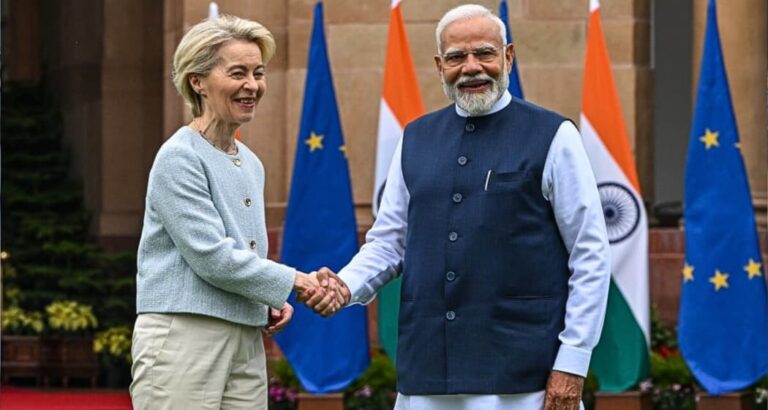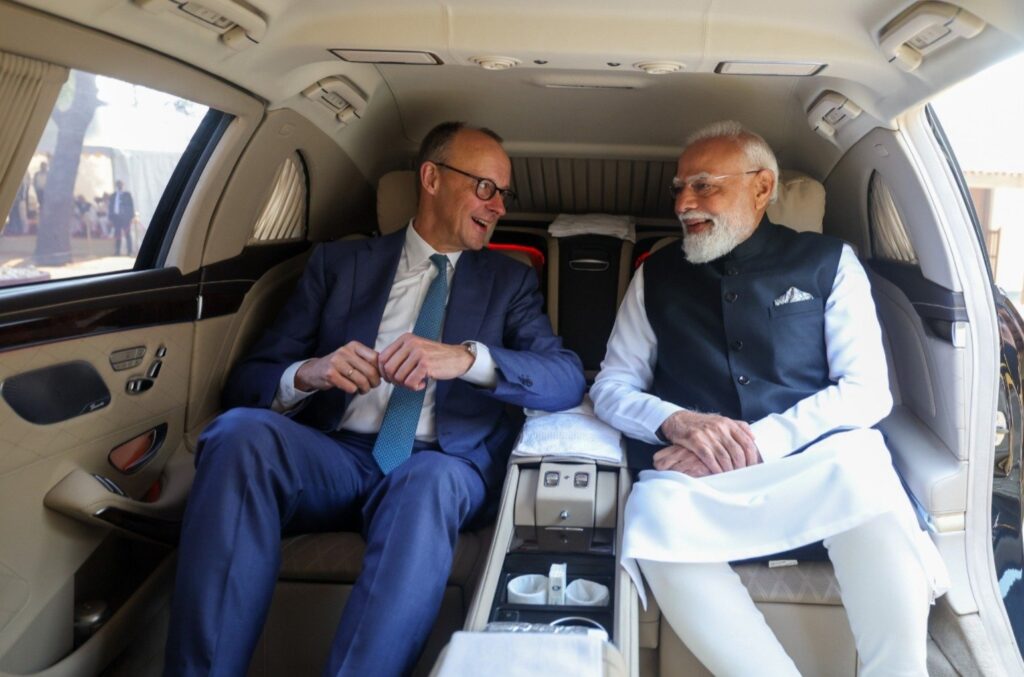
German Chancellor Friedrich Merz said an EU-India free trade deal could be concluded by the end of January 2026, arguing that negotiations are “close to completion” after talks with Prime Minister Narendra Modi in Gujarat.
Merz’s comments were made during a visit that included meetings in Ahmedabad/Gandhinagar and were presented by Berlin as an effort to deepen economic and security ties with India. Reuters reported that, if the remaining issues were resolved, EU leaders could visit India later this month to sign the deal. Indian and German officials issued a joint statement after the negotiations, framing the relationship as part of a broader strategic partnership and citing record bilateral trade in 2024.
The future EU-India deal would be the bloc’s most significant trade deal with a major emerging economy in more than a decade. It comes as the EU seeks to expand trade links beyond China and secure supply chains for essential inputs. Reuters reported that Merz criticized rising global protectionism during the trip, without naming specific countries, and linked the push for a deal to the broader global trade climate.
For the EU, the economic base is already solid. The European Commission’s trade factsheet said The EU accounted for €120 billion in merchandise trade with India in 2024, accounting for 11.5% of India’s total merchandise trade that year, while India was the EU’s ninth largest merchandise trading partner. The Commission also notes that trade in goods between the EU and India has increased significantly over the past decade.
The negotiations were running in their current form since June 2022, when the EU and India restarted negotiations on a free trade agreement alongside separate strands on investment protection and geographical indications. European Parliament “Legislative Train” briefing defines the structure as three side agreements and traces the longer history of the talks which began in 2007 and ended in 2013.
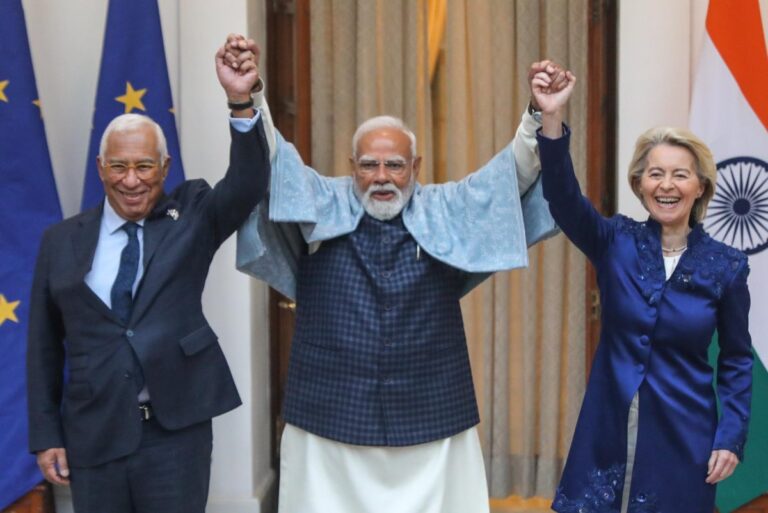
Merz’s timetable for late January matches Brussels’ expectations for a possible summit later this month. The note on the agenda of the European Parliament refers at a possible EU-India summit in New Delhi on January 27, 2026, with the hope that any final trade text will have to be settled beforehand if that date is confirmed.
On the Indian side, Commerce and Industry Minister Piyush Goyal has repeatedly said reported that the negotiations are in their “final stages”, notably after a January visit to Brussels for discussions with EU trade leaders. Reuters reported Goyal said the deal was “almost finalized”, after earlier ambitions to complete negotiations by the end of 2025 were not met.
Even though public messaging has emphasized proximity to a landing zone, the remaining contents of a package are expected to be politically sensitive on both sides. EU-India trade negotiations blanket market access for industrial and agricultural products, services, public procurement, rules affecting investment, intellectual property and provisions on sustainable development. A recent eminent point of contention This is the EU’s Carbon Border Adjustment Mechanism (CBAM), which applies reporting requirements and, from 2026, an embedded emissions-related levy on certain carbon-intensive imports. The Commission describes CBAM as a mechanism to price carbon embedded in imports and encourage cleaner production outside the EU. India has criticized CBAM in the past, according to Reuters report According to him, Goyal’s objections to EU rules and standards are harming trade.
Merz’s trip to India also produced bilateral results beyond trade. The Associated Press reported agreements covering areas such as defense cooperation, skills and mobility, health, education, climate and energy cooperation, as well as rare earths and critical minerals. Reuters likewise referred to agreements on security cooperation, critical minerals, healthcare and artificial intelligence, while noting that Germany has urged India to reduce its dependence on Russia in energy and defense – an area where New Delhi has already resisted external pressure.
If a political agreement is reached by the end of January, the next steps will move to legal clean-up, translation, signing and ratification procedures. EU trade agreements in general require approval by Member States in the Council and approval by the European Parliament; Separate investment protection provisions may be subject to additional national procedures, depending on the legal structure chosen.
First published by euglobal.news.
Post Views: 2,138
About The Author