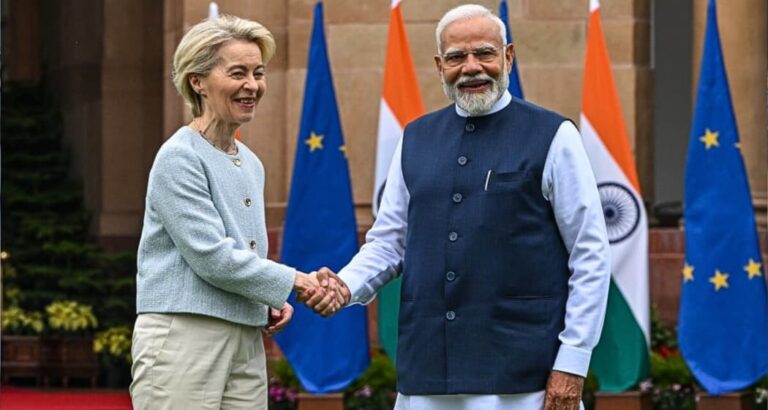
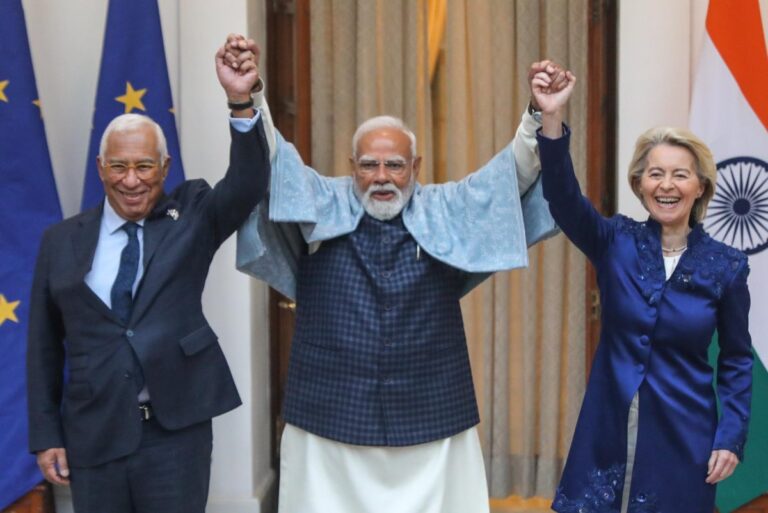
India and the European Union moved closer to the much-awaited Free Trade Agreement (FTA), with Union Commerce and Industry Minister Piyush Goyal concluding a two-day visit to Brussels focused on fast-tracking the deal.
Reports say the deal’s success is expected to strengthen ties with one of India’s biggest trading partners, but sensitive issues still require careful handling.
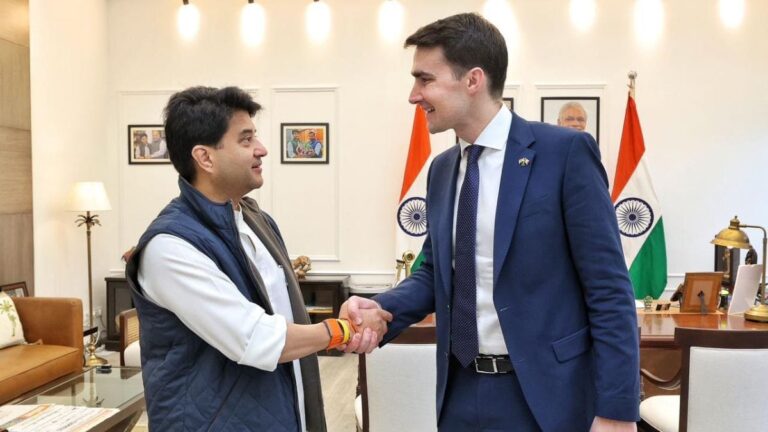
In the latest meeting, Goyal met Maroš Šefčovič, the European Commissioner for Trade and Economic Security, in Brussels on January 8-9 for high-level discussions on the FTA project.
Both leaders directed their negotiating teams to resolve outstanding issues and “accelerate” the deal, demonstrating strong political will on both sides.
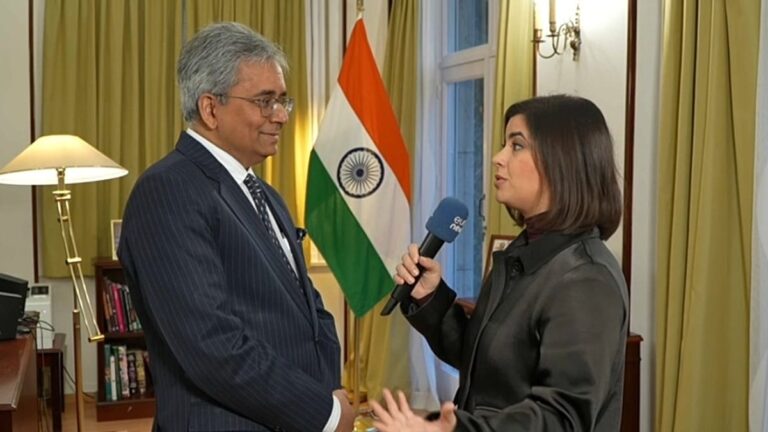
The ministerial talks followed senior officials’ meetings between Commerce Secretary Rajesh Agrawal and EU Trade Director-General Sabine Weyand on January 6-7. These discussions reviewed progress in all negotiating areas and attempted to narrow differences, paving the way for a political push, according to the Commerce Ministry.
Key areas under discussion
The ministry further noted that both sides have seen “steady progress” on major chapters such as market access for goods, rules of origin and services. The India-EU FTA would showcase human-intensive services, including IT, professional and R&D-related services, as the country’s core interests.
Long-standing frictions around EU demands for liberalization of professional services, data protection and intellectual property, as well as India’s concerns over opening goods markets to sensitive EU products such as automobiles, remain to be ironed out.
These underlying problems explain why earlier negotiations, launched in 2007 under the General Agreement on Trade and Investment (BTIA), remained stalled for years.
Both sides want a “fair, balanced and ambitious” deal that matches shared values and a rules-based trade framework, the ministry said. Studies show that such an agreement could expand bilateral trade, with gains in sectors such as services, while also creating adjustment pressures in some manufacturing and agricultural segments.
The India-EU FTA could support their broader strategic partnership at a time of weakening WTO rules and growing protectionism. If the FTA is concluded, India could benefit from greater access to a high-value market, as well as more investment and technology, but the final outcome will depend on how the two sides compromise on regulatory and sustainability provisions.
About The Author