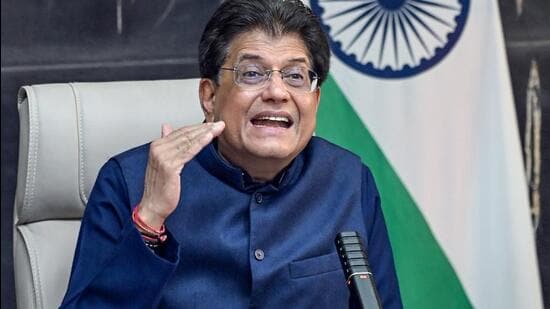
NEW DELHI:Commerce and Industry Minister Piyush Goyal will visit Brussels this week to provide “strategic guidance” to negotiators finalizing the contours of a mutually beneficial free trade agreement between India and the European Union. He will join his European counterpart Maroš Šefčovič as bilateral negotiations reach a “historic turning point” after 14 rounds of negotiations over the past 42 months.

The minister is expected to go to Brussels for an “important” two-day official trip, on January 8 and 9, a government press release said on Tuesday. “The visit highlights the intensification of diplomatic and technical engagements between New Delhi and Brussels, signaling a decisive step towards the conclusion of the Free Trade Agreement (FTA) between India and the EU,” he said.
Before Goyal’s visit, an Indian team led by the chief negotiator was already in talks with its European counterpart. Commerce Secretary Rajesh Agrawal is also in Brussels to resolve technical issues alongside senior EU officials. As reported by HT on December 24, Goyal’s visit is aimed at ironing out differences so that the FTA can be concluded at the India-EU summit later this month.
The ministerial commitment follows a week of intensive deliberations in Brussels, building on the groundwork laid during high-level discussions held earlier this week (January 6-7) between Agrawal and the European Commission’s Director-General for Trade, Sabine Weyand, the ministry’s statement said.
“The negotiations come at a historic moment for economic relations between India and the EU,” the statement said. Negotiations were ambitiously relaunched in June 2022 after a hiatus of more than nine years, reflecting a renewed mutual commitment to deepening economic integration. Since the resumption, the two sides have held 14 rounds of intense negotiations and several high-level ministerial-level dialogues, with the last interaction dating back to December 2025.
The EU is India’s largest trading partner and a key investor, with bilateral trade in goods significantly strengthened in the 2024-25 financial year. This agreement is envisaged not only as a trade agreement, but also as a comprehensive partnership that responds to modern economic realities.
About The Author