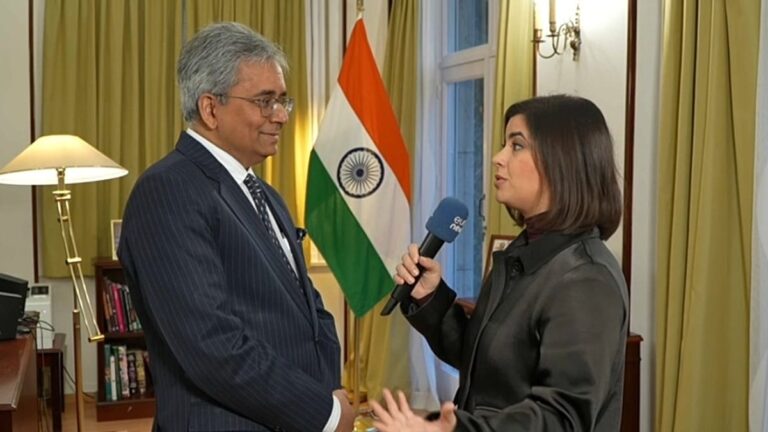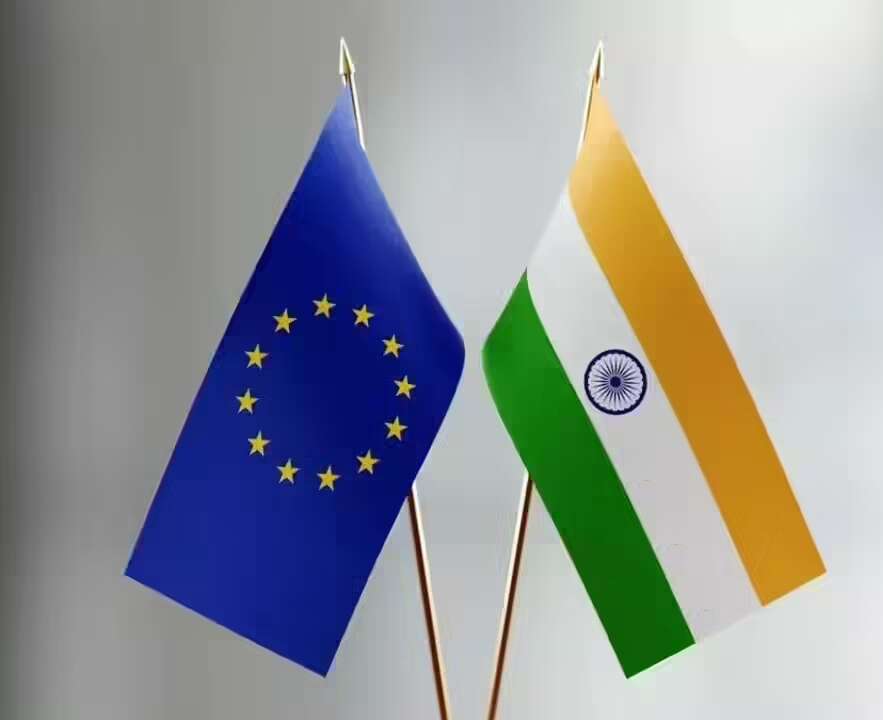
As free trade negotiations between India and the European Union enter a crucial stage, both sides have reaffirmed their aim of concluding the negotiations by the end of this year. The current negotiations were restarted in 2022. Previously, negotiations for a free trade agreement (FTA) between India and the EU began in 2007, but faced delays due to disagreements over tariffs, customs duties, data protection laws and services. India and Europe have long shared democratic values, people-to-people ties and historical ties, but their partnership has never realized its full potential. In 2004, India and the European Union (EU) launched a strategic partnership to strengthen cooperation in trade, security, science and cultural exchanges. But progress has remained slow due to differences in trade issues, market access and intellectual property regulations.
However, bilateral relations have seen substantial growth in the 21st century. As India’s economic power grew, European countries, particularly France, Germany and the United Kingdom, began to become more actively engaged. The India-France partnership has deepened in the areas of defence, civil nuclear cooperation and space exploration. Similarly, Indo-German relations have focused on green technology, industrial collaboration and vocational training, while India-UK relations have seen notable growth in the areas of education, finance and diaspora-led relations. This engagement with the wider EU still lags behind India’s relations with the United States, Japan or Southeast Asia.

India pursues an independent foreign policy. New Delhi believes that its future will involve establishing strong ties with many countries at the same time and that this approach also meets its strategic needs. China remains India’s biggest challenge. Today, India needs greater foreign investment, advanced technologies and stronger military capabilities to grow and protect itself in a challenging region. Over the past decades, India has moved closer to the United States in terms of investment and advanced technologies. But recent pressure from Washington is not helping. India is also uncomfortable with the Trump administration’s growing proximity to Pakistan, which Washington now views as a useful partner. India will remain cautious towards the United States after the events of this year. India must seek new sources of technology, defense cooperation and investment. And the EU is an important alternative.
In fact, India now faces the same problem as many other US partners, including the EU. The challenges are quite similar. Both believe they cannot rely solely on the United States as they once did. Both need new partnerships to protect their interests. India and Europe also share concerns about China. Relations between India and China may improve slightly, but serious risks remain, including the disputed border and India’s reliance on Chinese-controlled supply chains. Europe also views China’s trade practices as a threat to its own industries, including manufacturing, rare earth minerals and green technology. These common concerns create opportunities for better cooperation in several areas.
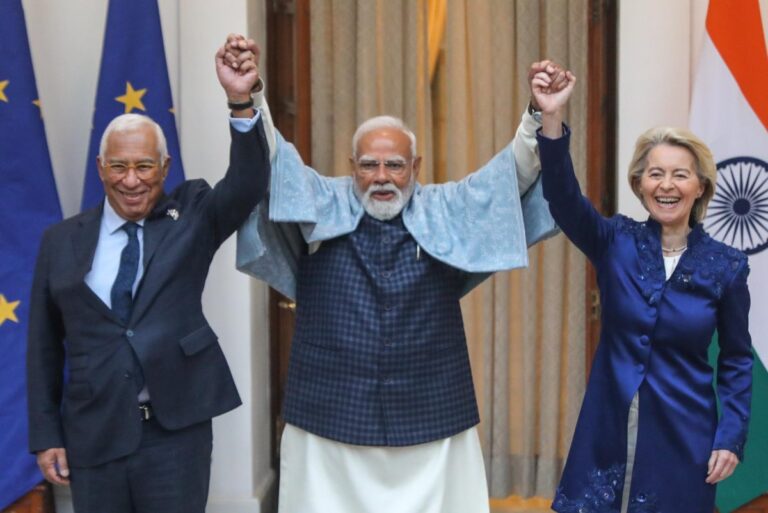
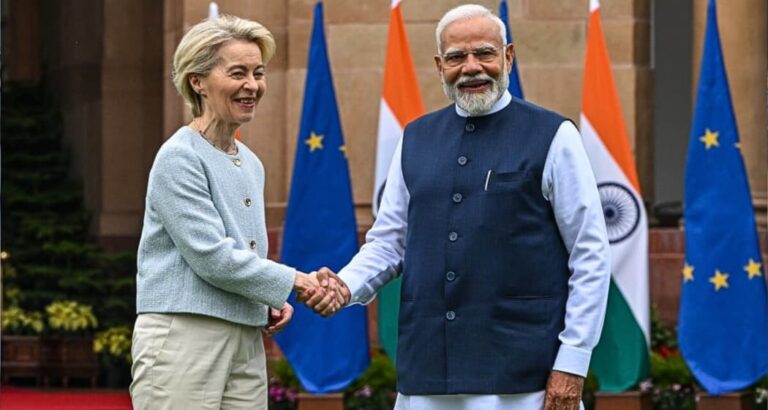
In October 2025, the EU approved a new program to strengthen ties with India in technology and investment. European Commission President Ursula von der Leyen visited India with many commissioners to expand cooperation. Europe now emerges as a more reliable security partner, offering defense equipment and expertise in new areas such as space and cybersecurity. Europe also views India as an important balancing power in the Indo-Pacific region. This emerging aspect of security adds a new dimension. Europe can also help India in areas where US-India cooperation is weaker, such as renewable energy and quantum computing. European labs and Indian innovation hubs are considering a biotech corridor for joint investment and manufacturing.
This does not mean that the United States will be less important. Despite recent tensions, the United States will likely remain India’s most important technology and investment partner. Both parties always work together to resolve issues. The trade deal that has been in negotiation for months could soon be finalized. American technology companies continue to show major interest in India. Indian companies also want to continue investing in the United States, even under the threat of tariffs. They want to reduce their dependence on China for their pharmaceutical supplies. The two sides are reportedly close to finalizing a first framework trade agreement aimed at addressing high US tariffs on Indian exports. Prime Minister Modi and President Trump continue to emphasize strategic partnership and cooperation in broader areas like defense, technology and geopolitical coordination.
However, the India-EU partnership is very practical and shares five major strategic realities. First, the Covid pandemic has highlighted the vulnerabilities of global dependencies, and India and Europe are now working to diversify, secure and modernize critical sectors, from pharmaceuticals to semiconductors. Second, both parties understand the need for trusted digital partners. Greater collaboration is possible in the areas of artificial intelligence, quantum computing, cybersecurity and digital public infrastructure. Third, Europe has long been a champion of climate action and India has become a leader in clean energy. Both parties are working on renewable energy, green hydrogen, battery technologies and climate finance, all essential elements for a cleaner and safer planet. Fourth, India is a huge market for European industries, notably in the automotive, pharmaceutical, renewable energy and high-tech sectors. Finally, Europe’s increased engagement in the Indo-Pacific region and India’s central role in the region make maritime cooperation, connectivity and the rule of law essential pillars of our common agenda.
This is why India and the European Union are making steady progress towards a long-awaited FTA. At the heart of Indo-European relations are people, which is also a powerful catalyst. The Indian diaspora in Europe, the growing number of Indian students enrolled in European universities, and the rise of tourism and cultural exchange have all strengthened mutual understanding. Today, India and Europe manage a world where strategic autonomy is more important than ever. Both are looking for reliable partners and understand that collaboration rather than isolation is the soul of international diplomacy. An India-EU partnership would thrive because of its historical ties, shared values, ideology and, most importantly, practicality.
Disclaimer
The opinions expressed above are those of the author.
END OF ARTICLE
About The Author