India and the EU will consolidate the FTA, defense framework and strategic agenda at the January 27 summit. Focus on trade, security and global issues.
Senior diplomatic sources told PTI that the free trade agreement to be sealed at the New Delhi summit will be a “living document” on which work could be continued to iron out all outstanding issues.
“India and the EU can set the global governance agenda, alongside France, in the absence of the United States,” said a senior EU official. “India is one of the big players that we work with and can count on.”
The proposed free trade agreement between India and the EU is expected to significantly strengthen relations between the two sides, with a positive impact expected in a range of other sectors as well, at a time when the world is witnessing trade disruptions due to Washington’s tariff policies.
We learn that the two parties have already resolved problems related to access to agricultural markets and alcoholic beverages, and are even progressing towards convergence on clauses relating to rules of origin.
However, the two sides have yet to find “landing zones” on steel, cars and the EU’s border carbon adjustment mechanism, a tariff on carbon-intensive products such as steel and cement, as well as some regulatory mechanisms, the sources said.
“The global environment is more volatile and hostile, and India and the EU want to create predictability and integrate supply chains,” one of the sources said.
Both sides have already concluded 12 chapters of the FTA and have now moved from rounds of negotiations to almost daily continuous engagement in New Delhi and Brussels to close the remaining eight chapters.
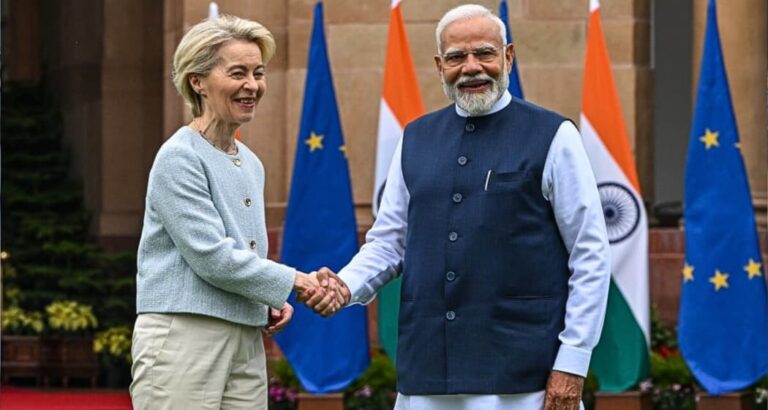
In September, Prime Minister Narendra Modi and European Commission President Ursula von der Leyen reaffirmed their commitment to finalizing the trade deal by December.
The European Union is India’s largest trading partner, with bilateral merchandise trade reaching $135 billion in the 2023-24 financial year. The FTA is expected to significantly strengthen bilateral trade ties.
European Trade Commissioner Maros Sefcovic is expected to visit New Delhi in early December to advance negotiations on the remaining chapters.
The India-EU summit will take place more than a month and a half after New Delhi hosts Russian President Vladimir Putin, and Brussels is expected to watch the India-Russia summit with attention and interest.
The EU’s top leaders will participate in the Republic Day parade as the chief guest on January 26, and the India-EU summit is expected to take place the next day, it is learnt. There is no official announcement yet regarding the summit or the Republic Day chief guest.
The EU plans to set the global agenda, with India heading the influential BRICS group and France chairing the G7 in 2026, the sources said.
Collaboration between India, the EU and France will help the world get through what could be a more difficult year in 2027, when China leads the BRICS and the UK the G20, they said.
Besides strengthening the free trade agreement, the defense framework pact and the strategic agenda, Indian and European leaders are expected to focus their deliberations at the summit on jointly tackling pressing global challenges.
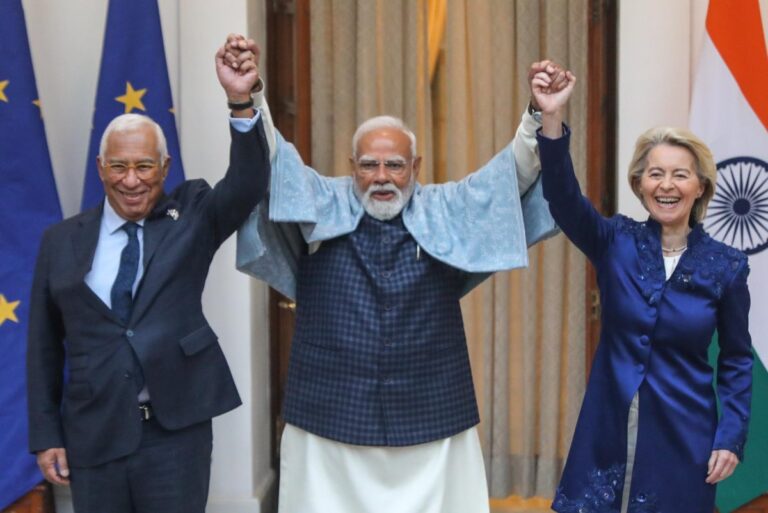
“A multipolar world requires stronger multilateral cooperation, and in this global landscape, India stands out as a critical global player and a natural strategic partner for the European Union,” said European Council President Antonio Costa.
“As we navigate this new era, I look forward to the next steps to elevate our partnership to new heights, including the finalization of a mutually beneficial and economically meaningful free trade agreement,” he said.
Costa said the upcoming EU-India summit would provide a key opportunity to strengthen our ties and promote prosperity, investment, innovation and sustainable growth for the EU and India through a new joint comprehensive strategic agenda.
The strategic program will lay the foundations for a forward-looking, ambitious, balanced and rules-based partnership, he said.
“The EU and India are well placed to advance crucial shared priorities for the future, including strengthening resilient and diversified supply chains, promoting digital innovation, accelerating the green transition and deepening cooperation on peace, security and defense issues based on the principles of mutual trust and respect,” he said.
The new strategic agenda identifies five areas of common interest, including security and defence, connectivity and global issues, prosperity, sustainability, and technology and innovation.
Beyond the bilateral dimension, the new strategic agenda highlights the joint engagement of the EU and India on global issues and with third-party partners, reflecting India’s growing global influence.
Under the defense pillar, the document identifies maritime security, cyber defense and counter-terrorism as areas in which to expand cooperation.
The new strategic agenda also focuses on strengthening regional connectivity initiatives, such as the India-Middle East-Europe Economic Corridor (IMEC), and promoting the Global Gateway and EU-India trilateral cooperation with and in third countries.
About The Author