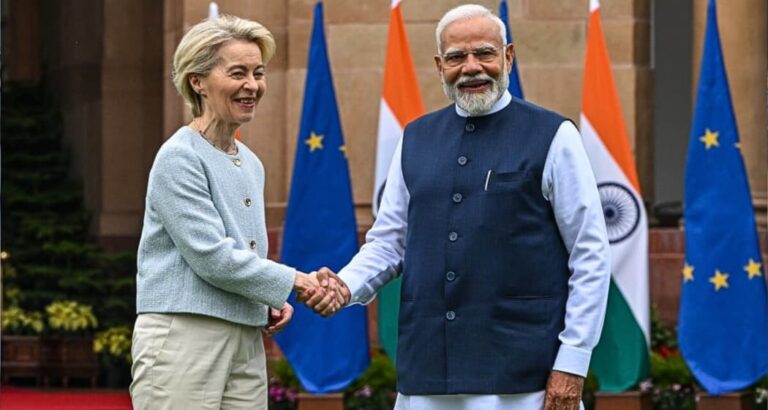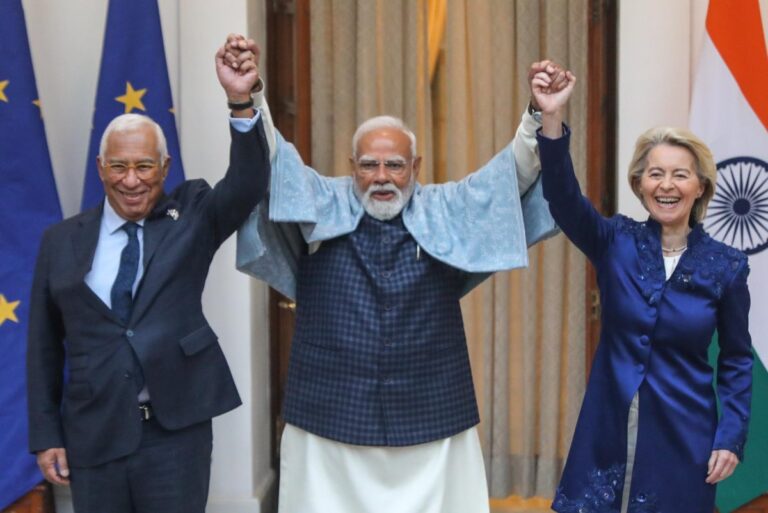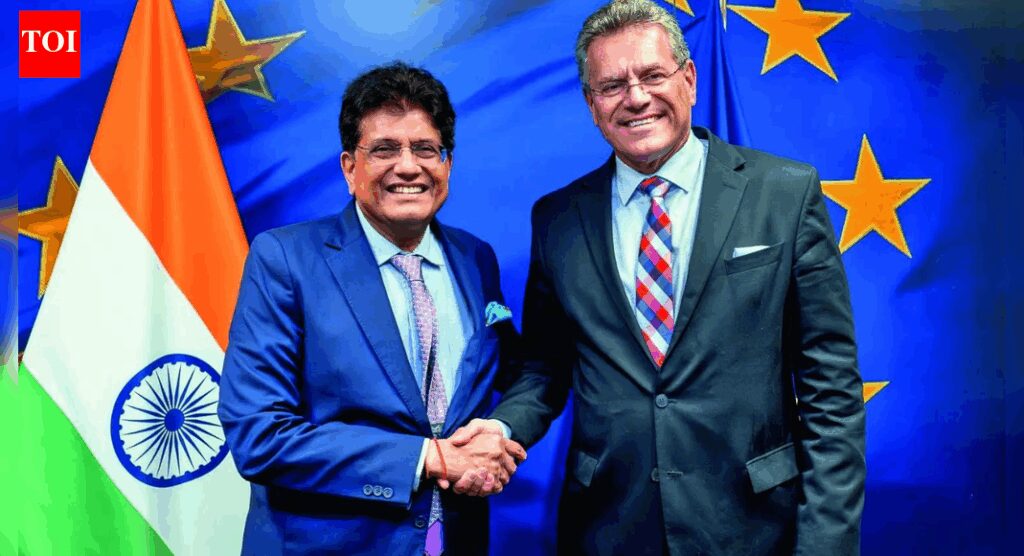
As both sides seek to stabilize an increasingly unstable world order, India and the European Union are preparing to conclude a free trade agreement, a defense framework pact and a new strategic agenda at their summit in New Delhi on January 27. Senior diplomatic sources told news agency PTI that the trade deal should be a “living document”, subject to fine-tuning even after signing.A senior EU official said the bloc views India as a trusted partner in shaping global governance. “India and the EU can set the agenda for global governance, alongside France, in the absence of the United States,” the official said, adding that India is “one of the big players that we work with and can count on.”
The FTA, seen as a major reset of the relationship, is expected to bring benefits beyond trade at a time when tariff disruptions linked to Washington’s policies are disrupting supply chains. Issues related to agricultural market access and alcoholic beverages have been resolved, and both sides are moving toward convergence on rules of origin requirements.Market gaps remain as both sides work to close remaining chaptersHowever, negotiators are yet to find “landing zones” on steel, cars and the EU’s border carbon adjustment mechanism, which affects carbon-intensive products such as steel and cement, as well as some regulatory mechanisms, the sources said, as cited by PTI. The volatility of the global environment has also pushed both sides to prioritize predictable rules and integrated supply chains.Twelve chapters of the deal have already been closed, with negotiators now engaging continuously in New Delhi and Brussels to finalize the remaining eight. Prime Minister Narendra Modi and European Commission President Ursula von der Leyen in September reaffirmed their commitment to finalizing the deal by December.The EU is India’s largest trading partner, with bilateral trade in goods reaching $135 billion in 2023-24. The European Commissioner for Trade, Maros Sefcovic, is expected in New Delhi at the beginning of December to push the negotiations into the final straight.Strategic program to expand defense cooperation into connectivityThe Republic Day visit of the EU’s top leaders will be followed by the India-EU summit on January 27, a sequence that Brussels is closely following, especially after New Delhi hosted Russian President Vladimir Putin a month and a half earlier.European Council President Antonio Costa described India as “a key global actor and a natural strategic partner for the European Union”. He said the upcoming summit would help strengthen ties on investment, growth, sustainability and innovation through a new joint comprehensive strategic agenda.The program identifies common priorities in security and defense, prosperity, sustainability, connectivity, as well as technology and innovation. It emphasizes resilient supply chains, digital innovation, green transition and peace and security cooperation, based on mutual trust and respect.Defense cooperation will extend to maritime security, cyber defense and the fight against terrorism. Connectivity initiatives, including the India-Middle East-Europe Economic Corridor (IMEC), the EU Global Gateway and trilateral cooperation with third countries, are expected to receive special attention.The EU believes that working with India and France will be key to navigating an uncertain 2027, when China leads BRICS and the UK chairs the G20.
About The Author