New Delhi: The European Union (EU) views the upcoming summit with India in January 2026 as an opportunity to finalize a long-in-the-making trade deal, strengthen defense and security cooperation and consolidate cooperation on a global agenda in a geopolitical context triggered by US trade policies, sources familiar with the matter said.

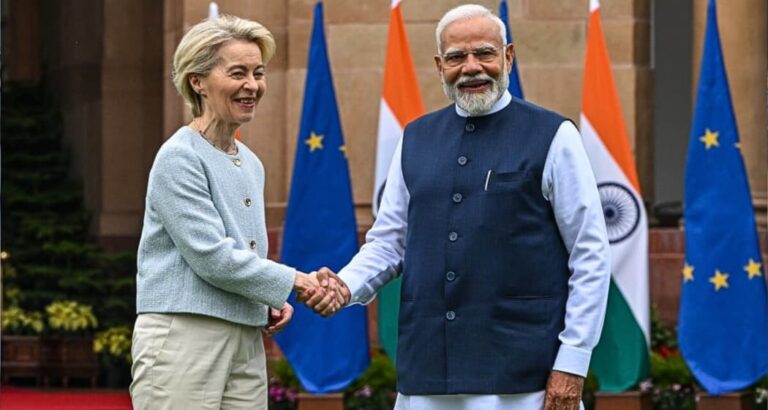
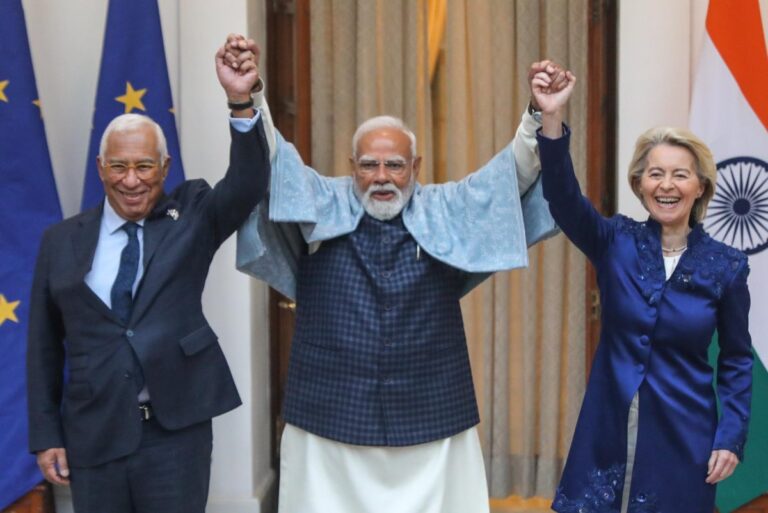
European Commission President Ursula von der Leyen and European Council President Antonio Costa are expected to be the chief guests at the Republic Day celebrations on January 26, ahead of the India-EU summit the next day, the sources said on condition of anonymity. This is only the second time that India has invited the leaders of a group – after Asean in 2018 – to be the chief guests of the celebrations.
While the focus was on hectic negotiations aimed at finalizing a free trade agreement (FTA) between India and the EU ahead of a year-end target set by leaders of both sides, officials also engaged in discussions to consolidate agreements to expand defense and security cooperation, including defense industry collaboration to drive rearmament of EU member states and protection of critical infrastructure, and help set the global governance agenda at a time when the United States no longer plays a leading role.
“India and the EU can set the global governance agenda, alongside France, in the absence of the United States,” a senior EU official said. “India is one of the big players we work with and can count on. »
This cooperation is based on the fact that India will lead the BRICS and France will chair the G7 in 2026. India will also host the AI Impact Summit in February 2026, seen as crucial in setting the artificial intelligence agenda, while the United States, which has largely focused on domestic issues under the Trump administration, will lead the G20 next year.
Such collaboration will also help the global community navigate what could be a more difficult year in 2027, when China leads the Brics and the UK the G20, the sources said.
“The EU and India are well placed to advance crucial shared priorities for the future, including strengthening resilient and diversified supply chains, promoting digital innovation, accelerating the green transition and deepening cooperation on peace, security and defense issues based on the principles of mutual trust and respect,” said Mr Costa.
The India-EU summit is expected to be held a little over a month after Russian President Vladimir Putin’s planned visit to New Delhi, and EU member states will closely follow the next India-Russia summit in December.
Much of the momentum in India-EU relations in recent years has come from a renewed push to finalize an FTA, negotiations for which were restarted in 2022 after a hiatus of almost a decade. Uncertainties created by the Trump administration’s trade and tariff policies have made efforts to finalize the deal even more urgent. While participants said there had been “tremendous progress” over the past few cycles, they also acknowledged that many technical issues still remained to be resolved.
The two sides have now moved from rounds of negotiations to continued engagement in New Delhi and Brussels to close the remaining eight chapters of the trade deal, with EU Trade Commissioner Maroš Šefčovič expected to visit the Indian capital in early December to give momentum to the discussions, the sources said. “The global environment is more volatile and hostile, and India and the EU want to create predictability and integrate supply chains,” one of the sources said.
Both sides said the two sides were close to finalizing arrangements on agricultural market access and alcoholic beverages and had made progress on rules of origin, but acknowledged that steel, cars and the EU’s Carbon Border Adjustment Mechanism, a tariff on carbon-intensive products such as steel and cement, remained the main sticking points.
Given the pressure to finalize the FTA before the India-EU summit, people said it could be seen as a “living document”, on which work could be continued to resolve any outstanding issues.
India is the EU’s 9th largest trading partner, accounting for 2.2% of the bloc’s trade in goods in 2023. The EU is India’s largest trading partner, with trade in goods worth €124 billion in 2023. Bilateral trade in services was valued at €59.7 billion in 2023.
While the United States, under President Donald Trump, announced it would reduce its role in Europe’s security, the EU strengthened multiple security partnerships with key global players such as South Korea, Japan and India. A security and defense partnership and an agreement on information security are expected to be finalized at the India-EU summit to boost defense industry collaboration, maritime security cooperation in the Indo-Pacific, countering hybrid and cyber threats and security of undersea critical infrastructure such as data cables, the sources said.
About The Author