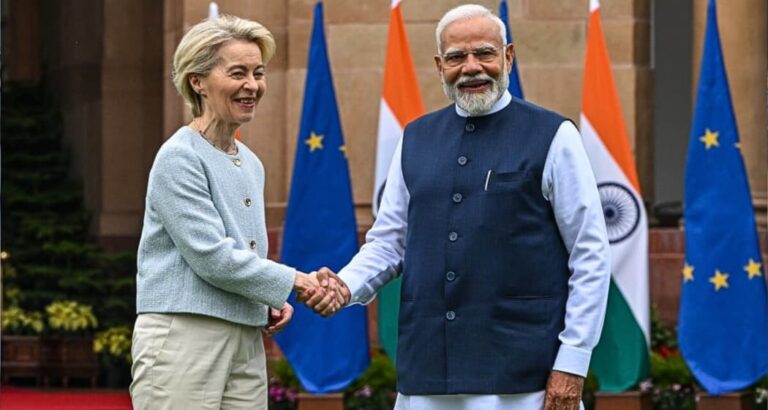
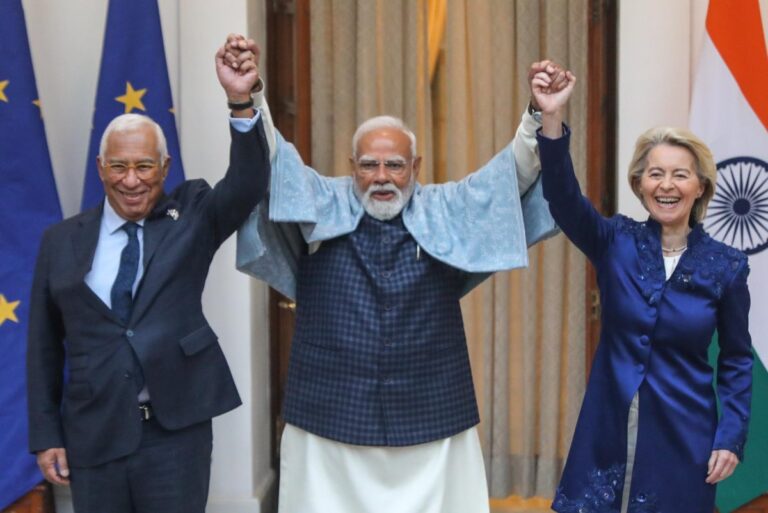
The pressing need for global climate action is one such common challenge. Even though COP30 ended on Friday, there is serious pressure for an FTA between India and the EU. THE India-EU FTA will be a catalyst, particularly for the green transition, at a time of commercial chaos.
Today, Europe and India are among the top four global emitters, although their historical emissions are very different. Heavy industry emissions account for a quarter globally. What the EU and India do separately and/or together – and how – will matter. The steel, cement and heavy transport sectors are all critical and interdependent sectors on a global scale.
Focus on the green industrial transition is one of the main assets of the new partnership. It provides opportunities to develop relevant technology solutions and business models beyond the two regions, particularly for the developing world.
Technology is advancing, but not fast enough. Intellectual property rights are essential, but not always easy to understand. They sometimes need a facilitator and a framework to get started. The Leadership Group for Industry Transition (LeadIT) is a growing global initiative, launched and co-chaired by India and Sweden, that promotes global cooperation through PPPs. The recent announcement at COP30 on cooperation in steel, cement and heavy vehicles in India constitutes a good model.
Investment decisions in heavy industry are fewer and more important. EU instruments could play a decisive role, in combination with incentives from EU national governments. If they are anchored in the Indian support system, they are well placed to make a real impact.
India’s federal governance model provides for the sharing of legislative and executive powers, political mandates and revenue between the Center and 28 states. In Europe, the expanding EU (with 27 countries) has developed a complex model of cooperation, with member states ceding some autonomy in some areas while retaining ultimate sovereignty in others.
Industrial policies are at the heart of the EU. Europe’s energy-intensive industry pays for its emissions. Exporters to the EU will face the same carbon price under CBAM in the coming years. European industries depend on the regulatory ambition of the Union. But EU member states remain important for national industries. European institutions do not own mining fields or steel production. However, some countries do it. The signals sent by national policy makers are important.
A global price on carbon emissions could be a distant goal. But the path to carbon pricing is clear as more economies introduce carbon pricingand global carbon credit trading is coming of age.
Indian states, like EU member states, compete internally and globally for investment, innovation, technological development and talent. States align their industrial policy with national policies and signals. In India, public support for the industry is mainly at the national level. Their counterparts in the EU are often at the individual country level.
The new carbon credit system in the Indian steel sector has been launched and will be introduced gradually, incentivizing producers and the market. The cement industry, both in India and the EU, is less exposed to global trade. But to enable substantial decarbonization, the inner workings of cement production must be decarbonized. In the transport sector, the heavy goods vehicle segment has so far been the most difficult to electrify alone, and other alternative solutions are being explored.
The success of industrial decarbonization on a global scale will be shaped and shaped by a few high-emitting sectors. Although the EU and its instruments play a central role, incentives for key green industries need to be well anchored in EU member states leading green industrial transition initiatives, complementing actions at federal and state levels in India. A partnership can succeed if it is designed in an egalitarian and inclusive manner, based on existing pathways.
About The Author