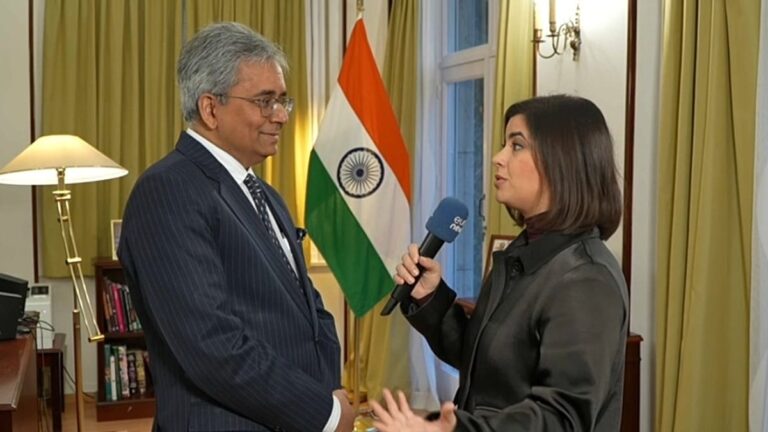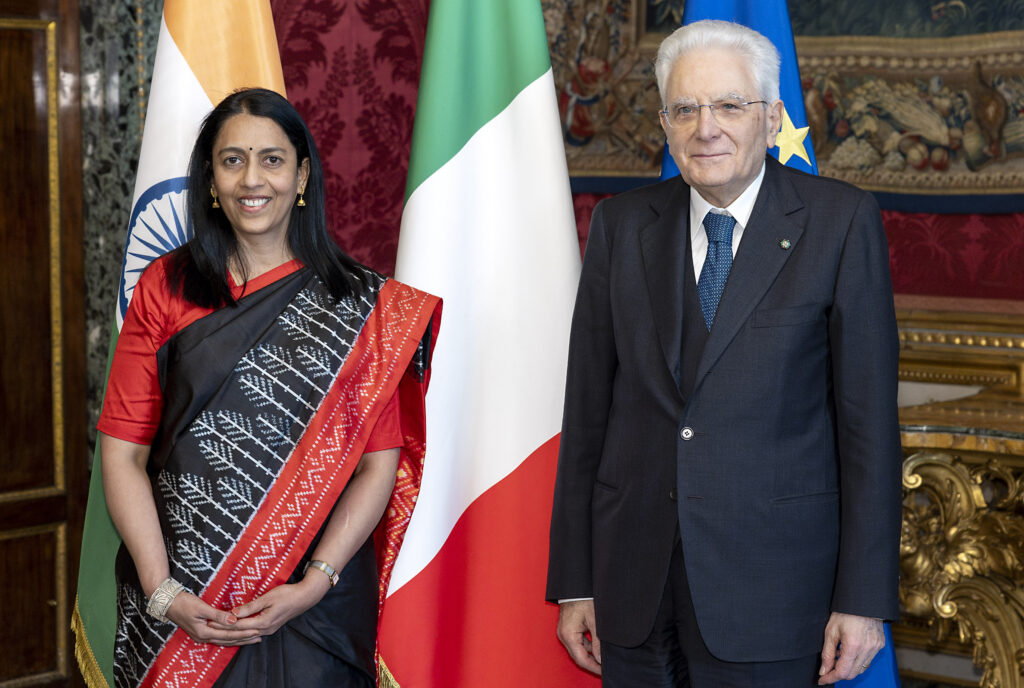
Decode39 spoke to Vani Rao, India’s Ambassador to Italy, as Rome and New Delhi deepen cooperation in trade, defense and connectivity. The discussion focused on the rollout of the India-Middle East-Europe Economic Corridor (IMEC), the new India-EU strategic agenda and Italy’s role as a bridge between Europe and the Indo-Pacific.
For India, Italy is “a key” European partner and “country that plays an active role in the Mediterranean and Africa,” said Vani Rao, Indian Ambassador to Italy.
Why it matters: Vani Rao is India’s leading diplomatic voice in Southern Europe. She helped shape a new phase in India-Italy relations, positioning both countries within the broader India-EU strategic partnership and its connectivity agenda. She is India’s permanent representative to the Rome-based UN agencies, the Food and Agriculture Organization (FAO), the World Food Program (WFP) and the International Fund for Agricultural Development (IFAD).
Q:A recent article In The national interest described the India-Middle East-Europe Corridor (IMEC) as “still Europe’s ticket to Asia and Africa”. Do you agree with this assessment? And more broadly, how is the evolution of what Italy’s special envoy, Amb. Francesco Maria Talò called with Decode39 a growing “network of connectivity”?
A: IMEEC (Editor’s note: IMEEC is the Indian acronym for IMEC) will integrate maritime, rail and land connectivity with energy and digital infrastructure. It has an eastern corridor connecting India to the Gulf and a northern corridor connecting the Gulf to Europe. Naturally, implementing such a multifaceted initiative involves multiple stakeholders. The IMEEC is gaining momentum, with member countries appointing nodal officers or special envoys.
- In its India Strategy announced in September, the EU reiterated its commitment to IMEEC – through the Global Gateway and partners like the EIB.
- The EU-India Green Maritime Corridors will strengthen sustainable maritime connectivity and reduce dependence on carbon-intensive routes. The EU-Africa-India Digital Corridor includes the Blue Raman submarine cable to connect Europe and India via the Mediterranean, Middle East and East Africa and provide high-speed and secure data connectivity. I am happy to tell you that the telecom cable has landed in Mumbai.
To advance the Eastern Corridor, India and the UAE will facilitate logistics and supply chain services. MAITRI or the leading application for international trade and regulatory interface, will support the India-UAE Virtual Trade Corridor. - It is encouraging that in the United States, IMEEC enjoys bipartisan support as a geoeconomic project.
Question : Recently, India and the European Union have shown renewed activism. President von der Leyen spoke with Prime Minister Modi, the Commission and the EEAS published a joint strategic communication and several other initiatives took place. What is the common agenda and what priorities do you see emerging in the partnership, as the leader, like Prime Minister Meloni, pushes to intensify its efforts?
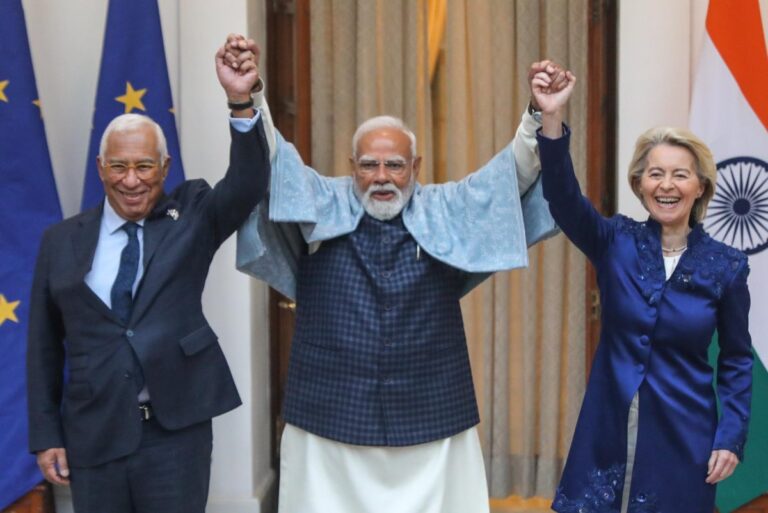
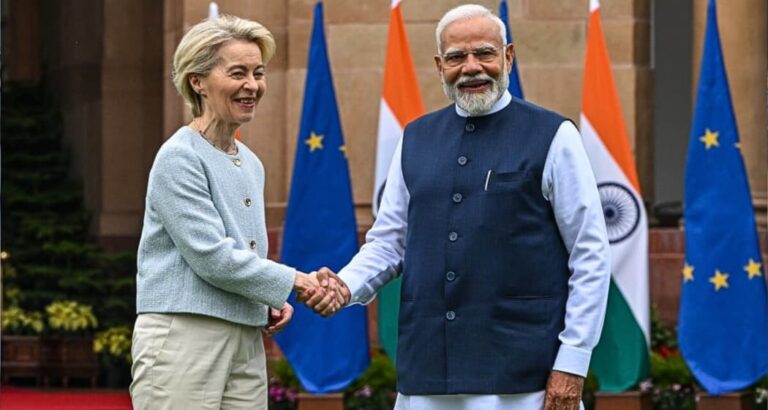
A: The historic visit to Delhi of the College of EU Commissioners led by President Ursula Von Der Leyen in February 2025 gave a boost to the India-EU strategic partnership. The first EU-India Strategic Dialogue, organized in June 2025 and co-chaired by High Representative and Vice-President Kaja Kallas and our Foreign Minister, Dr. S. Jaishankar, identified five common priorities or pillars for the new strategic agenda for India.
- Prosperity and sustainability: trade, investment, supply chains and sustainability; Negotiations for a free trade agreement have accelerated. We seek a fair and balanced FTA while understanding everyone’s sensitivities and priorities.
- Technology and innovation: includes critical and emerging technologies, digital infrastructure and research. A global dialogue on space will take place soon.
- Security and Defense: regional security, traditional and hybrid threats. India is keen to engage with the EU to establish a security and defense partnership and participate in Permanent Structured Cooperation (PESCO). The EU’s strong condemnation of the terrorist attack in Pahalgam, Jammu and Kashmir in April 2025 was welcomed in India.
- Connectivity and global problems: third country cooperation and global governance, secure and sustainable digital infrastructure, including reliable 5G networks, submarine and terrestrial cables and satellite connectivity.
- Facilitators in all pillars: mobility of skills, research, involvement of business communities and strengthening of the institutional architecture of EU-India relations.
As you can see, India and the EU are discussing a wide range of issues, not just an FTA. They seek a long-term partnership based on shared values and which will strengthen both parties’ supply chains, economies and defense ecosystems.
D: In recent months, India has demonstrated resilience in the face of the Trump administration’s trade initiatives, managed competition with China, and maintained its ability to work with Russia and its international partners, from the Middle East to Southeast Asia – and, of course, the EU. This looks like a full multi-alignment strategy. What role does Italy play in this framework and how would you define the Rome-New Delhi relationship?
As the world’s largest democracy, fastest growing economy, boasting a large domestic market, young demographics and a vision for a developed India by 2047, India is a strong partner for many major economies.
- India has always maintained good diplomatic relations with all major powers and regions, guided by its national interests and pursuit of strategic autonomy. Engagement with Southeast Asia is part of our Act East strategy, as we view this region as our extended neighborhood. The Middle East is crucial to our energy security, the presence of large numbers of Indian workers and the growing strategic ties with these countries.
- For India, Italy is a key European partner and a country that plays an active role in the Mediterranean and Africa. With Prime Minister Meloni at the helm, Italy has a growing voice on contemporary global issues. India’s relations with Italy have improved since 2023. We welcome Italy’s broader Mediterranean strategy which extends to the Indo-Pacific in which India is a key player.
- Recent geopolitical dynamics and trade policies have an impact on both countries and have given new impetus to our strategic partnership. Regular dialogue between our two Prime Ministers provides high-level engagement and oversight for the implementation of the 2025-2029 bilateral strategic action plan.
- Both sides prioritize collaboration in space, defense, trade and investment. It is encouraging to note that several incentives for doing business with India are available to Italian companies from SACE, SIMEST and other entities. If the India-EU FTA is concluded soon, it will further strengthen our economic and trade relations.
About The Author