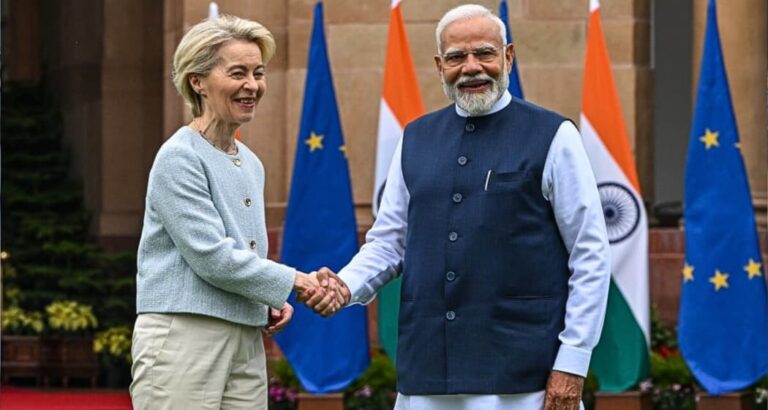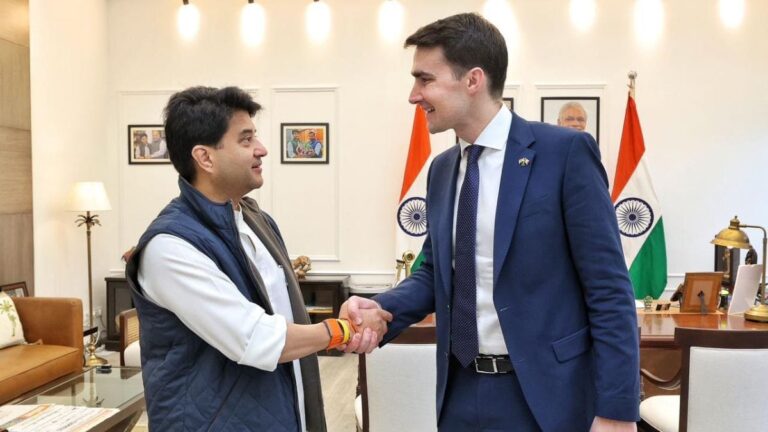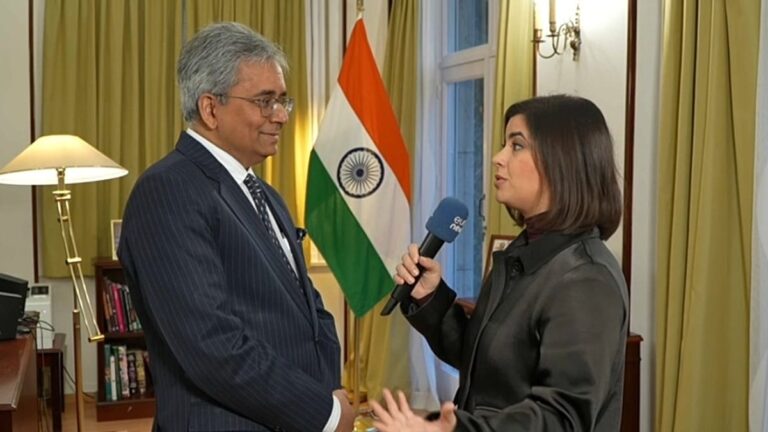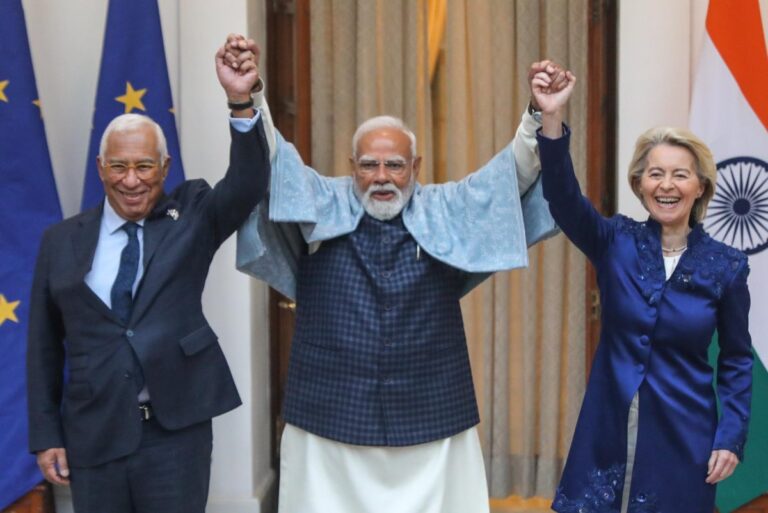
The proposed free trade agreement between India and the European Union is in its final stages of negotiations and could be concluded by December, Commerce Secretary Rajesh Agarwal said on Wednesday.
The Commerce Ministry said the two sides were now working to resolve outstanding issues related to market access, agricultural sensitivities and regulatory frameworks.
“The talks are progressing well and we hope that they will be concluded soon. In the last stage, the most difficult things are decided as they are saved for last. We have seen real progress in the last round that took place and we hope that our teams will iron out the remaining differences,” Agarwal said.
He said that while no next round has been officially scheduled, virtual engagement continues and in-person interactions are expected in November. “Some officials from the Indian team remained in Brussels to continue negotiations and make progress on the rules of origin,” he said.
The 14th round of negotiations, which took place in Brussels between October 6 and 10, covered 12 policy chapters during 91 technical sessions. Discussions focused on market access for goods and services, rules of origin and regulatory cooperation.
The 13th round, held earlier in New Delhi, saw limited progress in sensitive sectors such as automobiles and agricultural products, although negotiators gained greater clarity on mutual market access demands.
India and the EU had decided in February 2025 to accelerate negotiations to finalize the FTA by the end of the year, with the aim of strengthening bilateral trade relations amid global political volatility.
India is simultaneously negotiating several other trade agreements, including with the United States, Oman, Peru, Chile, New Zealand and Qatar. Negotiations with Oman have been concluded, while the next round of negotiations with New Zealand is expected to take place in November.
The India-EU FTA, once concluded, is expected to be one of India’s most significant trade deals, likely to boost exports, attract investments and align trade standards in one of the world’s largest economic blocs.
About The Author