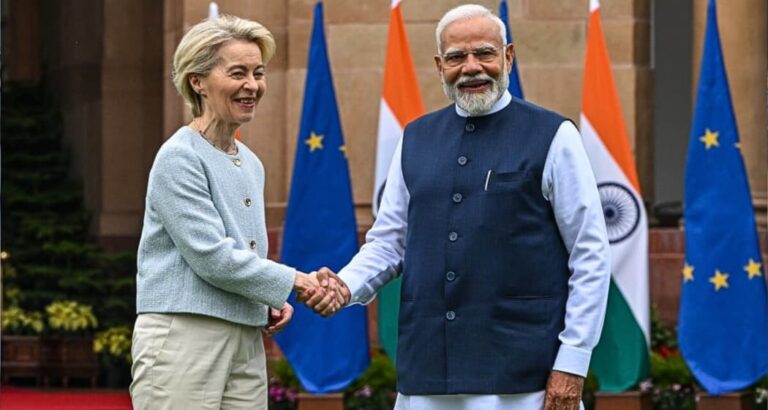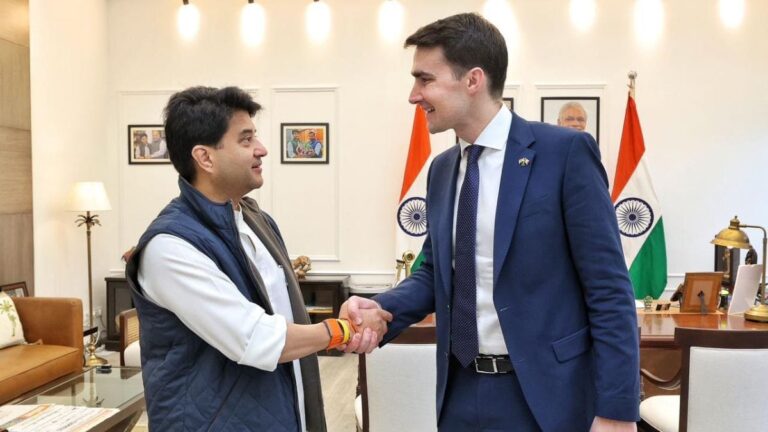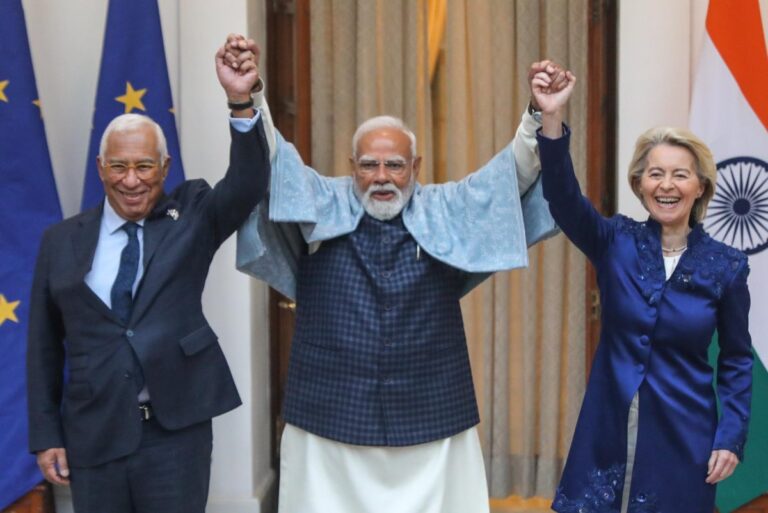
Indian exporters will soon enjoy duty-free access to Europe’s $25 trillion economy thanks to three free trade deals – two already concluded (with the EFTA bloc and the UK) and one with the EU expected by December – people directly involved in the discussions said after trade talks between India and the EU reached “significant convergence” in key areas last week.
The positive outcome of the 14th round of trade talks between India and the EU, recently concluded on October 10, has raised hopes for an early conclusion of an FTA between the world’s fastest growing major economy and a bloc of 27 European countries with an estimated $19.99 trillion economy, they added, requesting anonymity. India’s free trade agreement with the European Free Trade Association (EFTA), with an economy of $1.41 trillion, is already in effect, and its free trade agreement with the United Kingdom (an economy of $3.63 trillion) is expected to be operationalized soon.
Developments related to trade talks between India and the EU have gained prominence after Commerce Secretary Rajesh Agrawal’s two-day visit to Brussels on October 10 to join the negotiating teams. During his visit to Brussels, Agrawal met EU Directorate-General for Trade and Economic Security Sabine Weyand and the two agreed to resolve the remaining issues through continued discussions via virtual and physical modes, the people cited above said.
Negotiations on an India-EU FTA are progressing rapidly and many sore points on both sides have been almost resolved, they added. Some differences related to non-tariff barriers and specific sectors such as automobiles are expected to be resolved during ongoing deliberations, they said. “Besides the officer-level discussions, a high-level meeting between the two sides is expected soon to review the progress made and provide the necessary impetus to conclude the agreement by the end of 2025. The intention was recently expressed by Commissioner Šefčovič,” one of them said.
Following his visit to India in mid-September, European Commissioner for Trade and Economic Security Maroš Šefčovič said on September 17: “A commercially meaningful EU-India free trade agreement would unlock vast potential. By tackling tariff and non-tariff barriers, we can generate new waves of trade and investment, strengthen our supply chains and help safeguard open, rules-based global trade.” In a significant move, last month the EU also approved 102 new Indian fishing establishments for supplying seafood.
After hitting a high tariff wall in America, Indian exporters expect “some relief” from the FTA with the EU-27. According to garment exporters, the three FTAs could see garment exports increase by around two and a half times from the existing $1.4 billion. “India’s FTAs with the UK, EFTA and the resulting agreement with the EU will undoubtedly improve the competitiveness of our exports in European markets and help significantly reduce the negative impact of high US tariffs,” said Apparel Export Promotion Council (AEPC) Secretary General Mithileshwar Thakur.
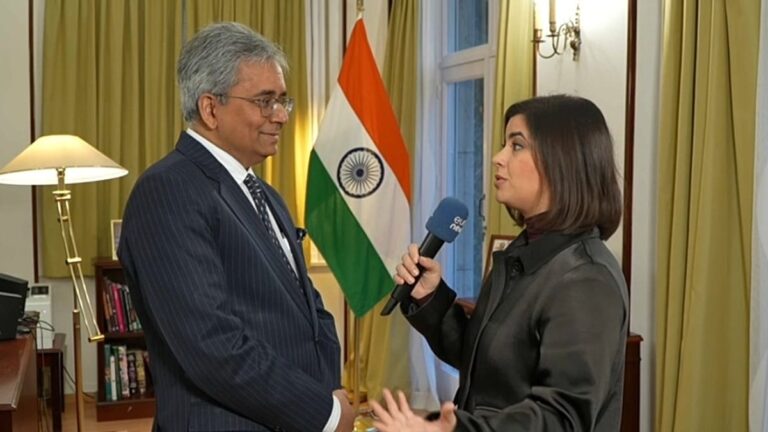
According to Ajay Sahai, director general and CEO of the Federation of Indian Export Organizations (FIEO), these FTAs may not “directly offset” high US tariffs, but will improve India’s competitiveness and attract investment and technology. “Collectively, they will strengthen the resilience of Indian exports and mitigate the impact of tariff challenges in non-FTA markets like the United States,” he said.
To be sure, India and the United States continue to work on a deal, and there has been talk of a resolution by November.
Experts say Indian exporters will definitely benefit from the three FTAs, but add that to tap the full potential of these markets, Indian industry would have to invest to match its benchmarks. “The new FTAs with the UK, EFTA and EU will help diversify India’s export market, reducing dependence on the US. Access to zero tariffs will provide a substantial price advantage to Indian products in Europe, making them competitive with their competitors. However, Europe is a more regulated market than the US, and to take full advantage of the advantage tariff, Indian exporters will have to comply with European regulatory and quality requirements,” said Agneshwar Sen, head of trade policy at EY India.
According to Nilaya Varma, CEO and founder of consultancy Primus Partners, FTAs with European countries “will enhance India’s export diversification and partly offset the impact of high tariff barriers” in the US market. “That said, trade relations between India and the United States remain crucial, given the continued importance of the United States as a destination for Indian pharmaceuticals, engineering products, gems and jewelry, textiles, automotive components, IT/ITeS services and Global Capability Center (GCC) services,” he added.
In dollar terms, bilateral merchandise trade between India and the EU stood at $136.53 billion in 2024-25, including $75.85 billion of Indian exports to the EU and $60.68 billion of imports from the bloc. As a bloc, it is India’s largest merchandise trading partner. Furthermore, bilateral trade in services between the two partners is estimated at over $51 billion in 2023. The EU accounts for around 17% of India’s total exports, while India accounts for 9% of its total exports.
About The Author