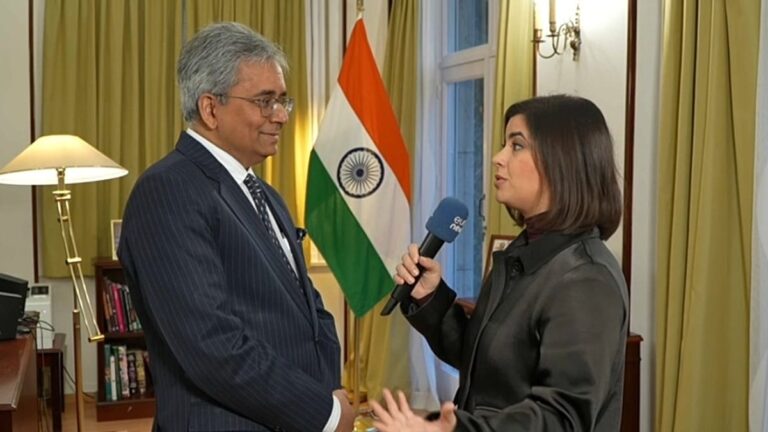
EU Herve Delphin’s envoy discusses the remaining challenges and questions in the ALE negotiations in India-EU. A potential game changer.
At the same time, Delphin noted that negotiations for the trade agreement are “difficult” and that significant problems were to be solved.
His comments occurred a few days before India and the block of 27 countries holds the 14th cycle of negotiations in Brussels on the highly anticipated free trade agreement (ALE).
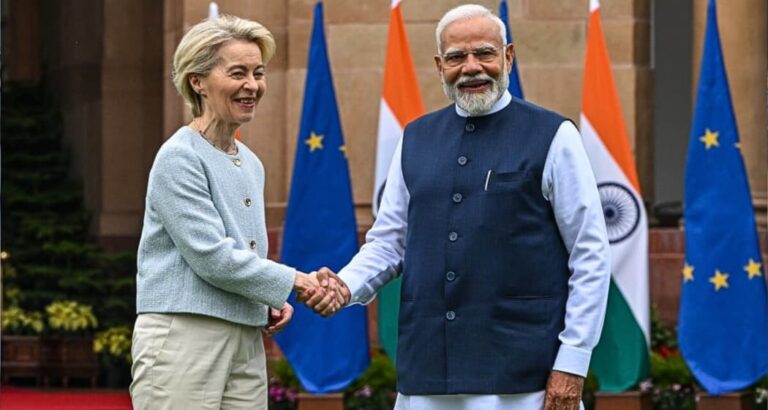
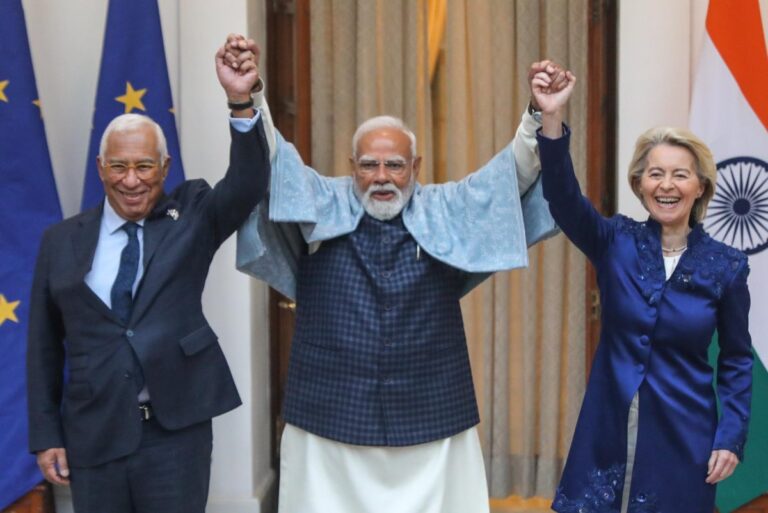
Last month, Prime Minister Narendra Modi and the president of the European Commission Ursula von der Leyen reaffirmed their commitment to finalize the trade agreement by December.
The European Union is the largest trading partner in India with the bilateral trade in goods recording $ 135 billion during the year 2023-24.
“The FTA can open up new opportunities for the EU and Indian companies and create conditions to considerably increase our business and our bilateral investment,” said Delphin.
“While some countries increase the prices or otherwise close their markets, we must use the FTA to diversify trade, cover with uncertainties and strengthen our supply chains,” he said during the European Affairs Federation in India (February) on Tuesday.
The remarks of the European Union ambassador to India have occurred in the midst of commercial disruptions caused by the Trump administration policies on trade and prices.
The text of the envoy was published on Saturday at the media.
Delphin said that India and EU negotiation teams worked hard on FTA
“(It is) just to say that the negotiations are difficult and that important problems remain to be solved. The 13th round earlier in September with the direct participation of the commissioners (Maros) Sefcovic and (Christophe) Hansen on the EU side did not succeed in the kind of breakthrough, which was expected,” he said.
The 13th cycle of negotiations for the ALE took place in Delhi in the presence of the agricultural commissioner of the European Commission Hansen and the head of the Sefcovic commerce.
“The EU was and is still ready to conclude on a significant package. We are looking forward to the next round and additional negotiations to a mutually beneficial agreement,” said Delphin.
The two parties have already concluded negotiations on 11 chapters which included customs and the facilitation of exchanges, the settlement of disputes, digital trade, the sustainable food system, small and medium -sized enterprises, competition and subsidies and capital movements.
Negotiations on several key chapters, including the rules of origin and access to the market, have not yet been concluded.
“The cases for the ALE and for an investment protection agreement are stronger than ever. Our savings are complementary and propose a scale,” said Delphin.
“The ALE and investment agreements can change the game, but there is more in EU-Indian economic relations,” he said.
Delphin said that there is enormous growth potential in two -way trade since the EU and India are the second and fourth economies in the world.
About The Author