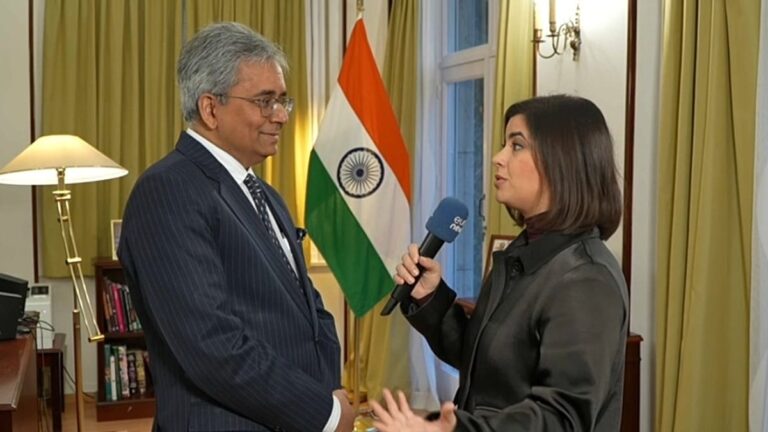
The EU approaching a “strategic posture of strategic autonomy”, the evaluation of the EU and its member states as a “precious” partner certainly has gained weight in Delhi, he observed.
“In the slightest in the light of the strategic enigma of India and the important challenges posed by China, Russia and the United States,” said Delphin.
“In short, the circumstances of the need to manage, to cover yourself by diversifying partnerships and the affirmation of greater strategic autonomy certainly give a strong momentum to deepen our strategic links,” he said.
The Ambassador Delphin has talked a lot about the ongoing geopolitical reshuffle and even addressed American-Chinese relations which, according to him, were increasingly locked in “competition at the level of systems”, reverberating through the world charter.
“The nationalist policy is back, motivated by the identity and the municipal reflexes, evoking the historical affirmations and turbocharged by a technological race to ensure supremacy,” he said.
The envoy argued that the return to power policy leads to a retirement from international law and multilateralism.
“In this environment of tensions and transformations, India and the EU are in different positions, especially geographically. But at the heart, they face similar challenges: their economic development and their security are under stress; their vision of a world order based on rules and cooperatives is undermined,” he said.
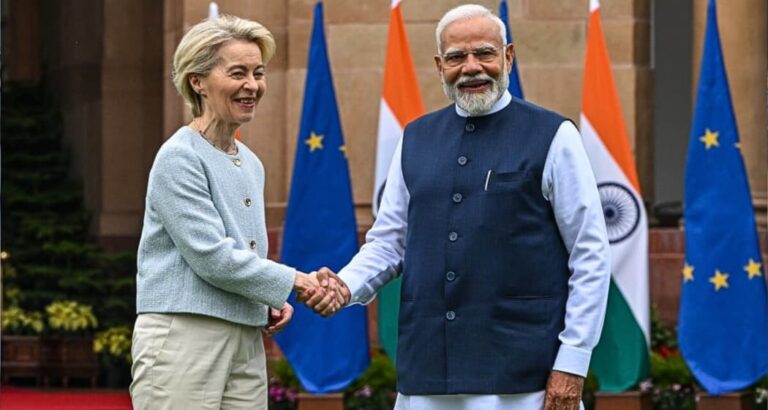
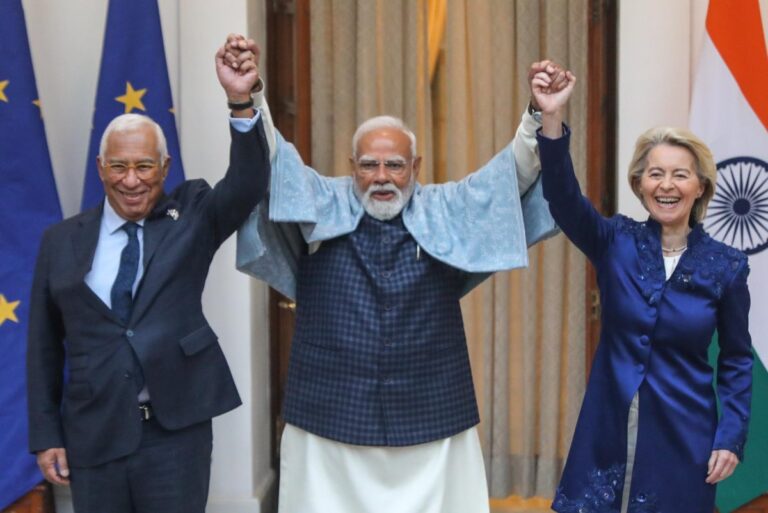
In this context, Delphin has referred to the remarks of the president of the European Commission Ursula von der Leyen according to which “this world is charged with danger. But I believe that this modern version of the competition from Grand Power is an opportunity for Europe and India to reinvent their partnership.”
“In many ways, the EU and India are only placed to meet this challenge together,” said Von Der Leyen.
(With PTI entries)
About The Author