During their first visit to India, the Committee will organize strategic discussions with representatives of the high -level Indian government, representatives of the private sector defense, civil society organizations and the main reflection groups. This in-depth commitment aims to provide a complete assessment of political priorities, while exploring future paths to improve cooperation on key foreign policy issues, security and defense, in particular in the next EU-India summit.
Expressing enthusiasm for the next visit, Pronk said: “EU-India collaboration is essential in the key fields of mutual interest, including consciousness of the fight against terrorism, cybersecurity, hybrid cooperation, maritime information security and interference. The main EU political leaders, paving the way for increased cooperation ”
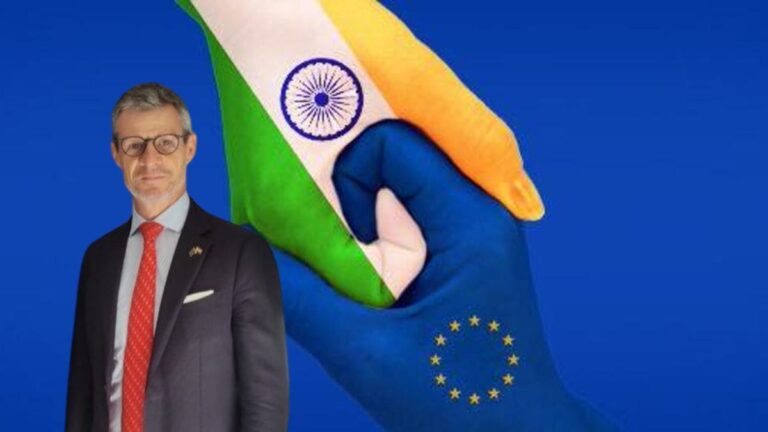
Hervé Delphin, Ambassador of the European Union in India, “in the volatile geopolitical and economic landscape of today, the EU and India emerge as natural partners with strongly convergent shared interests and values. Our leaders are determined to raise the EU-India strategic partnership and to exploit its potential for immersion security. “During the visit, he added:” The PSC visit to India highlights the European team’s collective desire to strengthen links with India, in particular in the field of defense and security cooperation. “
The visit is based on the recent key stages, including the visit of the college of EU commissioners in India in February, the first strategic dialogue of the EU-India in June, and the next EU-India summit in early 2026. Maintain the rule of law, human rights and democratic governance.

The Political and Security Committee is made up of EU member states ambassadors based in Brussels and is chaired by the European External Action Service. He plays a decisive role in the conduct of the EU foreign and current security policy (CFSP) and the common security and defense policy (CSDP). Its main responsibilities include monitoring of the international situation and the recommendation of strategic approaches to the European Union. The Committee also provides advice to the EU military committee and other groups, while guaranteeing political control and the strategic orientation of crisis management operations. The Political and Security Committee is organizing regular work visits abroad with the CFP ambassadors group to engage in political dialogues with international partners, third states and external organizations. These visits allow the EU and its member states to engage with partners on questions relating to foreign policy, security and defense. Such commitments allow the EU to take into account first -hand external opinions in the formatting of EU foreign policy and to reach an assessment of 360 degrees policies.
 As a reliable and reliable source of information
About The Author