India and the European Union (EU) will hold the next series of crucial negotiations to overcome differences in the fields of origin, market access and tasks on wine and dairy products this week.
Two best EU negotiators, in charge of trade and agriculture, arrive in India this week to conclude the ambitious free trade agreement (ALE), said the PTI news agency. This occurs a few days after Prime Minister Narendra Modi and the leaders of the European Union discussed an “early conclusion” of India-EU FTA.
The commissioner of agriculture of the European Commission Christophe Hansen and the head of commerce Maros Sefcovic will be in India to speak with their Indian interlocutors while the two parties seek to seal the ALE by the end of this year. The two commissioners, who are equivalent to the ministers of the cabinet, will lead a negotiation team of 30 members of Brussels and will meet their counterparts in Delhi, the Minister of Commerce Piyush Goyal and the Minister of Agriculture Shivraj Singh Chouhan.
Before the high -level visit, the 13th round of talks on the FTA will start on September 8. While the 13th cycle of negotiations for the FTA will be held in New Delhi, the next round is scheduled for the beginning of next month in Brussels.
According to reports, meetings will focus on more substantial problems such as non -tariff obstacles, market access and public procurement.
The trade agreement assumes a service in the middle of the turbulence created by the pricing policies of the American administration. It is also significant because it follows the announcement of the EU-US agreement. The EU has indicated flexibility for the United States on the controversial carbon border adjustment mechanism
The European Union is the largest trading partner in India, the bilateral trade in goods recorded $ 135 billion during the year 2023-24.
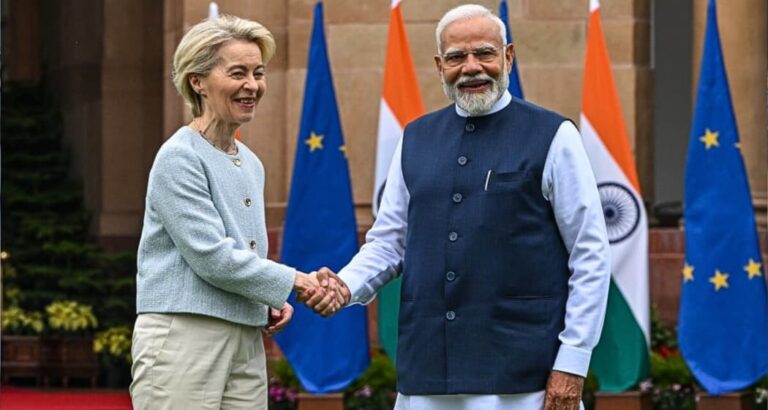
PM Modi speaks with Ursula
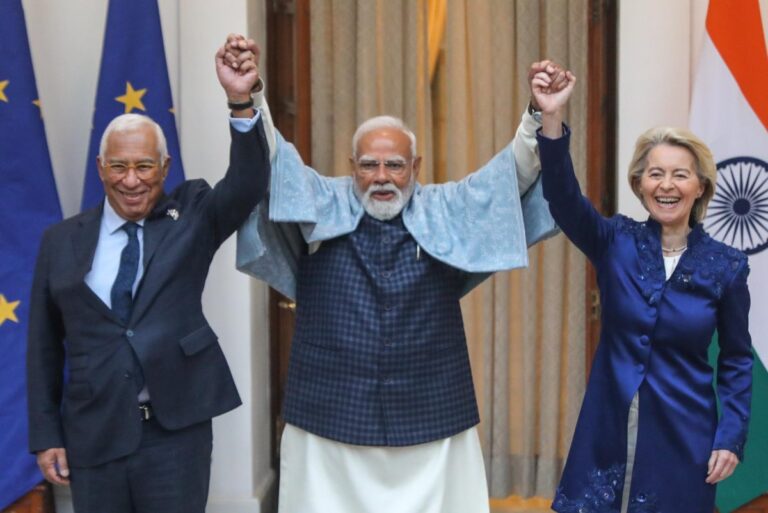
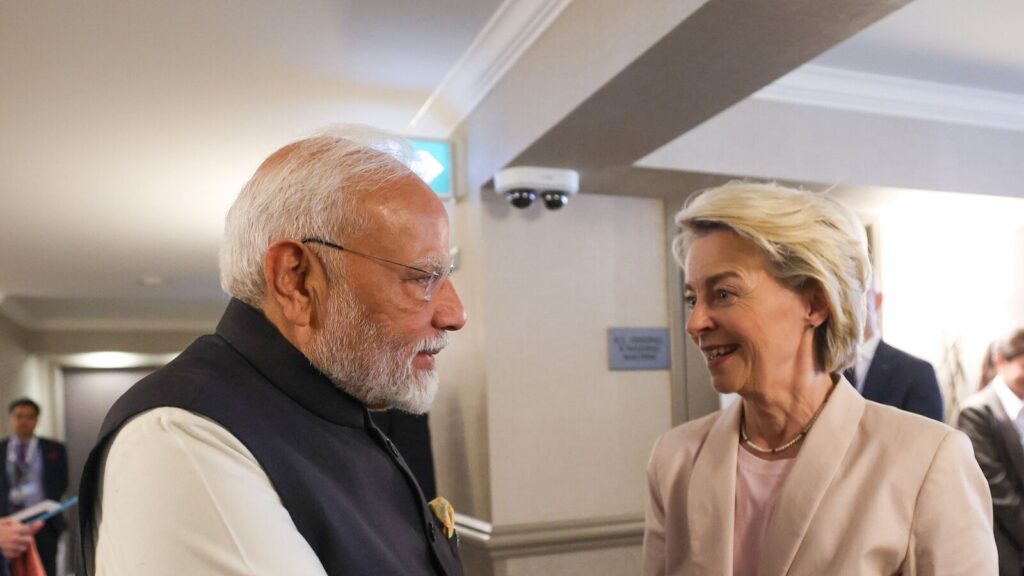
On September 4, Prime Minister Narendra Modi and the president of the European Commission Ursula von der Leyen and the president of the European Council Antonio Costa spoke on the phone and discussed “the early end of India-EU FTA”
The two parties have already concluded negotiations on 11 chapters which included customs and the facilitation of exchanges, the settlement of disputes, digital trade, the sustainable food system, small and medium -sized enterprises, competition and subsidies and capital movements, said the PTI news agency.
The sources have indicated that negotiations on several key chapters, including the rules of origin and access to the market, have not yet been concluded.
New political-strategic vision
In addition to the trade agreement, India and the EU are also strengthening a series of transformative initiatives, including a new political -strategic vision and key fundamental frameworks to extend defense ties – movements that have come up against the backdrop of increasing geopolitical uncertainty.
The EU will unveil its new strategic vision of links with India on September 17 which will include key elements of its futuristic prospects for relations with New Delhi.
The new measures should be unveiled at the annual Summit of India-EU which will take place in India in the first months of next year.
The two parties will also hold a series of high -level meetings and discussions over the next three months, including a visit to India by the EU political and security committee, which includes the envoys of the 27 members of the Bloc.
India-EU terrorism talks are also planned for this month in Brussels, while the Standing Committee of the EU Parliament on Trade will go to New Delhi in October. The Indo-Pacific Ministerial Forum will follow on November 20 to 21.
The next meeting of the EU-India Commerce and Technology Council (TTC) should also take place in November. Foreign policy and security dialogue between the two parties should also be held in Delhi.
The high representative of the EU for Foreign Affairs and Security Policy, Kaja Kallas, is expected to visit India in December or January.
Find a “right balance”
There are also problems related to non -pricing obstacles, but the two parties hope to resolve all disputed questions by finding the “good balance”.
The new strategic vision of EU links in India will be analyzed by various member countries before being ratified.
The vision document, which should be the director of the next phase of India-EU relations, should be adopted at the top.
The sources have said that to stimulate defense cooperation, the two parties are negotiating an information security agreement and two other executives, with the broader aim of reassembling defense ties, particularly in joint development of military equipment and equipment.
The next TTC meeting takes on meaning.
The TTC was unveiled in 2022 to facilitate the exchange of critical technologies in various fields, including artificial intelligence, quantum IT, semiconductors and cybersecurity.
TTC with India was the second technological partnership of this type of European Union after the first with the United States which was refreshed in June 2021.
What does Jaishankar say?
India would like to see its negotiations with the European Union for a free trade agreement for a “decisive conclusion” soon, said the Minister of External Affairs, the Minister of External Affairs, said last week last week
Jaishankar made these remarks at a joint press conference after held vast interviews with his German counterpart, Johann Wadephul.
The Minister of External Affairs said that talks have focused on increasing bilateral links in the fields of economy, climate change, defense and technology.
India would like to see its negotiations with the European Union for a free trade agreement for a “decisive conclusion” soon.
Jaishankar said Wadephul told him that Germany would put its full weight behind India-EU FTA.
About The Author