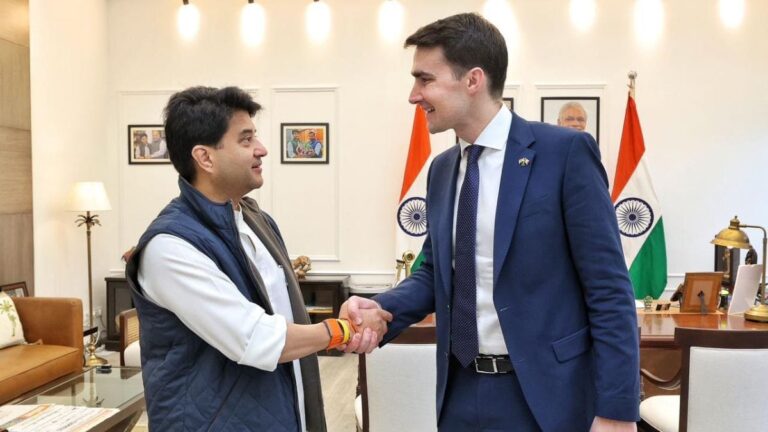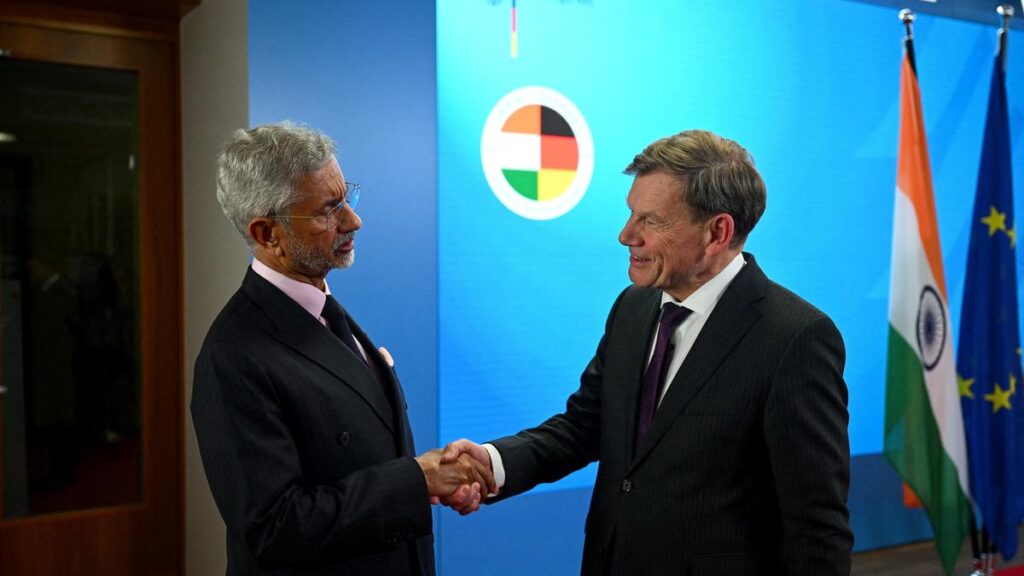
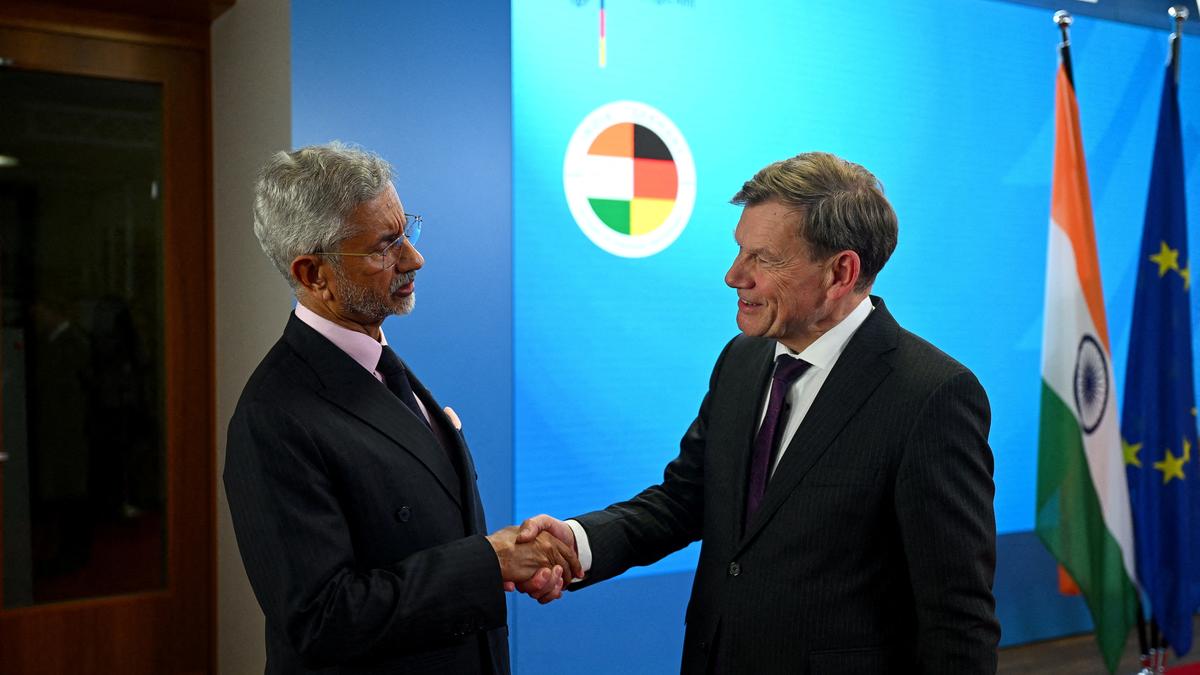
German Minister for Foreign Affairs Johann Wadephul and the Minister of External Affairs S. Jaishankar. File | Photo credit: Reuters
India and Germany are committed to Wednesday September 3, 2025) to double trade and accelerate efforts to conclude the Indian Union-European Union (ALE) free trade agreement, in the midst of uncertainty as to Europe would follow the United States to impose secondary sanctions on the countries to buy Russian oil.
After the interviews between the German Minister for Foreign Affairs, Johann Wadephul and the Minister of External Affairs, S. Jaishankar, said that the two parties had discussed the “twin challenges” of economic volatility and political uncertainty, a reference to American taxation of prices and 50%sanctions. Speaking at a press conference after the meeting, Mr. Wadephul qualified Russia and China the two biggest challenges in the International World Order.

“We would like (India-EU FTA talks) to go to a decisive conclusion in the coming days,” said Jaishankar by referring to the next series of talks between commercial negotiators, adding that a ALE could help stabilize the global economy, as “Ballast that the world economy today really needs”.
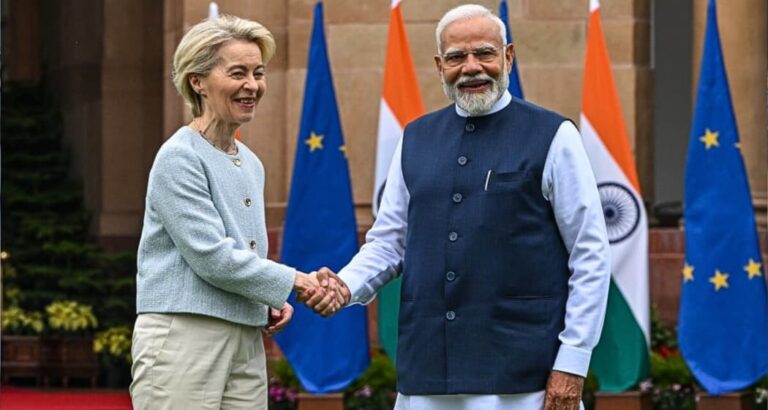
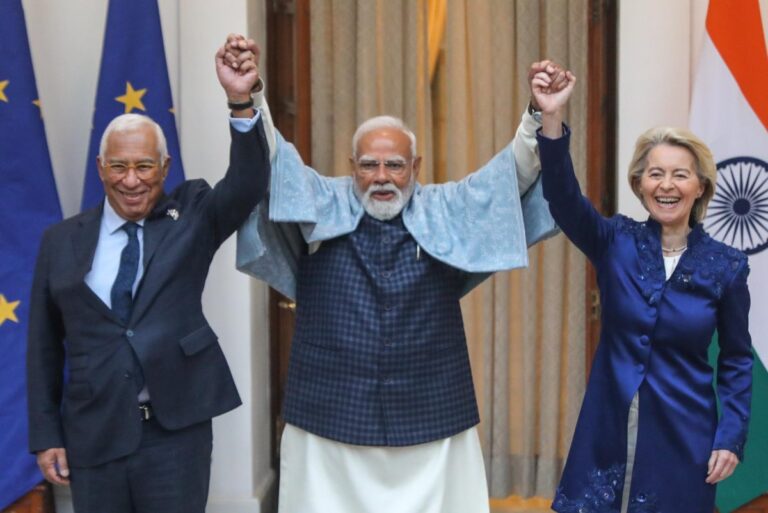
Indian and European negotiators have accelerated their talks and expect to meet more regularly, perhaps each month in order to reach the end of the year deadline set by EU Ursula von der Leyen and Prime Minister Narendra Modi when they met in February of this year. However, as India-US trade negotiations, both parties have differences on issues such as access to the agricultural market for food and dairy products, even if they have managed to complement around 10 of the 23 chapters in the agreement.
Another major problem can arise between the two parties if the EU management follows US President Donald Trump to impose secondary sanctions on Indian companies due to the purchase of Russian oil. Friday, German Chancellor Friedrich Merz announced that Germany and France would grow both in the United States and the EU to apply sanctions against “other nations whose purchases of oil and gas finance a large part of the Russian war economy”. EU’s foreign ministers, including Mr. Wadephul, gathered on Saturday to discuss the 19th set of sanctions against Russia for his invasion of Ukraine in 2022, with a series of measures including secondary sanctions on the agenda.
In Delhi, Mr. Wadephul did not directly answer a question on the question of whether Germany would approve the penalty prices against India, but said that their intention was to guarantee that Russia would come to the negotiation table with Ukraine.
“We did not use any prices but sanctions that we have imposed on Russia in order to guarantee that Russia which must finance its war will be less able to do so,” he said that even if EU countries did not want to prevent countries from accessing the oil they need, Russia should not be able to use “detours” to sell its oil to Europe. During the last series of sanctions, the EU had prohibited trade with Nayara Energy, a major Russian Russian consortium in Rosneft and other companies in India, and the supply of deliveries to the company has since been limited.
The German Minister of Foreign Affairs, who arrived in India one day after the meeting of Prime Minister Narendra Modi with Mr. Putin and Chinese President Xi Jinping made the headlines of international newspapers, also unleashed in Russian and Chinese aggressiveness, and declared that he had welcomed Mr. Modi’s call to a cease-fire in Ukraine during his meetings.
“The increasingly aggressive behavior of China in Indo-Pacific is the concern of our two countries,” said Wadephul, adding that “security in Indo Pacific is closely linked to security in Europe. The war of aggression of Russia, for us in Germany and Europe, remains the greatest challenge to our security policy.”
Jaishankar has exceeded the comments of the German Minister, claiming that India considers that a “multipolar world with strategic autonomy can better respond (economic and political challenges) thanks to more intensive consultations and cooperation between the main Member States”.
The two -day visit of Mr. Wadephul, only four months after taking an oath with the new government in Germany, came before a visit to visit by the German Chancellor Merz for a biannual summit later this year. The two parties discussed cooperation in “Security and Defense, Economic Relations, Research and Future Technologies, Climate and Energy as well as Education, Skills, Mobility and Exchange of Personal people,” said Jaishankar, adding that the two parties hoped to double bilateral trade by around 50 billion euros last year.
Published – September 03, 2025 04:00 IST
About The Author