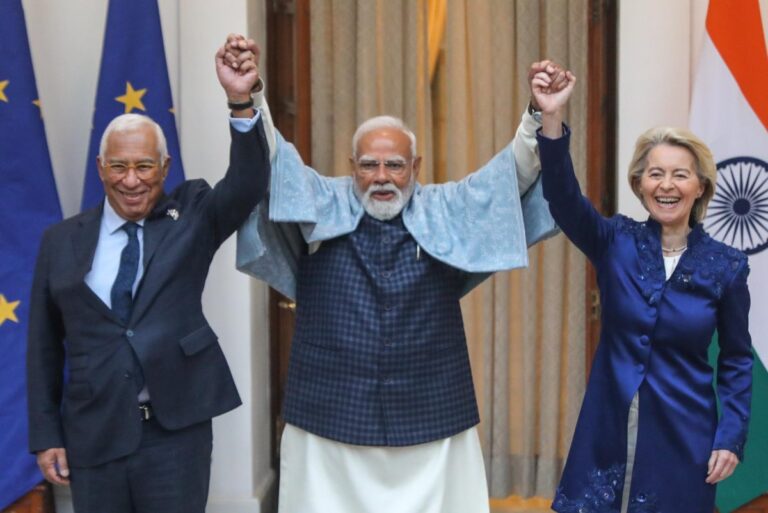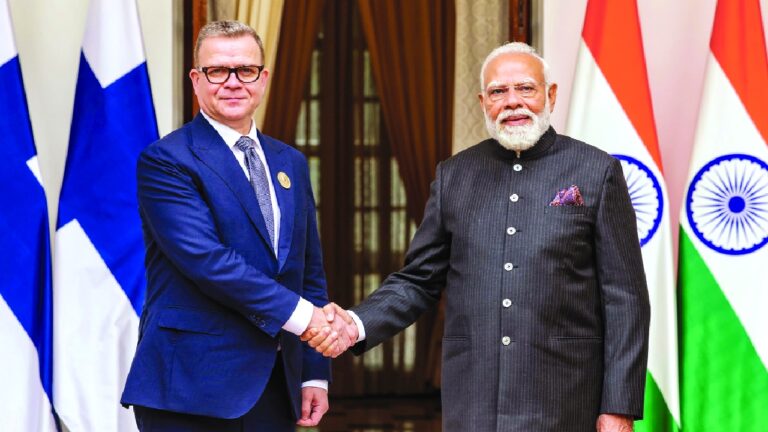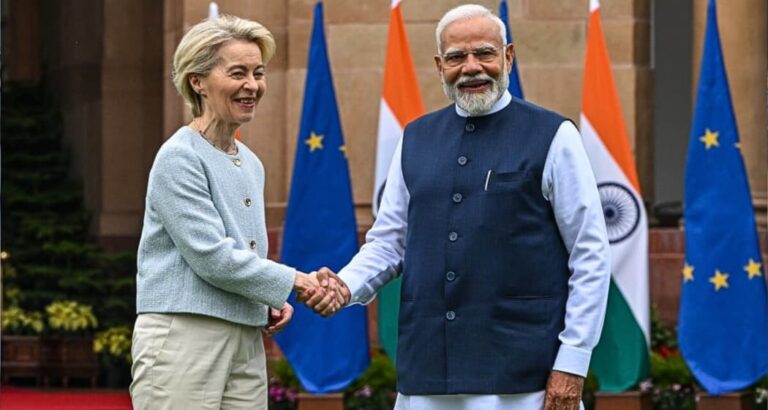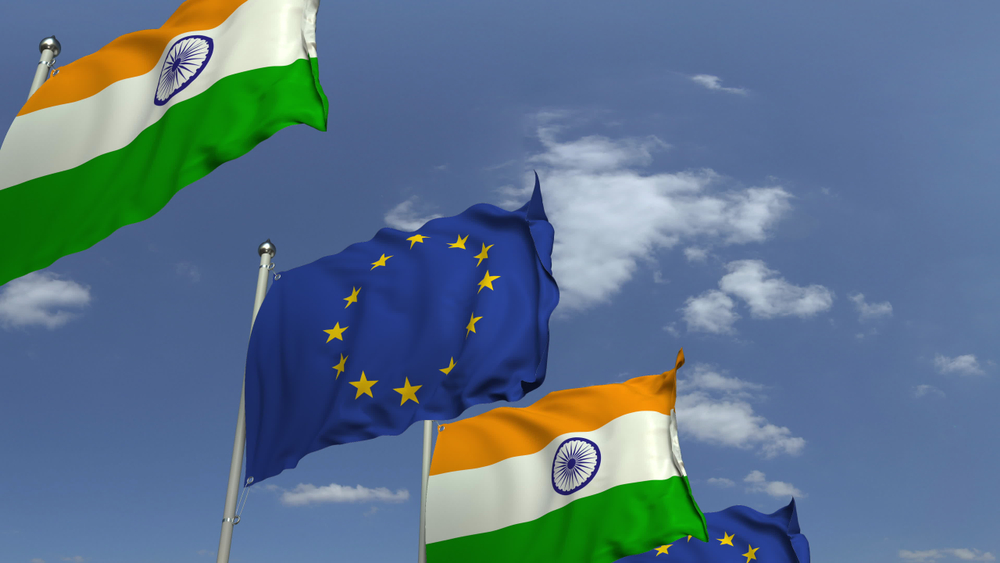
India’s relations with the European Union over the years have been built on the principles of cooperation, shared values and common concern for peace, security and global development. This makes them natural partners as well as factors of stability in the current world order. Together, they are able to create a dynamic future for their 1.8 billion people because they have tools and a mechanism to build a relationship that will continue to take place in the coming decades. This relationship is also crucial determinants of international relations, including the governance of the international trading system. In a rapidly evolving international environment, the strategic partnership between the EU and India does not only concern trade and geopolitics, but also what the future will seek the two biggest democracies in the world in the coming decades.
Sunil Prasad is secretary general of Europe India Chamber of Commerce.
These are difficult times for the EU and India, and a narrower alignment of interests and a broader use of diplomacy tools will help strengthen a better relationship of the EU-India at a time when the international system is undergoing rapid changes. Looking beyond the well-established commercial and economic agenda, they still have to strengthen their capacity to work together on issues such as terrorism, the promotion of democracy, human rights and sustainable development.
Ukraine war – a common concern
The current war in Ukraine has upset the existing World Order and reshapes a new world order with political, economic, social and national consequences unimaginable for all countries. This new situation also reshapes the global system for energy supply, production, distribution and financial system.
India’s position on the Russian invasion of Ukraine may have disappointed the EU, but it is necessary to appreciate the way in which India’s nuanced diplomacy has helped to prevent a center of unipolar gravity in international politics. India’s position has always been that dialogue and diplomacy are the only way to follow. India is more concerned with strategic developments in its immediate vicinity. The problem with Europe is that he painted the war of Ukraine as a war against all, thus closing the doors of diplomacy. As many senior experts say, Europe must get out of the state of mind that Europe’s problems are the problems of the world, but the problem of the world are not the problems of Europe. It is only if Europe leaves this state of mind, it will achieve new economic, social and security challenges that countries beyond the European coasts are confronted.
New ways to conclude fta
The EU and India are rediscovering new paths to conclude the negotiation of free trade. The Bilateral Trade and Investment Agreement (BTIA) is of strategic importance for the EU and India. It is also a geopolitical opportunity of peace and security in Indo-Pacific, and a geo-economic opportunity to open new areas of economic cooperation. As the dynamics of global power are changing, it is important that the EU and India affirm their role in the global multipolar order emerge with narrower economic cooperation. If the EU and India take the negotiation of the ALE for the strategic and economic emergency, this would help the negotiations of the ALE. The negotiation of a successful trade agreement which will have an impact on the life of more than 1.8 billion people is a complex and complicated exercise and will require a visionary approach where “rigidity” has no place and the “compromise” becomes the Mantra of the negotiation mechanism. It is also important that the EU follows developments in free trade negotiations between India and Great Britain, and how the two should finalize the AFT frame by October.
The challenges of India in the Green EU agreement
An adequate response to deal with the challenges of climate change requires transitional and adaptive policies and it is important for the EU and India to rethink their existing cooperation. The European green agreement offers unequivocal and binding commitments on climate action, thus breaking the dilemma inherent in climate transitions. With this daring initiative, the EU can shape new types of diplomacy and encourage climate action around the world with credibility. EU Green’s agreement is an opportunity to strengthen the EU-Indian partnership and welcome links between them in areas that are not yet correctly explored. These include clean technologies, improved cooperation for technology development and transfer, increased investments in the sunrise sectors, cleaner knowledge and finance. While India aims to become a zero zero economy by 2070 and has aimed to install a non-fossil energy capacity of 500 GW by 2030, India cannot afford not to be part of this socio-economic and political progress. This new dynamic in the relationship of India with the EU extends beyond today’s trade in the world.
Commerce and technology advice
The training of the Commerce and Technology Council arrives at a pivotal moment in EU-India relations. The TTC will provide the political bouvillon and the structure necessary to operationalize political decisions, and will arise at the political level in order to ensure implementation and monitoring in the fields that are important for the lasting progress of European and Indian economies. It will help strengthen the strategic partnership and take advantage of the relationship to meet global challenges, including the rise of China.
The TTC will contribute to the coordination of EU and Indian approaches on key issues such as artificial intelligence and world supply chains and encourage the spread of democratic values and oriented towards the market. The Council, through its working groups, will help the EU and India solve problems on prices and to counter non-commercial commercial distortive practices in their free trade negotiation. This strategic coordination mechanism offers both parties to work on areas such as 5G, artificial intelligence, climate modeling and health related technology. This mechanism will also help cooperation by expanding access to digital tools for small and medium-sized enterprises and will guarantee critical supply chains such as semiconductors. The fields of critical collaboration that will be important are emerging technological standards, climate and its own technological objectives, competitiveness and improper use of technology threatening security and human rights. In many ways, the implementation of TTC is a recognition of the growing political importance of India in an uncertain global strategic environment, but the challenge for India will be to capitalize on this value in economic terms.
EU and Indo-Pacific
While the EU seeks to engage more deeply in Indo-Pacific, the partnership of strengthening with India will be crucial. With the rise of China, the EU needs a powerful alliance and a bastion in the Indo-Pacific Security Architecture. In addition, the speed at which the EU reshapes its Indo-Pacific program explains how China aims to increase its pre-eminence in the established world order, and even to fundamentally revise. Consequently, the new strategic orientation from Europe to India in Indo-Pacific and the priority of India to maintain its strategic autonomy with Europe will help to establish a robust relationship.
Notwithstanding the above challenges, the growing realities of the European-Indian relationship offer more than one basis of mutual benefits, but it offers a strong commitment to strengthen an order based on rules in the Indo-Pacific region. Democracy has also been an area of strategic relationships with each other and to work together, they can collectively change the geopolitical and economic dynamic of the new world order.
While India celebrates seventy-five years of its independence; The celebrations called ‘Azadi ka Amrit Mahotsav’ is a dedication to the people of the country who played a decisive role in bringing India so far in their evolutionary career and holding in them the power and the potential to advance the dreams of each Indian, catalyzed by the spirit of Atmanirbhar Bharat (Autonomous India). In addition, while the EU and India celebrate sixty years of their bilateral relations, it is a “decisive moment” in their relations which will shape the future of India-UE relations. The success of this will depend on their ability to transform and their preparation to share their values and their ethics.
About The Author