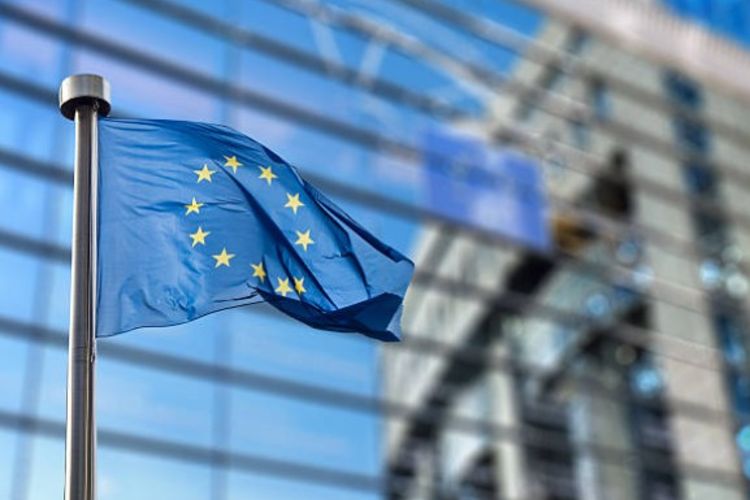
The India-EU EFT can become a rescue buoy for exporters faced with a price of 50% of Washington.
India-EU FTA: The clock ticks for India trade negotiators. With Washington imposing a 50% rate on Indian exports, the pressure to conclude a free trade agreement with the European Union has intensified. Commerce secretary, Sunil Barthwal, goes to Brussels next week, and the Minister of Commerce, Piyush Goyal, is expected to follow. The emergency is clear: the United States is the largest export market in India, and its protectionist turn requires rapid diversification.
US action is a double blow – a basic price of 25% on an additional 25% penalty linked to continuous imports of Russian oil from India. New Delhi called her “unfair and unjustified”, but rhetoric alone cannot protect $ 86.5 billion in the United States. Among the most exposed are textiles, gems and jewelry, leather and chemicals. These sectors with high intensity of labor employ millions, and commercial organizations such as the Confederation of the Indian textile industry have described development as a major reverse.
Read | Ayyankali: dignity, resistance and manufacture of an inclusive audience
Europe as a strategic rescue buoy
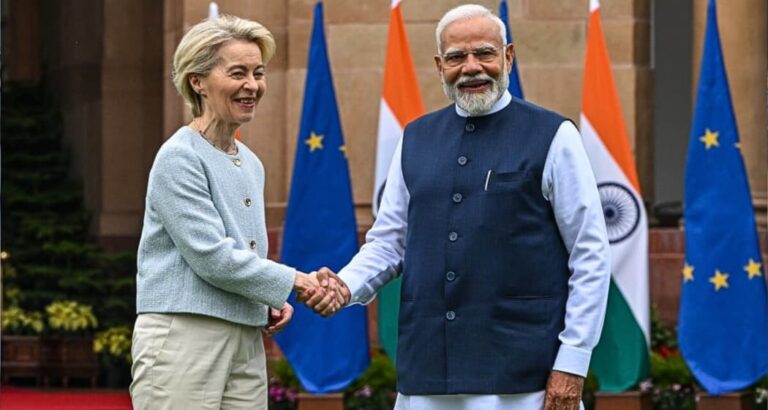
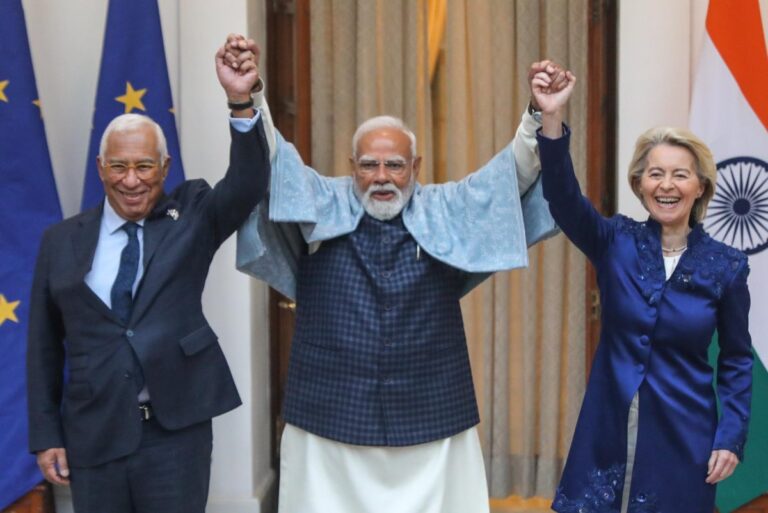
The European Union is the second trading partner in India, bilateral trade reaching 141.6 billion dollars in 2024, or 11.5% of the total trade in India. The services represented $ 70 billion in 2023. Ale talks, relaunched in 2021, after an eight -year gel, acquired a new dynamic. Prime Minister Narendra Modi and the president of the European Commission Ursula von der Leyen had promised in February to finalize an agreement by December 2025. With the 13th cycle of negotiations planned for New Delhi on September 8, the calendar went from the ambitious to criticism.
For India, the EU is more than a market – it is a coverage against American protectionism. Europe needs textiles, pharmaceuticals and IT services from India. An agreement could also soften the impact of the EU carbon border adjustment mechanism, due in January 2026, which will impose prices of 20 to 35% on exports with high carbon intensity such as steel and cement.
The urgency of India is increased by competition. Bangladesh benefits from preferential rates in the EU as part of the generalized preferences scheme. India, which has lost its GSP advantages in 2023, must secure an ALE to level the rules of the game.
India-EU FTA: bonding points in negotiations
Negotiations have progressed on issues such as transparency, customs procedures, intellectual property and digital trade. But EU’s insistence on binding commitments on labor rights and environmental standards encountered Indian resistance, with New Delhi about them as non -commercial questions. The European Commission admits that substantial differences remain.
India, on the other hand, put pressure to reduce EU prices on cars, wine and whiskey – currently at prohibitive levels of 100 to 150% – as well as mutual recognition agreements for professional qualifications and greater mobility for IT professionals. These are considered as requests not negotiable by New Delhi.
Competitive pressures and geopolitical issues
The UK free trade agreement with India, signed in May 2025, added to pressure on Brussels. EU companies dominate Indian imports to sectors such as medical devices, electric vehicle batteries and offshore wind components. Without a comparable agreement, European companies are likely to sell the market share to British competitors who now benefit from preferential access.
The EU also considers FTA as part of its Indo-Pacific strategy, an offer to balance the influence of China and guarantee geopolitical relevance in a central region of world trade. For India, the agreement is just as strategic – a pivot which points out its intention to deepen links with Europe as global supply chains fracture.
An Ale with Europe is not only a commercial pact; It is a geopolitical declaration. India’s interior efforts to strengthen resilience, to strengthen MPME which represent 45% of exports to the promotion of local industry, are important. But they will not compensate for American prices. The votes of industry, from Anand Mahindra to textile exporters, stressed the same message: diversify or perish.
However, the path is not smooth. EU’s high standards and India’s insistence on the autonomy of policies make negotiations arduous. But failure is not an option. If concluded, the India-eu EFT could provide not only market access, but also the strategic cushion that India needs in an uncertain world order.
About The Author