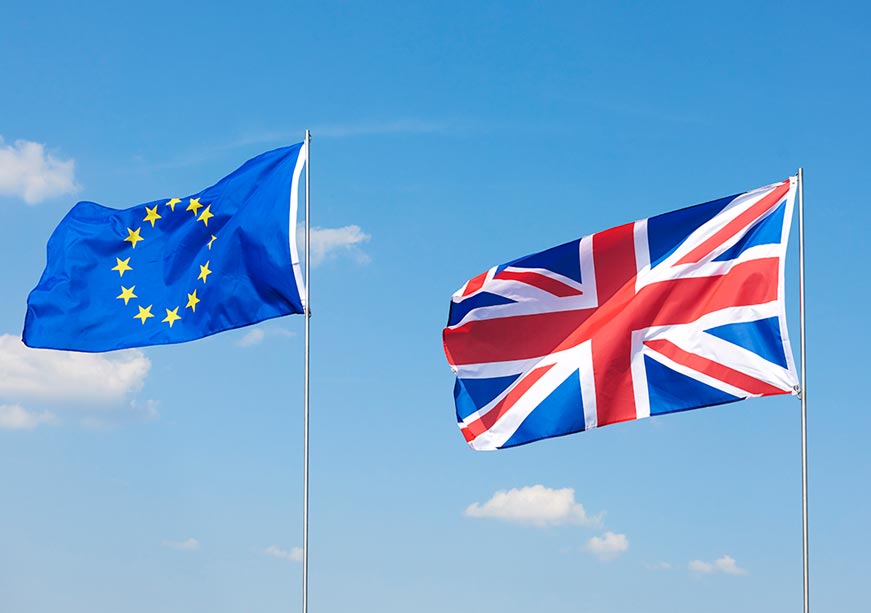
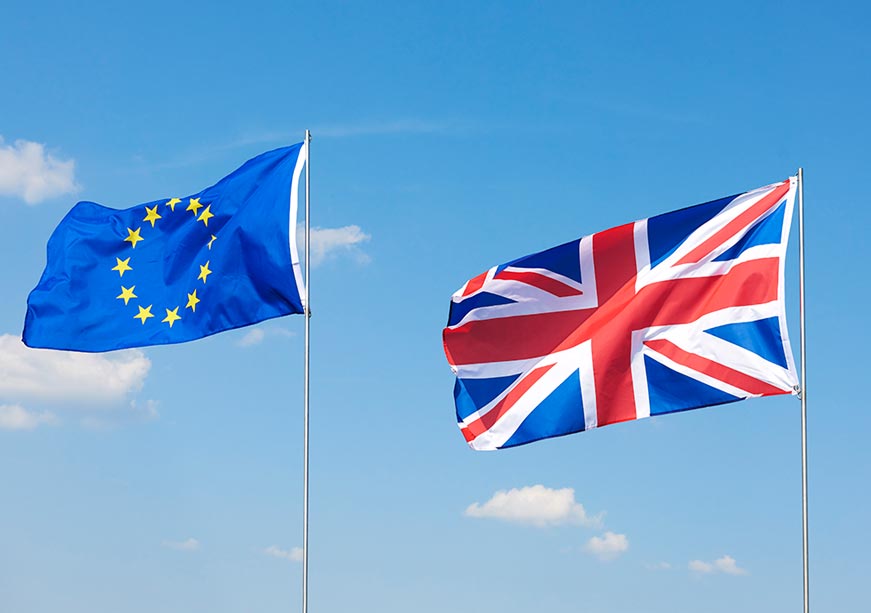
Image source: Freepik
In recent times, commercial transactions have aroused significant momentum and traction in the world. On May 9, 2025, India and the United Kingdom (United Kingdom) signed a ‘historical“The free trade agreement (ALE) has mapped a new partnership era. Barely two weeks later, on May 19, 2025, the United Kingdom and the European Union (EU) obtained a new agreement – the Commerce and Cooperation Agreement (TCA) – reset the relationship after the British release of the Union in 2020 (Brexit). This actmontage Covers various fields, including trade, migration and cooperation in sectors such as fishing, energy and transport. Although it offers much less privileges than those from which the United Kingdom benefits as a member of the EU, the agreement includes beneficial provisions for the United Kingdom, thus improving its economic resilience. It is obvious that the United Kingdom and the EU worked closely on European armaments, the Ukraine War and the proposed prices imposed by the United States of America (United States) since Keir Starmer supposed office As a British Prime Minister (PM). There is an alignment of objectives, and Euroscepticism is in decline, which makes the partnership stable and deserves to be prosecuted for both partners in an uncertain international environment. As partners sharing the same ideas sharing common values influencing their national and foreign policies, the EU and the United Kingdom seem quite ambitious in their joint agendas. Following this agreement, the normative power of the EU seems to have increased. However, it can also be said that since the Ukraine War, Brussels has intensified its efforts to develop its defense capacities. In this sense, the UE-UK security and defense partnership is one of the main results of the UE-UK summit.
As partners sharing the same ideas sharing common values influencing their national and foreign policies, the EU and the United Kingdom seem quite ambitious in their joint agendas.
What is UE-UK agreement?
The first UE-UK summit held discussions on security and defense, the prioritization of people, the strengthening of economies while protecting the planet and its resources, judicial cooperation, irregular migration and peaches. This led to the signing of an agreement which was praised as resetting relations. The United Kingdom should benefit more from the agreement than the EU in purely economic terms. However, the EU has acquired good will and increased stability in relations with an important regional partner. The economic security of the two countries has also been strengthened since the agreement, a critical factor in the face of pricing wars and worldwide conflicts. In the United Kingdom, the main beneficiary of the New Deal is the food sector. The amendment of laws concerning food exports and peaches is particularly crucial, since these sectors have been the worst by Brexit. The simplification of British food control would also allow it to be easily exported to the EU. The U UK The food sector has undergone economic losses Due to the paperwork-lame introduced by Brexit.
Fisheries were a controversial sector of cooperation while the United Kingdom was part of the EU. According to the New Deal, the existing quotas established in 2021 will remain in force for the next decade. Although this ensures the stability of the sector, criticisms observe that British companies will not be able to compete with EU products. The other affected sectors include education, where a similar program Erasmus is negotiated.
Although this agreement is generally positive for the United Kingdom, certain apprehensions remain. The concept of “Dynamic alignment” has frightened many eurosceptics in the United Kingdom; However, this fear now seems to fade. On the other hand, supporters of the label of the agreement this criticism of a “Brexit disturbance syndrome” where everything related to a more or less equal agreement between the EU and the United Kingdom is not desirable. However, it still strengthens the relationship between the two, given the challenges encountered by Europe and the international system.
Eu-Uk Deal and Brussels
Often described as a normative power,, The EU uses normative justification rather than material incentives or physical strength. Unlike military power, its strength lies in the legitimacy of its principles, its consistency and its coherence. The importance of the EU in global policy is not simply the result of having military resources. However, it is based on the importance of the ideas, standards and values underlying the European integration project.
It seems that the United Kingdom and the EU need this summit to present it as a great success of democracies that support the liberal order in times of uncertainty during the Trump presidency and the Russia war against Ukraine.
According to the EU-UK 2025 joint statement,, “Reaffirming our shared values (United Kingdom and EU) and our commitment to more in-depth cooperation in the context of a changing and complex global geopolitical landscape, we agree (for) a new strategic partnership.” A new strategic partnership is presented as a basis for future relationships. It seems that the United Kingdom and the EU need this summit to present it as a great success of democracies that support the liberal order in times of uncertainty during the Trump presidency and the Russia war against Ukraine.
The two parties involved highlight the need for common responsibility towards Europe and the strengthening of their partnership in terms of security and defense. In addition, Great Britain supported the EU position on the Russian-Ukraine conflict and also expressed its support for the territorial integrity of Moldova. The United Kingdom and the EU also share a common position on the situation in the Middle East. In this sense, the interests of the EU and the United Kingdom extend beyond conventional strategic areas. It is crucial from the EU point of view, which wishes to develop its potential to defend itself against hybrid threats and the resilience of critical infrastructure. EU-UK’s security and defense partnership could be the next sign of the EU’s desire to focus more on the development of its own defense potential and to reduce its military dependence on the United States. Under the agreement, the United Kingdom had access to a new instrument for financing the reset of the EU worth 150 billion euros, called ONwhich aims to improve defense production throughout the block, establishing a European preference of 65 to 35%. During the summit, leaders also stressed that for the United Kingdom and EU members, which are also the allies of the Organization of the North Atlantic Treaty (NATO), NATO remains the basis of their collective defense.
TCA emphasizes the need to establish common platforms for cooperation, to promote goodwill and to trust increasing geopolitical rivalries and disorders.
The upcoming road
Trade agreements have become a change of game, gaining immense importance in recent times. Since the United Kingdom has broke away from the EU, it has tried to compensate for the loss of access to the EU market. The examples include British agreements with Japan, Singapore, Vietnam and India, as well as the complete and progressive agreement for the transpacific partnership (CPTPP). In this sense, London once again wishes to collaborate with Brussels by restoring cooperative executives. Additional discussions on mobility, pharmaceutical products and chemicals are necessary for subsequent adjustment. The world, as a whole, is inclined to diversify trade relations and the financing of the supply chain by launching multi-ordeal alliances. Currently, TCA highlights the need to establish joint cooperation platforms, to promote goodwill and to trust increasing geopolitical rivalries and disorders. The signature of TCA also shows the EU’s trend to strengthen its economic and political cooperation with different state and non -state actors. For example, the EU and Mercosur (Argentina, Brazil, Paraguay and Uruguay)) announced an agreement on free trade in 2024, which has not yet been ratified by all member countries. The next EU-India FTA also signals the intention of countries to build strategic paths for common global good.
Swati Prabhu is a scholarship holder, Center for New Economic Diplomacy, observing Research Foundation.
Aleksandra JaskólskaPHD, University of Warsaw, Poland. She works on India’s foreign policy and international relations in Indo-Pacific.
Barbara Kratiuk Is assistant professor at Vistula University in Poland, looking for Indo-Pacific and Southeast Asia.
The views expressed above belong to the authors. ORF research and analyzes now available on Telegram! Click here To access our organized content – Blogs, long forms and interviews.
About The Author