India: UNODC joins the dialogue of the EU-India defending preventive approaches to counter violent extremism

New Delhi, India / March 19, 2025: The threat of violent extremism does not know any borders – and either the solutions. It is increasingly recognized in global than the prevention, intervention and application balance is essential for a strategic and sustainable response. Prioritize prevention – through education, community commitment and the construction of resilience – required early action and multisectoral cooperation.
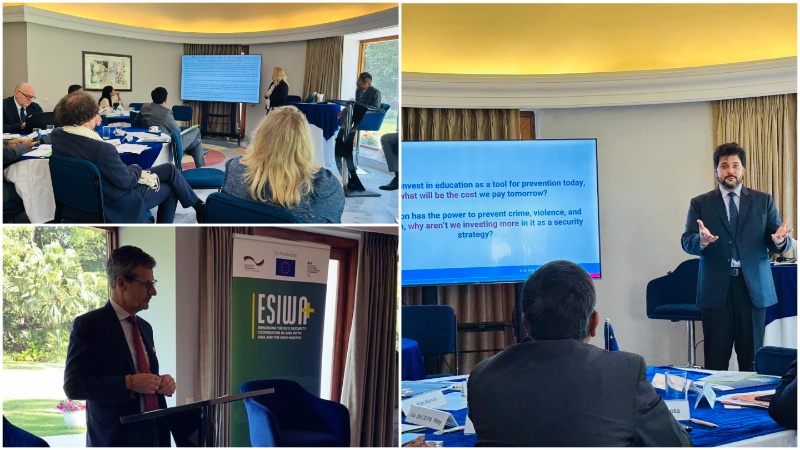
This shared commitment was resumed during an EU-Indian technical workshop to prevent and counter violent extremism, held in New Delhi alongside the Dialogue Raisina.
Organized by the European Union in cooperation with the Embassy of the Netherlands within the framework of the ESIWA + Initiative (improving the EU security cooperation in and with Asia and Indo-Pacific), the workshop brought together 25 experts against terrorism, Indians and Europeans, those responsible for civil society society for deliberations on strategies and solutions. The EU Ambassador to India, Mr. Hervé Delphin, opened the workshop.
Discussions focused on fully government approaches, risk assessment processes, exit programs and reintegration strategies. The need to engage young people was highlighted as the first line of defense against violent extremism.
Sharing of emerging vulnerabilities faced by young people, the UNODC communications agent for South Asia, Mr. Samarth Pathak, presented ideas from the RISEUP4PEACE Initiative—A educational initiative managed in collaboration with educational partners in India at the school level.
More than 6,800 educators and 27,000 students in 14 states / UTs were engaged and authorized through RISEUP4PEACE, integrating key themes related to classrooms, including inclusion, prevention of drug use, cyber security, anti-intimidation and gender equality, among others.
The initiative has also strengthened the capacities of educators, led to interactive activity programs with students, favored cross-learning and co-create good practices to promote a culture of peace, the rule of law and social responsibility.
Participants welcomed the initiative as a model focused on action that folds education with prevention to strengthen resilience among young people. “Equipping young people with empathy, resilience and awareness is not only protective but transformative,” noted a delegate.
According to a press noteMaciej Stadejek, director of the security and defense policy at the European external action service, said: “By sharing expertise and promoting dialogue, we strengthen our collective capacity to prevent and counter violent extremism while confirming democratic values and human rights.” The former director general of NIA, Dinkar Gupta, has echoed the importance of shared learning, by declaring: “learning everyone’s experiences will help us create more effective strategies for deradicalization, rehabilitation and long -term prevention.”
About The Author