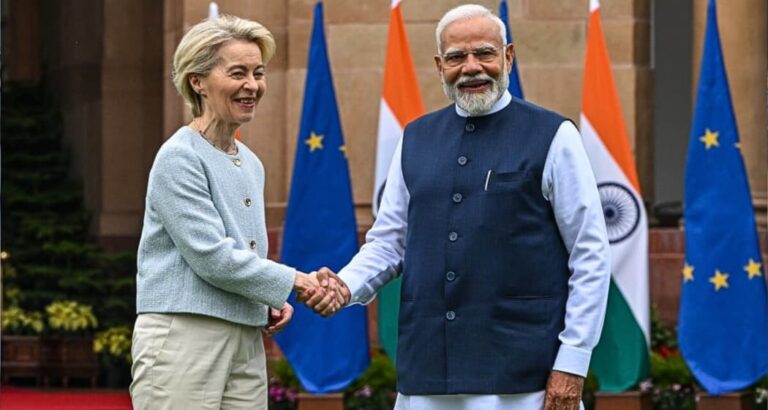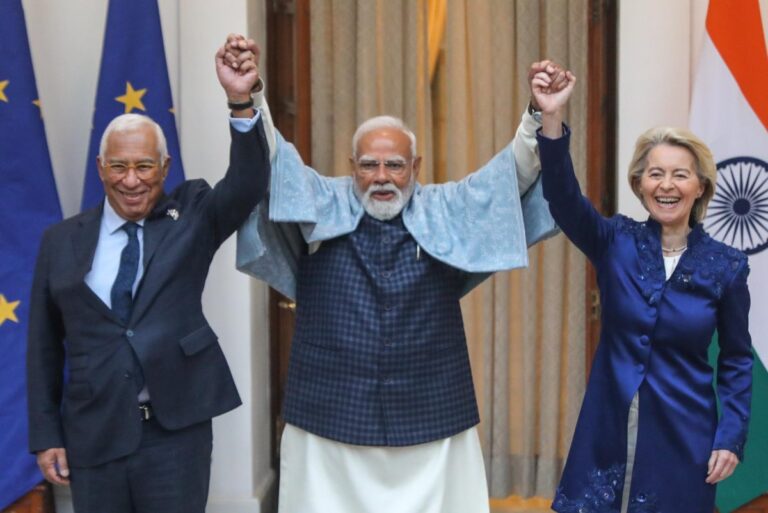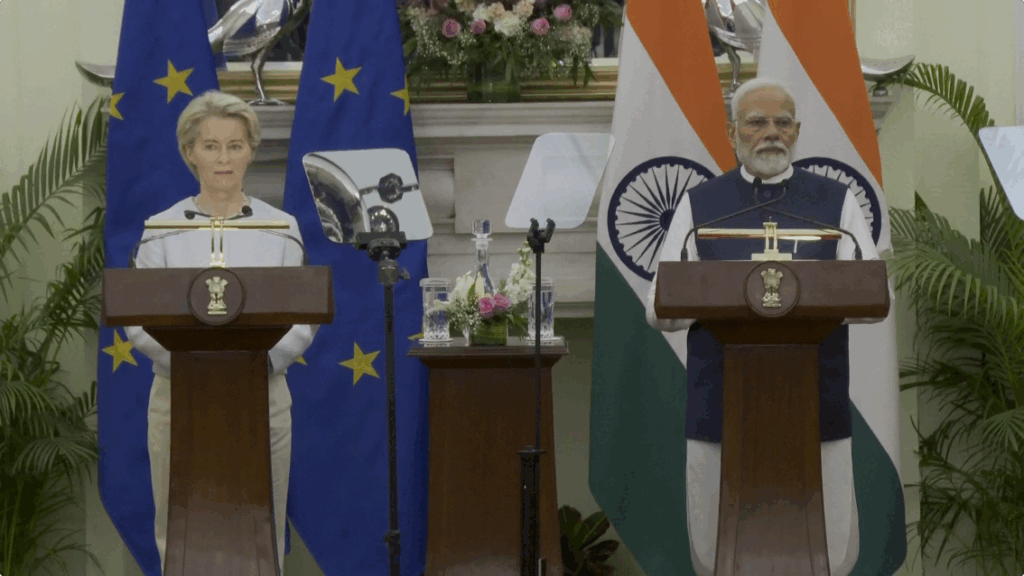
Brussels – In 2007, the EU and India began negotiations on a trade and bilateral investment agreement. However, these efforts stalled in 2014, mainly due to the failure of respective political leaders to make difficult choices. The talks restarted in 2022 and now offer a reasonable chance to deliver a bilateral free trade agreement “during the year“, As Indian Prime Minister Narendra Modi and the President of the European Commission Ursula von der Leyen said in February 2025. Thus wrote an analysis published by the Brussels based reflection group Bruegel.
The EU and India are both ranked among the five largest economies in the world in terms of GDP. However, many separate them economically. The GDP of India per capita is much lower than that of the EU, and its level of commercial protection and investment is much higher than that of the EU or even other countries with intermediate income. However, India has experienced faster than any other economy, even China. The EU and India are also compared by the global geopolitical situation and their common pursuit of strategic autonomy and economic security.
The two parties should learn the lessons of past failures and achieve an ambitious agreement in areas that have proven to be difficult, such as rates and goods services, and in new areas, such as climate protection, which could again derail the relaunched negotiations if it is not well managed,, Bruegel supports.
India has raised several concerns concerning the measures related to the EU climate, in particular the mechanism for adjusting carbon borders (Cbam) – An EU policy which imposes a carbon price on imports of certain goods, in particular those which have high carbon emissions, to ensure fair playground with EU companies which are already facing carbon costs within the framework of the EU emission negotiation system – and EU regulation on products without deforestation (Regulation (EU) 2023/115). India has asked to be exempt from the CBAM, which the EU cannot do without compromising its environmental objectives and the need to comply with the non-discrimination rules of the World Trade Organization (WTO).
An EU-Indian trade agreement at the end of 2025 will not only bring economic advantages, but will also strengthen broader economic and political ties between the EU and India at a time when global affairs are subject.
According to the study, a bilateral agreement and an ambitious investment agreement should be used to strengthen cooperation between the EU and India in the global context to help rebuild a world order based on rules for the new multipolar world. This is particularly important for multilateral trade and climate regimes, where convergent positions of the EU and Indian women may have a major influence on the overhaul of international institutions and rules.
And like Bruegel Explains in his memory of politics: “The successful EU-India trade and investment agreements require incentives for mutual growth. These agreements must not reflect the global EU free trade agreements, but must make India a magnet for investment. Access to the Union market must be attractive, supported by real regulatory dialogue, in particular on green and digital fronts. ”
The free trade agreement (ALE) could be concluded “by the end of 2025, while an innovative investment agreement, including green value chain projects, could be developed later. The EU is better placed to offer India a transformer and balanced trade agreement. If this is combined with a new type of investment contract, an ALE could also increase investments oriented towards export The geopolitical partnership between the two parties.
Finally, “India and the EU have the potential to be the main players in the restructuring of the global multipolar order compared to the global trade system and the climate regime. The EU and India could also work with other countries which have introduced the interior carbon prices to agree on the decarbonization of the high commercial intensity sectors, which could possibly provide an alternative to CBAM. »»
English version by the WitHub translation service
About The Author