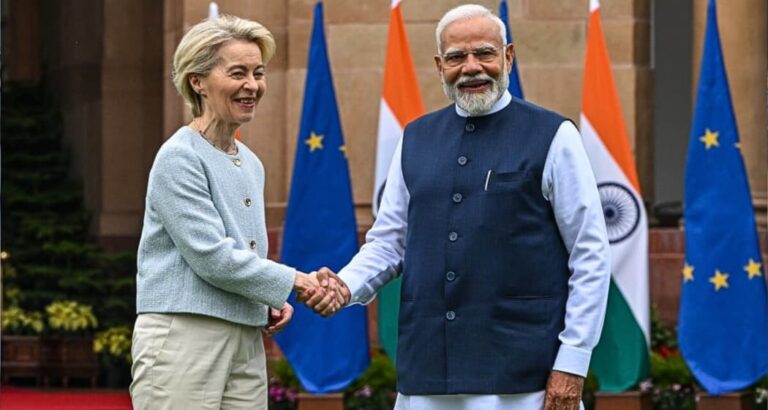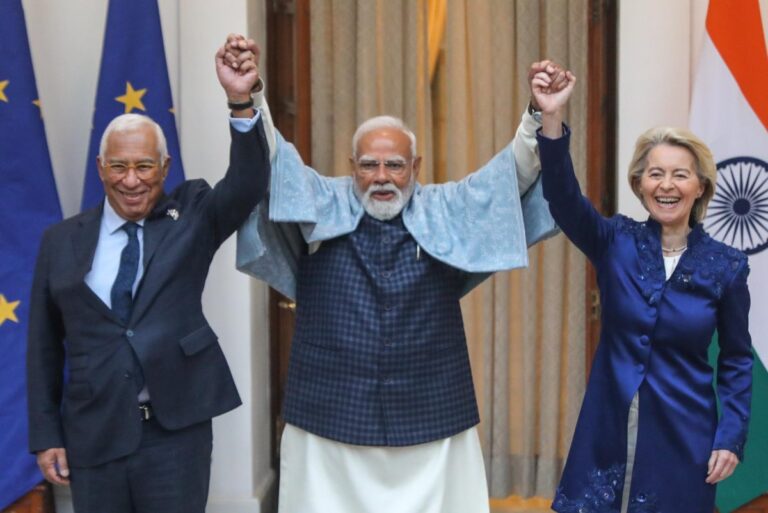
In the 12th cycle of negotiations which ended earlier this month, India and the European Union have succeeded in closing the “in principle” digital trade chapter and made substantial progress on the text dealing with “services and investments”, marking a significant step in the conclusion of the free trade agreement (ALE) that the two parties aim to sign by the end of the year.
The chapter of digital trade in ALE discussions covers crucial segments such as cross-border data flows, where business partners decide commitments to regulate data movement beyond borders, which is important for electronic commerce and global services.

Admittedly, the textual positions taken by both sides have not yet been made public. However, filling the regulatory difference in services between India and the EU would open the door to the Indian services sector to integrate deeper, increase and attract greater investments. This is important because the EU is the largest investor on a global scale, and the services represent more than 70% of the direct foreign investment (IDE) of the EU abroad.
According to a report by the European Parliament in 2021, the EU aimed to remove all “discriminatory and disproportionate obstacles to the establishment both in the service sector, as well as to the supply of cross -border services, in order to ensure a field field between the EU and the providers of Indian services”. India has rapid growth in IT and financial services which acted as a cushion for the economy, because the trade in goods has remained modest compared to the size of the economy.
Importance of India-EU data trade
The regulations on cross -border data flows are among the most controversial subjects of trade agreements with Western countries, in particular with the rise of artificial intelligence (AI). Effective AI systems – considered the cornerstone of the fourth industrial revolution – require various data sets from several countries. This sparked a fierce race for data from the Silicon Valley companies.
India has traditionally resisted the modification of its position on the location of data under all multilateral agreements to the World Trade Organization (WTO) to preserve political space. He also tightened standards, especially in April 2018, when the Bank of India reserve (RBI) made suppliers of payment systems such as Mastercard and Visa compulsory to store the payment data of Indian residents within the country.
A 2018 UNCTAD report, a power, platforms and the illusion of free trade stressed the importance of data for innovation. He noted that data control creates “market power and obstacles to entry for new players”.
The story continues below this announcement
The United Nations Commerce and Development Conference (UNCTED) also highlighted the potential advantages of data location, including encouragement to foreign investment in national digital infrastructure, allowing the application of national laws, as well as the safeguard of privacy and cyber-sovereign. Countries like Vietnam and the Philippines have implemented such measures to promote local capacities and protect the industries from infants.
Investment and dispute resolution
The EU business negotiations report also said that the negotiators have made substantial progress on the investment text. The negotiators had made very good progress on state mediation rules in the state, he added. The movement on the settlement of disputes is important because it suggests a breakthrough on the longtime concerns of the EU concerning the protection of investments in India.
A report by the European Parliament had previously expressed its regret that “the uncertainties remain for EU investors, in particular following India’s decision to end all its bilateral investment treaties in 2016” unilaterally. However, India has since started to resolve the issue by negotiating new investment treaties in a revised framework.
While India has shown flexibility in its position, promoting the resolution of investor-state litigation under domestic laws, the EU declared that an investment protection agreement could serve as “adequate springboard to further strengthen bilateral commercial relations”, as it encourages negotiators to work to establish a multilateral investment court.

© The Indian Express PVT Ltd
About The Author