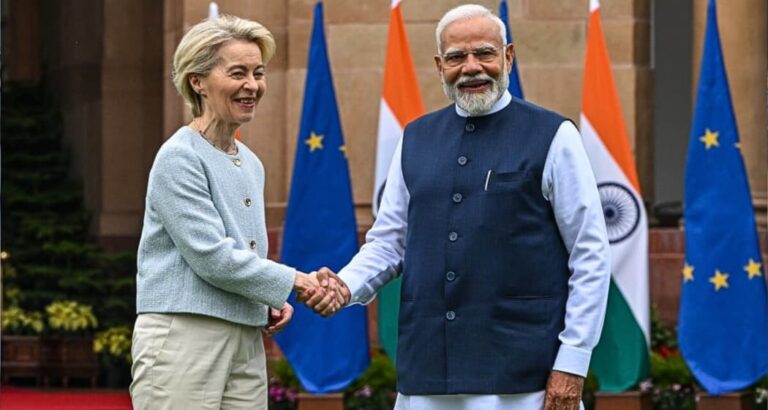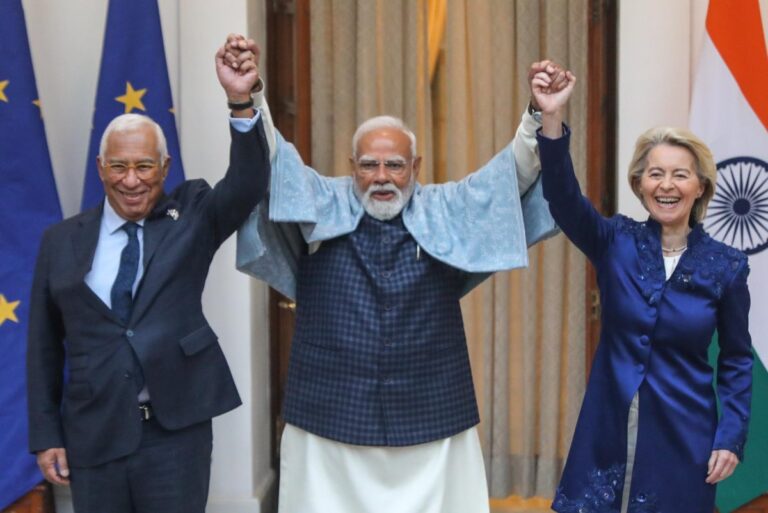
Last month, government sources said CNBC-TV18 That additional sessions take place in the negotiations of the free trade agreement (FTA) of the European Union (FTA) (FTA), the frequency of meetings from quarterly to monthly. Earlier, CNBC-TV18 had noted that India and the EU plan to conclude talks for an early harvest agreement by July 2025, like the one she signed with Australia.
The early harvesting agreement will include issues such as non -tariff rates and obstacles, intellectual property rights, government purchases, technical obstacles to trade and health and phytosanitary measures. India and the EU continue a two -step approach to finalize an ALE, with the exception of an agreement to protect bilateral investments and recognition of geographic indications (GIS) with the block of 27 members.
Read also: India-Us Mini Trade Deal can be finalized within 48 hours
Government sources have stressed that five other chapters of the 23 chapters in total were closed during the previous round. Negotiations cover 23 political areas, including trade in goods and services, investment protection, customs procedures, technical obstacles, intellectual property rights and sustainable development.
Declaring that even European companies have opposed proposed regulations such as the EUDR and the CBAM (mechanism for adjusting carbon) on the concerns of the incidence on businesses, sources have declared that India’s concerns on these regulations had also been communicated within the framework of negotiations.
According to a government official, the EU opposed quality control orders (QCO) by calling them as non -tariff barriers (TNT), to which India responded by saying that QCOS also apply to Indian companies, unlike internal EU concessions for its small and medium -sized enterprises (SMEs).
In return, India has offered that mutual recognition can be given by both parties in fields such as technical obstacles to trade (TBT) and health and phytosanitary measures (SPS). The government official has added that good relations with the EU are reflected in the current strategic dialogue, the block of 27 members displaying a sensitivity to the reported concerns of India.
Read also: not able to guess `to guess ”, any backup plan to be based on the way things go: sources
Last month, the Indian Minister of Commerce and Industry, Piyush Goyal, had met the EU commissioner for commercial and economic security, interinstitutional relations and transparency Maroš Šefčovič, the European Commissioner for Agriculture and Food Christophe Hansen, and the Ministers of the EU member countries, FRA negotiations, important.
While the EU has requested changes to the Patent Act of India to allow a “ persistence ” of patents in pharmaceutical products, India has already refused to accept similar requirements of the United Kingdom and Switzerland for the exclusivity of data to protect the generic pharmaceutical industry within the framework of the ALE with the United Kingdom and the European Free Trade Association (EFTA).
During the financial year 2023-24, the trade in bilateral products of the EU in India was $ 137.41 billion, with Indian exports worth $ 75.92 billion and imports worth $ 61.48 billion, which makes the largest commercial partner in the EU in goods. The EU represents almost 17% of total exports from India, while EU exports to India represent 9% of its total sales abroad.
While India discusses the possibility of inclusion of rare land resources in the AF with Chile and Peru to guarantee that dependence is not limited to a few countries, it explores the possibilities with Japan and South Korea to access treatment technologies for rare earths within the framework of a strategy to diversify the value chains for rare earths by increasing local eyebrows and treatment.
Read also: India, commercial operations in the United States, interviews with mutual cooperation, explains Piyush Goyal
About The Author