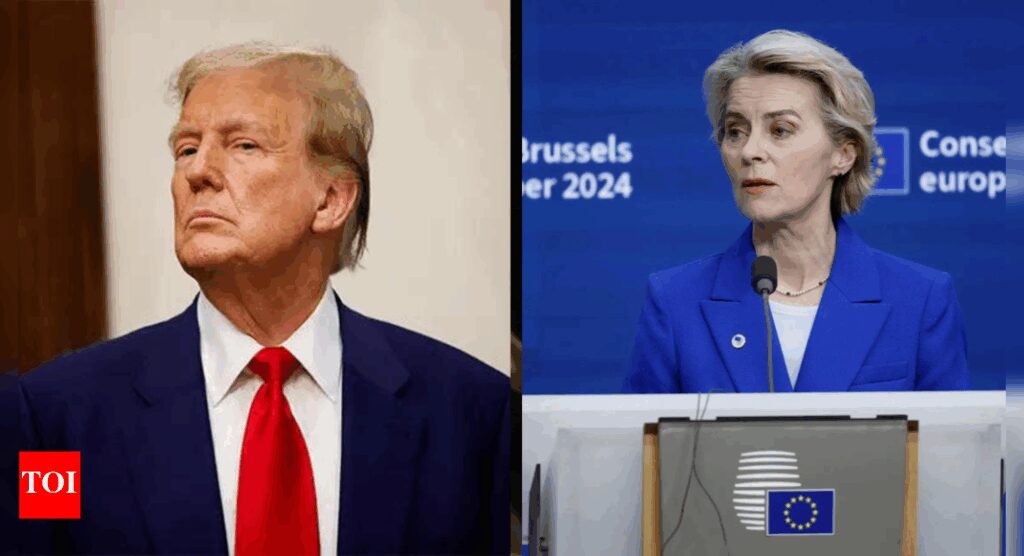
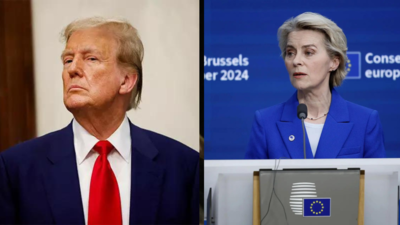
The European Union is considering a temporary trade agreement with the United States which would maintain a 10% tariff on most exports, according to a European Commission briefing at EU ambassadors on Friday, the Portal of Politico reported.The update occurred after a series of key negotiations in Washington on Thursday, where the EU trade commissioner, Maroš Šefčovič, aimed to defuse the threat of the American president Donald Trump to impose a rate of 50% on all European imports from July 9, if an agreement is not concluded.The discussions will continue on potential exemptions for certain sectors, including the automotive industry, two national officials familiar with the discussions said, according to the news portal.However, the result was considered disappointing in several European capitals, in particular after the previous signals of the Commission’s negotiation team that certain industries could receive immediate tariff relief. The United States is currently imposing 25% tariffs on cars and 50% on steel and aluminum imports.
The EU remains divided
Despite intensive negotiations, achieving a consensus on a trade agreement with the United States remains difficult for the president of the European Commission Ursula von der Leyen, in the midst of the current divisions between the EU member states on how to proceed. According to three diplomats, all possibilities, including non-compliance with any agreement, are always taken into account.In a new touch, US officials would have threatened to impose a 17% rate on European food imports, confirmed two national officials, supporting a Financial Times report.Von der Leyen is expected to organize individual consultations with EU leaders during the weekend before deciding on the next stages of the block, said a manager. Meanwhile, Trump should meet his advisers on Monday, which means that any official announcement would be delayed before these discussions.
Division in three categories
According to an EU diplomat, the European Commission expects President Donald Trump to classify American trade partners in three separate groups.In the first category, countries where provisional agreements have been concluded would see a continuous break on “reciprocal” prices, with the possibility of additional tariff repair later.The second category includes countries where no agreement has been concluded; Here, the prices specific to the country announced by Trump in April, 20% in the case of the EU, would be reinstated while the negotiations are continuing.In the third category, countries with dead or unsuccessful discussions will face higher prices, which would remain in place until further notice.
Deal limited in the middle of divisions
Ursula von der Leyen paved the way for a minimum trade agreement on Thursday, declaring that its objective was to guarantee a “agreement in principle”. This decision would follow a similar approach adopted by the United Kingdom, which maintained a basic rate while obtaining exemptions for key sectors such as automobiles and steel, wider negotiations.However, before the Briefing on Friday, several EU member states warned that such an agreement would be unacceptable without a clear and immediate commitment to President Donald Trump to raise prices on the critical industries.The German Chancellor Friedrich Merz pressure for a quick agreement, in particular to obtain rates lower than the main German export sectors. On the other hand, countries like France, Spain, Italy and Denmark have urged the Commission to negotiate a more complete and balanced arrangement with Washington.Meanwhile, Brussels has kept a second potential wave of reprisal rates, valued at 100 billion euros pending, in order to give negotiations to move forward and to avoid climbing the current transatlantic trade tensions.
About The Author