India’s push to ALF with the United States and the EU faces roadblocks on prices, data and environmental rules despite the political emergency.
The push of India to extend its export base through the free trade agreements (ALF) has acquired the emergency in recent months. The global trade flows that adapt to new geopolitical alignments, New Delhi is trying to position itself as a favorite partner. But optimism on quick results can be moved.
The Minister of Finance, Nirmala Sitharaman, recently expressed his confidence in the conclusion of the FTA with the United States and the European Union. These are among the most ambitious commercial negotiations in India, given the size of the markets and the complexity of the problems concerned. The fact that the two agreements have been in discussion for years indicate the challenges to come.
Read | The India Game Industry needs more intelligent regulations
Promise without progress
The European Union is the largest trading partner in India in goods, bilateral trade reaching 124 billion euros in 2023, or 12.2% of the total trade in India. The trade in services between the two amounted to 60 billion euros, a third of it in digital services. India, however, is only the ninth EU trading partner.
The talks with the EU have stalled several times, mainly on the high prices of India on cars, alcoholic drinks and other goods. Many of these prices exceed 100%. The EU also wants the stronger application of intellectual property rights and a greater alignment with its regulatory frameworks, including new environmental standards such as the carbon borders adjustment mechanism (Cbam).
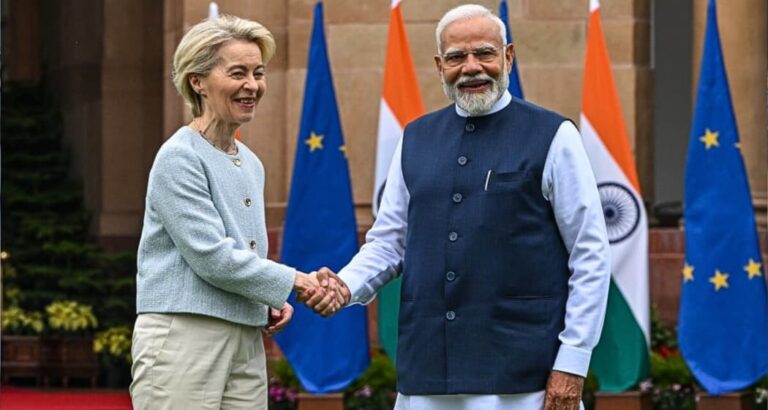
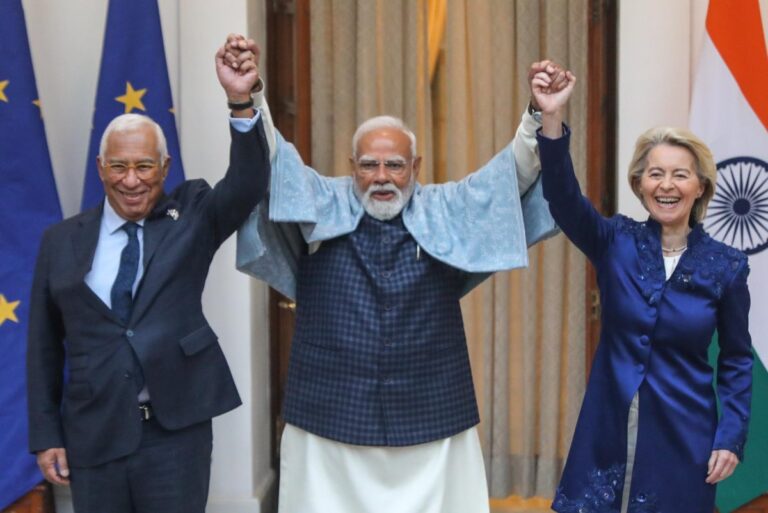
India, for its part, seeks easier access to pharmaceutical products, textiles and IT services, and remains at the opening of its agricultural sector to subsidized European agricultural exports. The agreement has been described by the president of the European Commission, Ursula von der Leyen, as potentially the largest of its kind, but this remains a long -term perspective rather than an imminent result.
Divergence on fundamentals
The India-US trade track has a different set of obstacles. The United States has long been pressure for wider access to the market in agriculture, in particular dairy and genetically modified products. He also asked for changes in the approach of India to digital trade, such as the opposition to India’s insistence on the location of data. Washington also wants less restrictions on medical devices and a stronger patent application.
The list of concerns of India includes the American prices on steel and automotive components, as well as a demand for more flexibility on pharmaceutical exports. Negotiations have struggled to make progress, even if the two parties express their interest in closer business links. The talks have been dragging since 2017, and limited progress suggests that a full agreement remains unlikely in the short term.
The problem has acquired a new emergency with the United States to resume reciprocal prices unless an agreement is concluded within a legally compulsory break period. The elimination of India from the seven pricing lines in the 2010 financial year budget was considered a gesture, but not enough to get on an ignition.
Gains without agreement
India’s push for commercial transactions comes at a time when global supply chains are reconfigured, often to the disadvantage of China. Between 2017 and 2024, India would have captured about $ 38 billion in American exports which would have been going to China otherwise. This gain, which occurred without any formal trade agreement, suggests that the attractiveness of India as an alternative supplier has developed in an organic way.
This change benefited sectors such as textiles, electronics, car components and solar modules – according to the government as part of the Make in India program. The question is whether a full-fledged trade agreement with the United States would offer sufficient additional advantages to justify the political compromises that it would be.
Recent FTA lessons
India has already signed the FTA with the water, Australia and the EFTA block of four members. Negotiations with the United Kingdom also concluded. These transactions reflect a more assertive commercial policy and a desire to use ALF as an instruments for integration into global value chains.
However, the results of these agreements remain to be evaluated. Many of them involve reductions in progressive prices that will take years to implement. In the case of the United Kingdom, India is committed to reducing prices on 90% of the goods negotiated in a decade. The CBAM clause remains unresolved.
Although these pacts can support the long -term export ambitions of India, they also lock liberalization which are not always symmetrical. The political challenge consists in ensuring that these agreements support internal industrial objectives without exposing the vulnerable sectors to premature competition.
Limited transactions, limited risk
Commercial experts are increasingly favorable to the continuation of limited agreements which focus on sectors with mutual benefits rather than targeting the scanning alm. These “early harvesting” transactions could allow India to extend access to the market without abandoning regulatory control or exhibiting the politically sensitive sectors.
The political economy of trade remains difficult. Agriculture, data confidentiality and pharmaceutical products are areas where consensus is difficult to build at the national level, not to mention foreign partners. This makes business agreements large -scale both economically complex and politically risky.
India’s commercial diplomacy has become more proactive, but structural obstacles remain. The EU and the United States are not reluctant partners, but they are not likely to make significant short-term concessions. The concept that several ALE will be quickly finished can be more political messaging than a realistic assessment.
New Delhi can still get certain offers. But success should not be defined by the number of agreements signed. It will be determined by the question of whether India manages to obtain market access without compromising the autonomy of the policies. This not only requires negotiation skills, but also a clear meaning of compromises – and the patience to see them.
About The Author