The US-UK agreement has not yet been implemented in full. When this happens, and exactly what form the agreement will take, are still uncertain. In addition, the agreement still leaves higher prices than before, 10% for most products, he noted.
The UK’s United States’s commercial pacts with the United States, the EU and India will not do much to stimulate short-term growth because they are either too narrow, or, in the case of the United Kingdom-US, always leaves exporters less than before, said global S&P ratings. The US-UK pact has not yet been fully implemented; The United Kingdom-EU is of narrow reach; And that of the United Kingdom is smaller in terms of economic importance than the agreement of the United Kingdom.
“Even if the United Kingdom is slightly better off in terms of trade with the United States than other countries, the trade in the United Kingdom will always be lower than it would have been under the prices before April 2, 2025,” said S&P Global Ratings.
The agreement of the United Kingdom-EU is close, even if it suggests that the United Kingdom may have put Brexit aside in favor of cooperation.
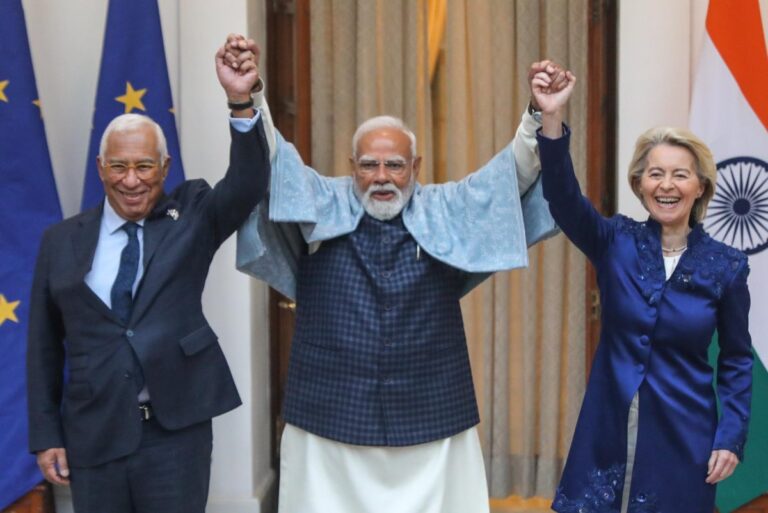
Finally, the country’s trade agreement with India will offer British exporters more options while they seek to diversify their business partners. However, even if India is a rapid growth market, the UK’s UK trade agreement is lower in terms of economic importance than the close agreement of the United Kingdom with the EU, according to the estimate of the British treasure, that is to say 4.8 billion pounds sterling against 9.0 billion long-term sterling pounds.
India is a smaller commercial partner, only knowing about 2% of the total export of products in the United Kingdom in the last 12 months, against around 64% for the EU and the United States combined, noted Global S&P.
The British economy is lower than it seems in the first quarter (T1 2025) and has lost 280,000 jobs in the past 12 months, he observed.
Surveys highlight moderate demand, especially in manufacturing, and consumers continue to save much more than they have done historically.
The Bank of England (BOE) will continue to adopt a gradual approach to reduction rates, because volatile economic data continue to point out high price pressure, even if the labor market is cooling. S&P Global plans to lower rates per quarter until February 2026, which should help investments and consumption bounce more quickly.
The country’s economy increased by 0.7% over the quarter to T1 2025.
Consumers have continued to reduce their expectations for the economy. This is likely to motivate higher savings than usual, preventing stronger recovery in household expenditure.
Retail sales dropped by 2.6% in May 2025, overthrowing previous annual gains.
The British gross domestic product should contract in the second quarter, reflecting moderate trends and a drop in trade with the United States because new prices have now started.
Fiber2fashion News Desk (DS)
About The Author