Issue
Tensions between India and Pakistan are escalation After a terrorist attack at the Pahalgam of Jammu-et-Cachemire at the end of April. The development crisis creates challenges for European diplomacy, in particular given its relationship with India and China.
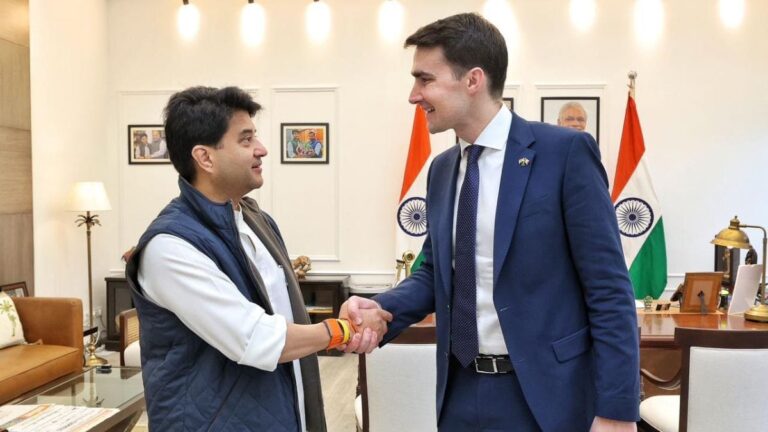
First, Delhi is likely to judge his international partners according to whether they support the position of India or adopt a more neutral position. While European leaders are looking for stronger diplomatic, economic and military links with India, including a Eu-Indie Trade Deal And defense exports, Brussels and EU member states must calibrate their messages more carefully.
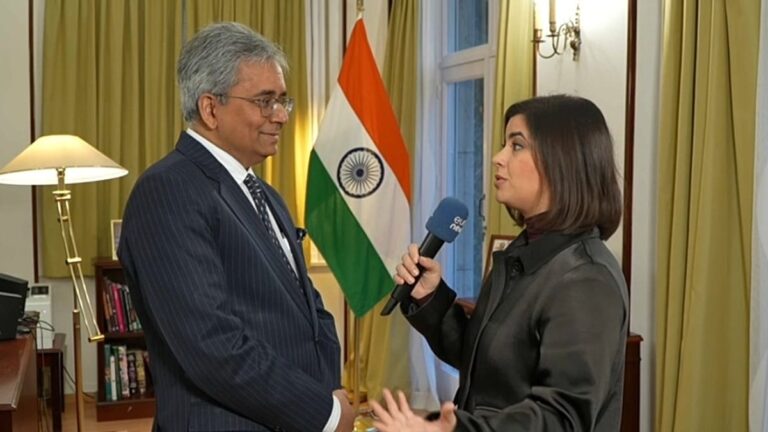
Kaja Kallas, the head of the EU foreign policy, tried to find a balance by condemning the first terrorist attacks And speak to foreign ministers on both sides Exhort de -escalation. But some Indian commentators have accused Europe of double standard has perceived, citing the will of Europe to support Ukraine against Russian aggression without unequivocally providing the same support for India.
Second, the Chinese Foreign Affairs Ministry has called The operation of India “regrettable” and urged the two parties to refrain from actions which “would still complicate the situation”. In practice, however, China is a partner close to Pakistan and a critical military technology supplier.
During the conflict, a J-10C Chinese manufacturing plane operated by Pakistan, equipped with long-range air missiles PL-15, made its first known Air air kill in live fight By cutting down an Indian burst produced by France. As a first fatal combat interaction of modern Chinese and European fighter planes, this event has demonstrated Chinese technological advances in radar and missile capacities. For India, he poses supply questions; For Europe, it brings back to the house a debate on the advanced capacities that China is capable and willing to provide – and to co -develop – its partners, including Russia.
Solution
Indian Prime Minister Narendra Modi canceled a future Three nations tour in Europe. European leaders hope for rapid resolution and rapid return to their recent accent on economic relations. But a clearer positioning will be necessary as the crisis is still degenerating: Brussels will probably have to prioritize its full relationship with India for concerns about the worsening of links with Pakistan. Legitimate concerns in the Member States concerning the allocation of terrorist activities, efforts to combat terrorism and the Pakistani diaspora communities will likely become secondary.
If Europe wants to promote itself as a reliable high technology defense supplier, while highlighting the importance of plans for a new security and defense partnership in Europe-India, this is accompanied by diplomatic choices.
Europe must also undertake an honest assessment of the new role of China as a supplier of advanced military capacities and a key cooperation partner in joint industrial defense projects. As a strategic and military relationship between Russia and China is getting closer and closerwith a Increase in joint military maneuvers And the industrial collaboration of defense between Beijing and Moscow, the J-10C demonstration in particular prefigures the type of challenges to China, Europe could later face its immediate neighborhood. In the light of the American retirement of Europe, a debate renewed on European export controls and technological transfers vis-à-vis China is necessary urgently.
Context
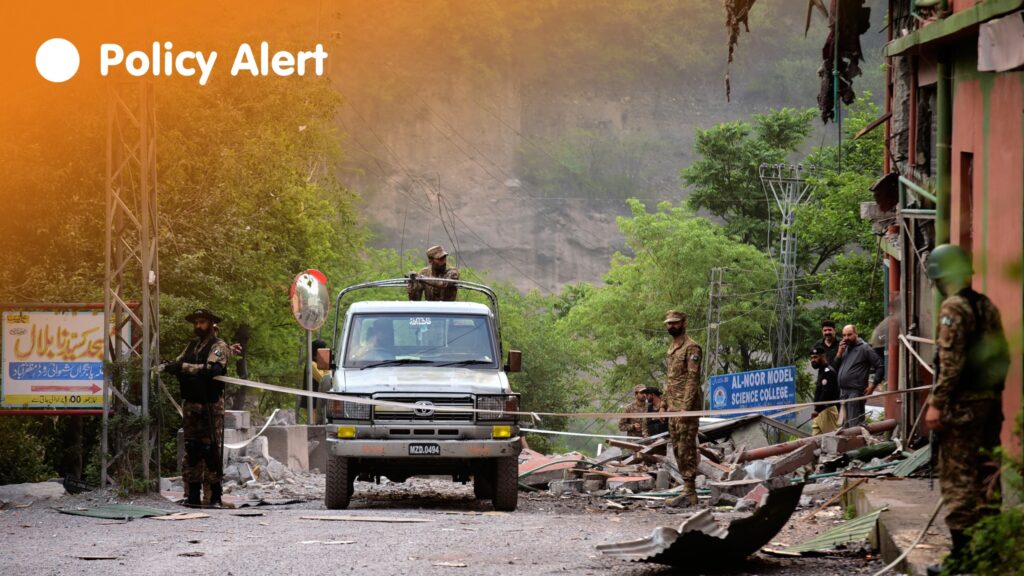
On April 26, the terrorist organization based in Pakistan, the Front Resistance, led a brutal attack which killed 25 Indian tourists and a Nepalese tourist in Pahalgam of Jammu-et-Cachemire-the deadliest of Indian civilians since the attacks of Mumbai 2008.
India retaliated with “the Sindoor operation”, initially striking terrorist targets on the Pakistani territory on May 7. Pakistan then killed incoming Indian planes at a significant distance. The situation increases more with Indian counterclaids and Pakistan would have answered Against Indian military targets on May 8. India and Pakistan are both nuclear powers.
The European Council on Foreign Relations does not take collective positions. ECFR publications only represent the views of their individual authors.
About The Author